The Teddy Bear
Odcinek serii Awesome Stuff
- Ilustrowany pokaz slajdów (31 ilustracji)
- Słowniczek (35 słów)
- Quiz ze zrozumienia (17 pytań)
- 13 notatek kulturowych

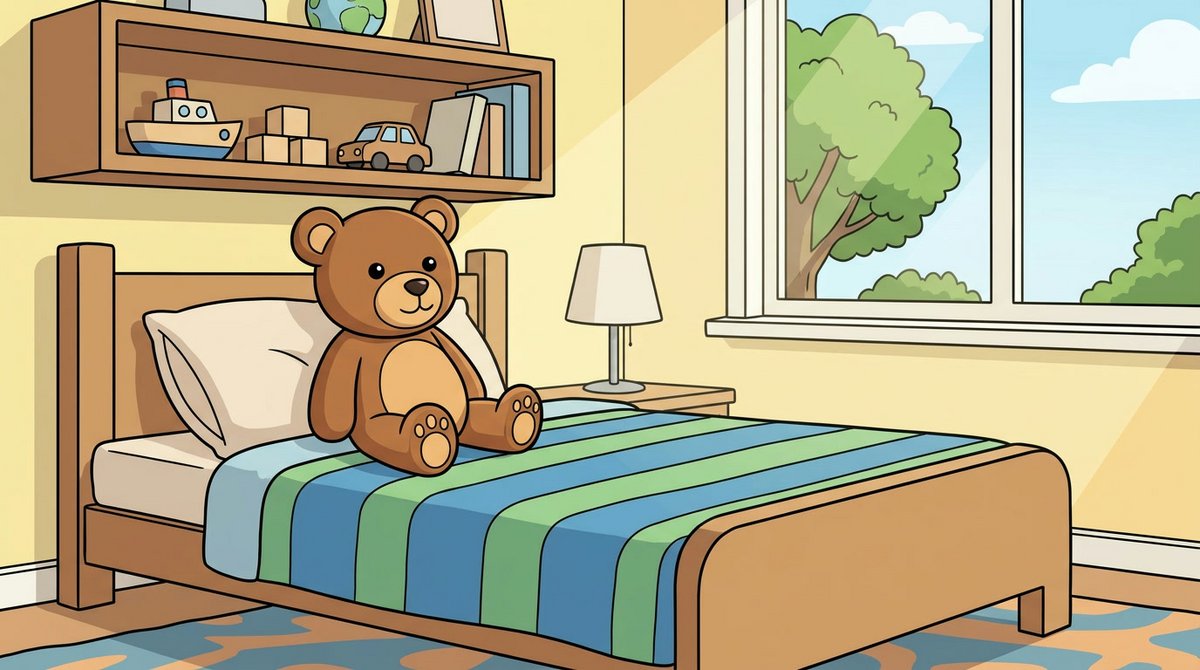
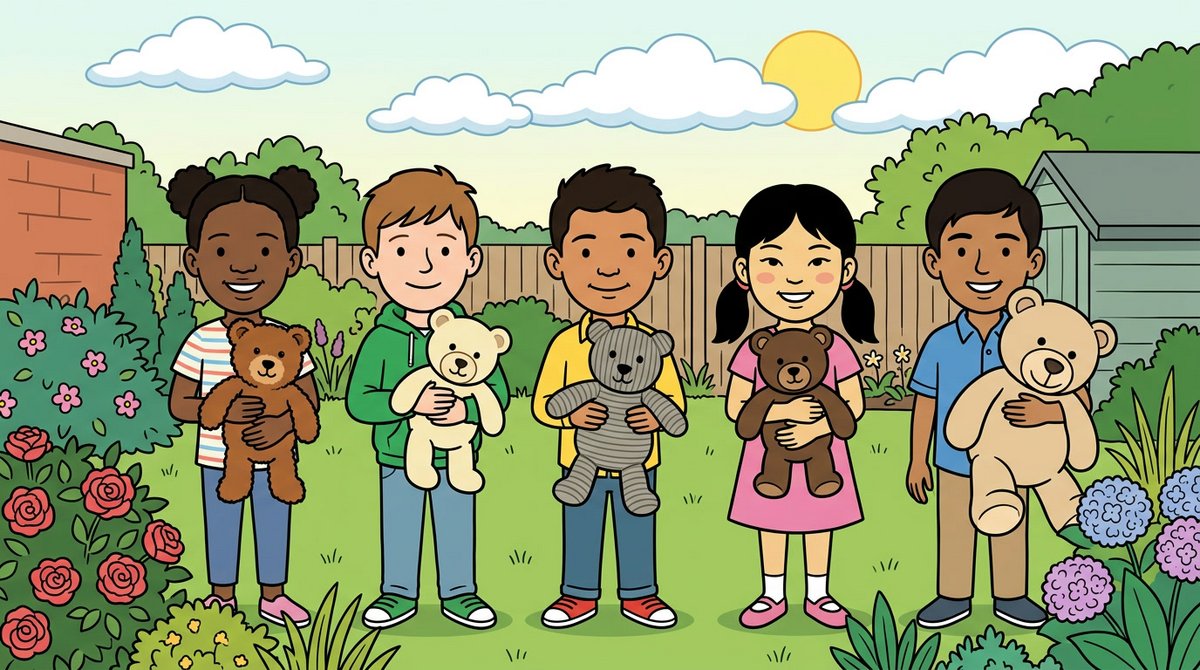 Fragment · 30 s
O odcinku
A president who said no on a bear hunt, a cartoon bear, and a little shop in Brooklyn: find out how the teddy bear got its name, and why police officers keep teddy bears in their cars.
Karty pracy do odcinka (2)
- Karta pracy Na Twoim koncie nauczyciela
- Karta nauczyciela Na Twoim koncie nauczyciela
Przewodnik dydaktyczny
Objective & content
Two friends talk about the teddy bear: one friend explains, the other asks. The episode tells how President Theodore Roosevelt, called Teddy, went on a bear hunt in Mississippi in 1902, where his guide Holt Collier tied a black bear to a tree and the president said it was not fair and did not shoot, then how a newspaper cartoon made the bear small, cute and famous, how Morris and Rose Michtom put two toy bears called "Teddy's bear" in the window of their little shop in Brooklyn, and how Richard Steiff made a toy bear in Germany at the same time; it ends with teddy bears today, from a museum in Washington to the bears police officers keep in their cars for scared children. The history is told in the past simple (went, found, tied, called, said, drew, made, sold, took), with the negative with didn't ("He didn't shoot the bear.") and questions in the past ("Did he find a bear?" "Was the bear big and scary?"), and today in the present simple (lots of kids have a teddy bear, police officers keep teddy bears in their cars). Learners listen for the people, the dates and the numbers, then answer the quiz in the app and the one-page pupil sheet.
Pedagogical guide
The 45-minute lesson plan starts from a drawing of a teddy bear: do you have one, and what is its name? Learners preview eight words, listen twice (once for why we say "teddy", once with four pauses for questions), then check the facts, practice the vocabulary, sort sentences into "in 1902 and 1903" and "today" to notice the past simple and the present simple, match past forms to their base verbs, and ask and answer questions about the teddy bear in pairs. At A1+ learners form simple past simple questions themselves ("Did he find a bear?") and answer briefly ("Not for days."). The hunt is told in a few gentle lines: keep the talk on the president's choice and on the toy. Most activities have a support path and a stretch path.
Suggested procedure
- Activate knowledge (3 min): draw a teddy bear and ask who has one and what its name is.
- Vocabulary preview (5 min): president, bear hunt, guide, cartoon, newspaper, shop window, toy company, toy fair.
- First listen (5 min): play the whole episode (about three and a half minutes) and ask why we say "teddy" and who Teddy was.
- Second listen (12 min): pause four times to ask about the bear hunt in 1902, the cartoon and the Michtoms' shop, the toy company and Richard Steiff's bears in Germany, and teddy bears today, then about the two friends' own teddy bears at the end.
- Comprehension check (5 min): the Facts part of the pupil sheet (questions 1 to 6, as in the app quiz).
- Vocabulary practice (4 min): the Vocabulary part (questions 7 to 12).
- Grammar focus (6 min): sort the episode's sentences into "in 1902 and 1903" and "today", match past forms to their base verbs (go and went, find and found, draw and drew, make and made), notice the base verb after didn't and did, then the Grammar part (questions 13 to 18).
- Speaking (5 min): in pairs, students ask and answer the episode's questions about the teddy bear, in the past and the present.
Materials & prerequisites
- The episode in the app, with its quiz.
- The one-page pupil sheet (18 items: facts, vocabulary, grammar) and its answer key, in the episode's printables.
- Prerequisites: the present simple, was and were, and years in English.
Możliwe adaptacje
- Słabsze poziomy: zaproponuj słuchanie partiami i dodatkowe materiały wizualne.
- Poziomy zaawansowane: zachęć do ustnego streszczenia i debaty po angielsku na ten temat.
- Liczne klasy: zorganizuj pracę w grupach ze zróżnicowanymi rolami.
🔒 Treść zastrzeżona
Ten zasób wymaga abonamentu, aby z niego skorzystać.
Odblokuj zasóbW cenie abonamentuTagi
- Podcast
- Past simple: irregular verbs
- Past simple: regular verbs
- Past simple: was / were
- Negation: do / does / did
- Question forms
- Present simple
- Past inventions
- US presidents
- Historical dates
- Wild animals
- Shops
- Jobs: basics
- Large numbers
- The USA: basics
- New York
- Child and passing time
- Daily life: living, playing, learning
- Listening comprehension
- Cultural awareness
- Vocabulary building
- Inventions & discoveries
- Exploring America
- Citizenship & society
- Past & Progress
- Places & Journeys
- Our World