The hurricane fund
Zasób dydaktyczny pomyślany, by dodać energii Twoim lekcjom angielskiego.
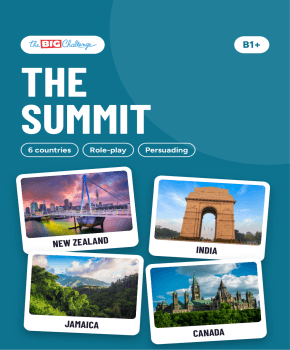
A role-play meeting for six groups: Jamaica, The Bahamas, Barbados, Trinidad and Tobago, Puerto Rico and Canada each get a card with three real facts, from Hurricanes Melissa, Dorian, Beryl, Flora and Maria to the storm Fiona, and a role in the game. Three projects are on the table, warnings and shelters, a stronger power network and protection for the coasts, and there is money for one only. Each place speaks, the class debates and fills a listening grid, then everyone votes for a project that is not their own. Six cards, a tips page, a listening grid and a teacher page; about 50 minutes.
Dokumenty do pobrania (1)
- Fact files, speaking tips, listening grid Na Twoim koncie nauczyciela
Przewodnik dydaktyczny
Objective & content
A B1+ role-play in which each group speaks for one place at a meeting about a hurricane fund. Six cards, two to a page, each give a photo, three real facts and the place's role in the game: Jamaica (Hurricane Melissa, 2025), The Bahamas (Dorian, 2019), Barbados (Beryl, 2024), Trinidad and Tobago (rarely hit, but Flora in 1963), Puerto Rico (Maria, 2017) and Canada, which helped to set up the shared Caribbean insurance fund and was hit by the storm Fiona in 2022. There is money for one project only, so every group has to persuade the others. By the end, pupils can present a position, argue for it, answer a counter-argument and change their mind for good reasons.
Pedagogical guide
The facts on the cards are real and checked; the fund and the project each place defends are invented for the game, and the card says so, so no real government is given an opinion it has not stated. Worth saying in class: Puerto Rico is a US territory, not a country, and Caribbean governments really do share an insurance fund against hurricanes. The tips page gives the three projects, a frame for a two-minute speech and the phrases to persuade, to agree and to disagree politely. The vote has one rule that makes the debate real: each group must vote for a project that is not its own.
Suggested procedure
- (5 min) Make six groups and give each group one card. Read the three projects on the tips page together.
- (15 min) Groups prepare a two-minute speech with the tips page: who we are, what happened to us, which project we want, why it is good for everyone.
- (15 min) The meeting: each place speaks and the class fills the grid. Then open the debate: groups try to win the others over.
- (10 min) The vote: each group votes for one project, but not the one on its card. Count the votes, then discuss the grid question.
Adaptations
[S] Groups prepare only three sentences: who we are, what happened, what we want.
[A] After the vote, each pupil writes a short news report of the meeting: which project won, and the best argument they heard.
Materials & prerequisites
The three card pages, cut in half along the dashed line (one card per group); the tips page and the listening grid for every pupil; the teacher page. Pupils should know the second conditional.
Możliwe adaptacje
- Słabsze poziomy: zaproponuj słuchanie partiami i dodatkowe materiały wizualne.
- Poziomy zaawansowane: zachęć do ustnego streszczenia i debaty po angielsku na ten temat.
- Liczne klasy: zorganizuj pracę w grupach ze zróżnicowanymi rolami.
🔒 Treść zastrzeżona
Ten zasób wymaga abonamentu, aby z niego skorzystać.
Odblokuj zasóbW cenie abonamentu