Phones at School
- Porównanie
 Podgląd · 3 z 11
Objective & content
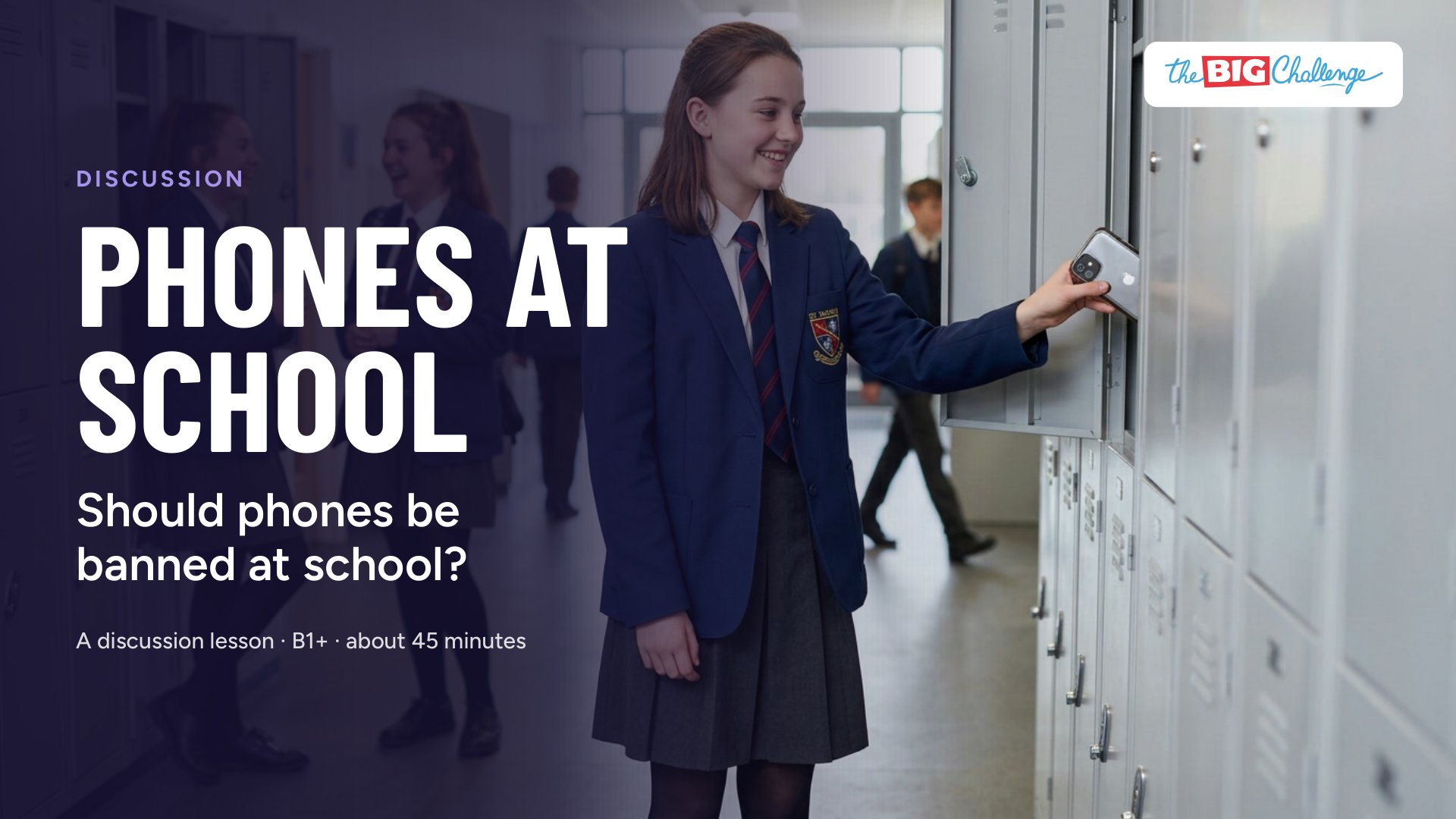
Should phones be banned at school? This 45-minute discussion lesson follows one path: the pupils first, then a story, then the world, then what the class thinks. The story is Ella, 14, who lives in Leeds: in September her school starts a new rule, and phones stay in lockers all day. On Monday she panics; by Friday she has a new friend, but she has also missed an important message from her mum (a short story written for this lesson). Then the class looks at real rules: a law in France since 2018, advice from the government in England since 2024, and in Germany no national rule, because each state decides: in Hesse, for example, no phones all day since August 2025, with exceptions. By the end, pupils can talk about the good and bad sides of phones at school, compare rules, defend an opinion and propose one fair rule in a short formal reply.
Dokumenty do pobrania (2)
- Pupil sheet Na Twoim koncie nauczyciela
- Discussion lesson (slides) Na Twoim koncie nauczyciela
Pedagogical guide
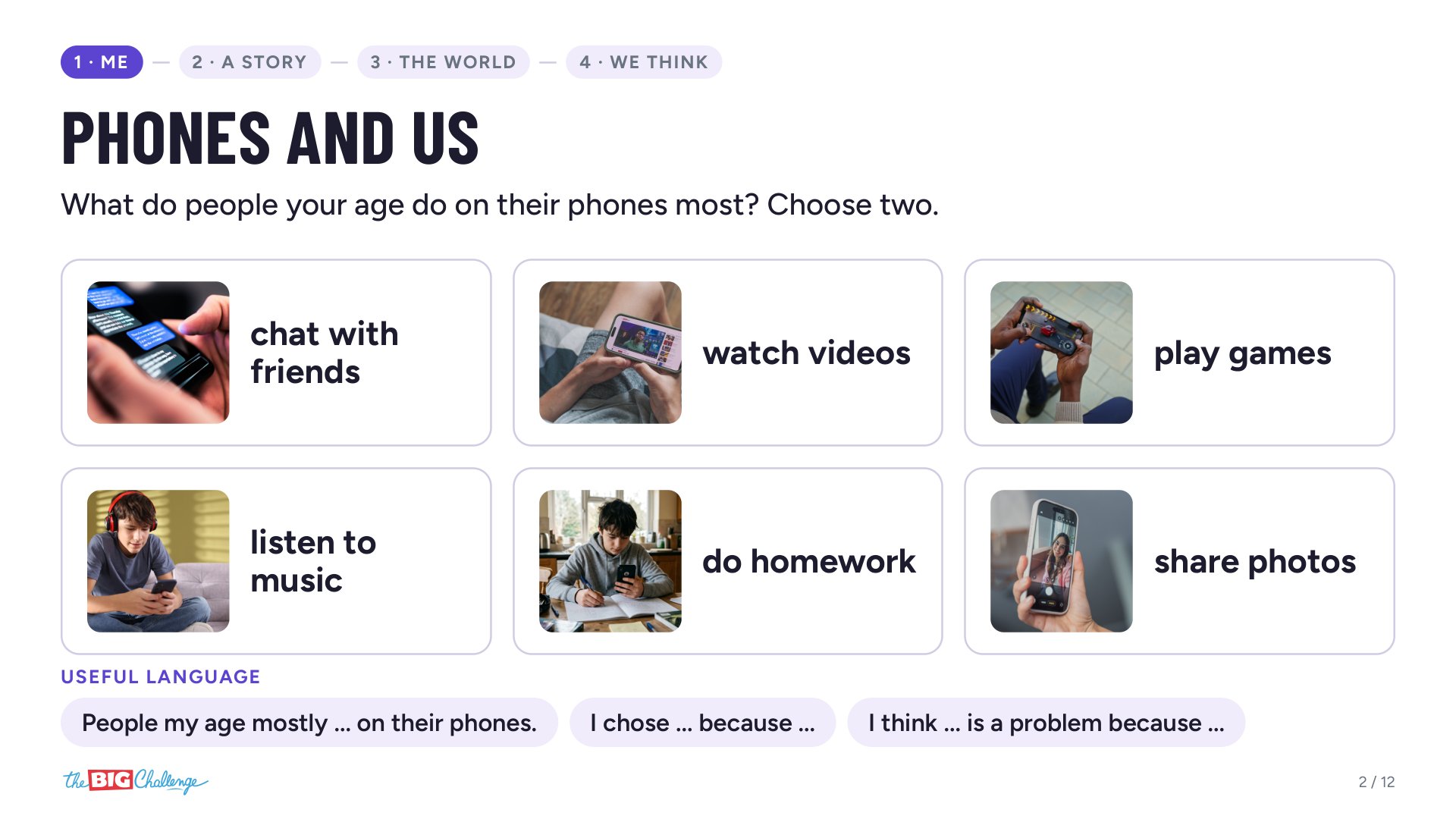
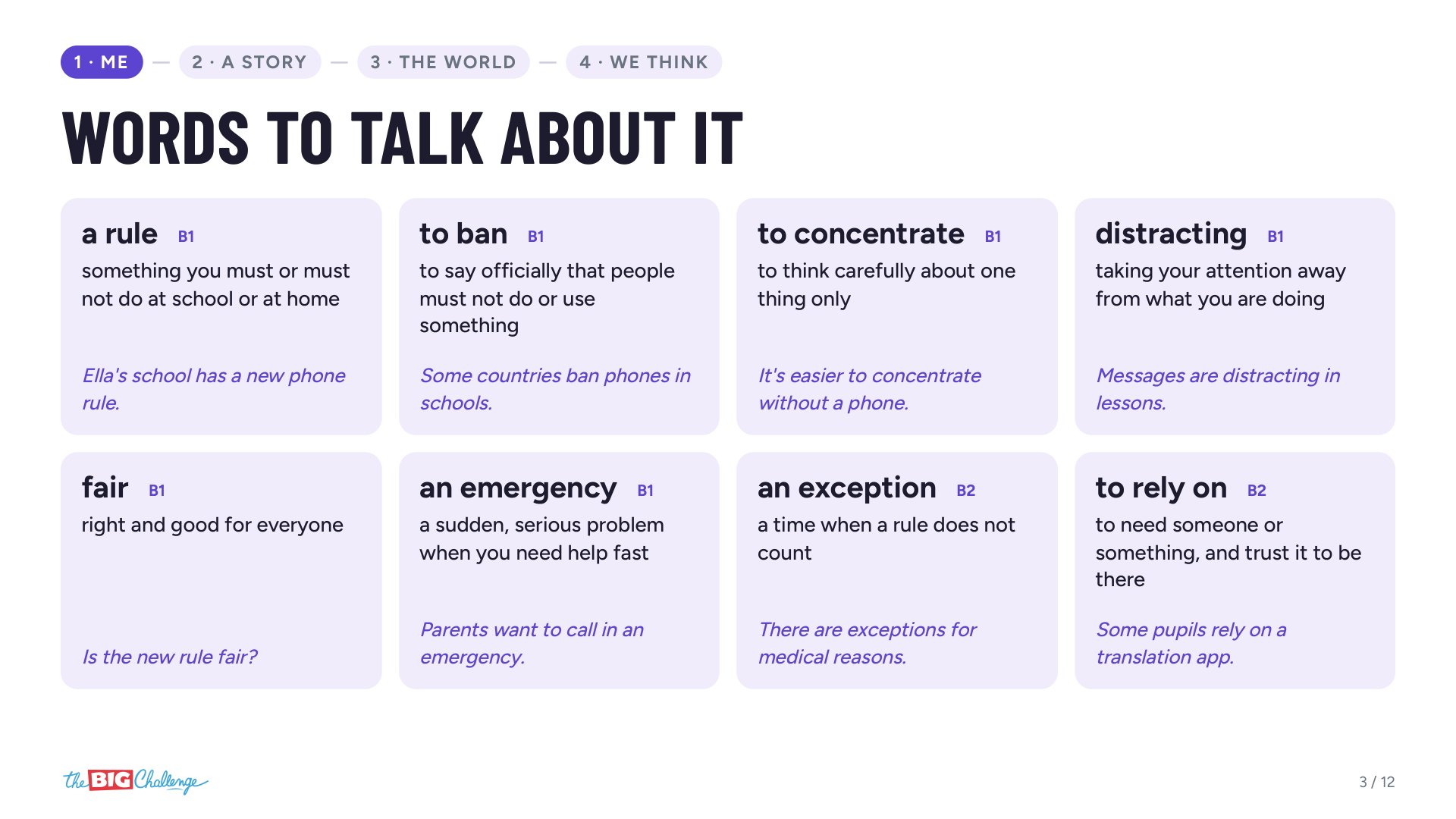
Every slide asks the class to do something: choose two picture cards, learn eight words, pick feeling words for Ella on Monday and on Friday, read four real rules, say which of four invented voices they agree with, choose three fair exceptions, compare "in class", "at break" and "after school" in three boxes, stand on a line from 1 to 5, and write a reply to the head teacher. The words come before the talking, and each question has a B1 version for everyone and a B2 one for stronger pupils. The pupil sheet follows the slides, so every pupil leaves with something written. The facts on the rules come from the French Ministry of Education, the UK Department for Education and the Hesse Ministry of Education, and the sources are on the slide. The four voices are invented opinions and are labelled as such. Some pupils have no phone: the cards ask about people their age, never about the pupil's own phone. Ella lives in England, where her school's rule is new; in France, pupils already live with the 2018 law, so the class can ask whether their own school is stricter than Ella's.
Suggested procedure45 min
- 2 min
Show the cover and read the big question: "Should phones be banned at school?" No answers yet.
- 8 min
Phones and us: pairs choose two cards and say why. Then read the eight words and their examples together.
- 8 min
Ella's phone-free week: read the story and check the four facts, then choose feeling words for Monday and for Friday.
- 10 min
What do real schools do? and Four opinions: read the four rules (which is a law, which is advice?), then the bubbles aloud; pairs choose the voice they agree with most.
- 11 min
A fair rule, then the three boxes and "Where do you stand?": pupils choose three exceptions, compare in class, at break and after school, then stand on the line from 1 to 5. Come back to the big question.
- 6 min
Dear Mrs Patel: pupils write a short reply to the head teacher with one fair rule and a reason.
Adaptations
- WsparcieKeep the word slide on screen during the story and the voices, and accept one-sentence answers built on the useful language. Pupils can number their three exceptions instead of writing them.
- PoszerzenieAsk stronger pairs the B2 question on the voices slide ("What would be fair for the new pupil?"), and have them argue for a place on the line from 1 to 5 that is not their own.
🔒 Treść zastrzeżona
Ten zasób wymaga abonamentu, aby z niego skorzystać.
Odblokuj zasóbW cenie abonamentu