My, your, his, her...
Interaktywne ćwiczenia, aby utrwalić kompetencje Twoich uczniów.
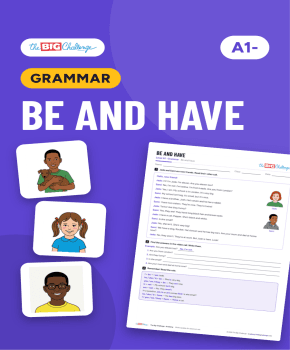
My, your, his, her, its, our and their, seen through Dev's text about his family photo. Pupils say who each word points to, read the rule, choose between his and her, its and it's, their and there, correct sentences and circle the right words in a message about lost things; answer key included.
Dokumenty do pobrania (2)
- Wersja kolorowa Na Twoim koncie nauczyciela
- Wersja czarno-biała Na Twoim koncie nauczyciela
Przewodnik dydaktyczny
Objective & content
This grammar sheet teaches the possessive words my, your, his, her, its, our and their. Pupils read Dev's text about a family photo, say who each word points to and read the rule, given in a box. They learn to choose his or her by the owner and not by the thing, and to tell its from it's and their from there. By the end, they can talk about their family and their things with the right possessive word.
Pedagogical guide
Page 1 is Dev's text, with a picture of the photo: his grandma's seventieth birthday, with his grandparents, his parents, his little sister Lola and Pickle the dog. Five multiple-choice questions ask who each word points to (their house, her hands, its ears), then pupils read the rule, given in a box in short lines with the key words in bold, which also warns about it's and there. Page 2 has nine sentences with his or her, where the owner comes first ("My uncle has a new bike. It's ... bike."), seven sentences with its or it's and their or there, and nine sentences with one wrong word, to write again correctly. Page 3 has fifteen sentences to complete with the seven words. The last task is a message from the school office about lost things: pupils circle his, her or their eleven times, and the owner named in each sentence decides the answer. Every exercise opens with a worked example.
Suggested procedure
- (5 min) Point to pupils' things and say "This is my pen. That is her bag." Pupils say a sentence about a classmate's thing.
- (10 min) Read Dev's text aloud with the picture; pupils answer the "Who is it?" questions.
- (5 min) Read the rule in the box with the class; pupils find examples of it in the text.
- (10 min) Page 2: his or her, its or it's, their or there, then the sentences to correct.
- (8 min) Page 3: pupils complete the fifteen sentences.
- (7 min) Pupils read the message from the school office and circle the right words.
- (5 min) Check with the answer key on page 4.
Adaptations
[S] Before the his or her task, hold up a pupil's pencil case and ask "Is it his or her pencil case?" with several pupils.
[A] Pupils bring a family photo or draw one and present three people ("This is my aunt. Her name is...").
Materials & prerequisites
One copy of pages 1 to 3 per pupil. Pages 4 and 5 are the answer key and teacher notes: keep them. Pupils need the subject pronouns (I, you, he, she, it, we, they), be and have in the present, there is and the family words. To take it further, play a lost-property game: each pupil puts one thing in a box, and the class says whose it is with his or her.
Możliwe adaptacje
- Słabsze poziomy: zaproponuj słuchanie partiami i dodatkowe materiały wizualne.
- Poziomy zaawansowane: zachęć do ustnego streszczenia i debaty po angielsku na ten temat.
- Liczne klasy: zorganizuj pracę w grupach ze zróżnicowanymi rolami.
🔒 Treść zastrzeżona
Ten zasób wymaga abonamentu, aby z niego skorzystać.
Odblokuj zasóbW cenie abonamentu