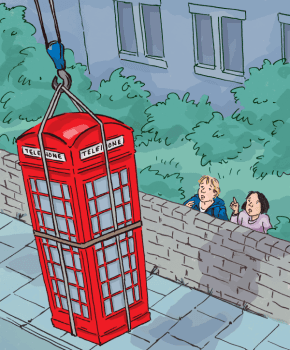
A Nose for Trouble
An immersive audiobook to enrich your students’ listening comprehension.
Take your students on a thrilling psychological thriller where appearances are deceiving. "A Nose for Trouble" blends genealogical investigation, history (the Titanic), and identity theft in the subdued atmosphere of the British aristocracy. This 32:58 audiobook, rich in plot twists, is ideal for students who wish to sharpen their listening and critical thinking skills when faced with a multifaceted plot.
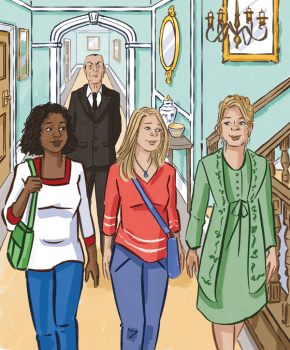
Teaching guide
Objective & Plot Summary
Objective: To lead students to follow and comprehend a complex audio plot, identifying key characters, their hidden motivations, and the different levels of the plot (past/present).
Summary: A young American tourist, Jessica, discovers she is the spitting image of a portrait in a Welsh manor. What begins as simple curiosity plunges her into a dark family secret linked to the Titanic, revealing an identity theft, a double murder, and the fact that her own grandmother is the true heiress of the estate.
Suggested Lesson Flow
1. Before Listening (~10 min): SETTING UP THE MYSTERY
-
Brainstorming: Discuss keywords:
stately home,aristocracy,heir,impostor,proof. -
Anticipation: Present the character map (page 2) and ask students to guess their roles (Who is the hero? The villain?).
2. During Listening (~40 min): FOLLOWING THE INVESTIGATION
-
Segmented listening in 3 acts to manage length and complexity:
-
Act 1 (The Mystery): Listen until the discovery of the portrait and the meeting with Angela. Pause: "What is the connection between Jessica and the portrait?".
-
Act 2 (The Investigation): Listen until the disappearance of the letter and the photo. Pause: "Who are the suspects? What are they trying to hide?".
-
Act 3 (The Resolution): Listen to the rest for the outcome and the final twist.
-
3. After Listening (~15-20 min): UNRAVELING THE PLOT
-
Discussion: "Who was the real villain: Diana or Bernard? Why? What was the biggest surprise?".
-
Synthesis Task: In groups, create a diagram or a
Possible adaptations
- Lower levels: Offer segmented listening and additional visual aids.
- Advanced levels: Encourage an oral summary and a debate in English on the theme.
- Large groups: Organise group work with differentiated roles.
🔒 Restricted content
This resource requires a subscription to be viewed.
Unlock the resourceIncluded in the subscription