Migration
Interactive exercises to consolidate your students’ learning.
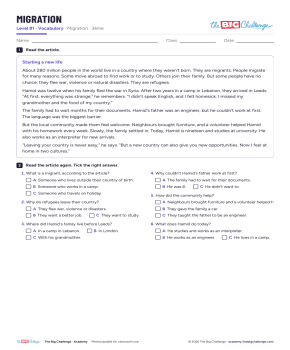
Why people move to another country, and what it is like to start a new life there: in "Starting a new life", Hamid tells how his family left Syria and settled in Leeds. Pupils work through the words of migration, from meanings and word forms to collocations, and end on a mystery word built from seven clues; answer key included.
Documents to download (2)
- Colour version In your teacher account
- Black and white version In your teacher account
Teaching guide
Objective & content
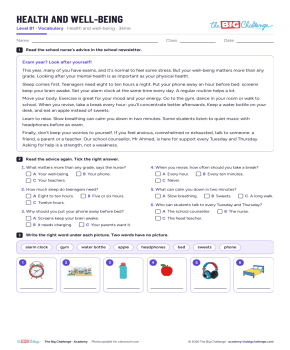
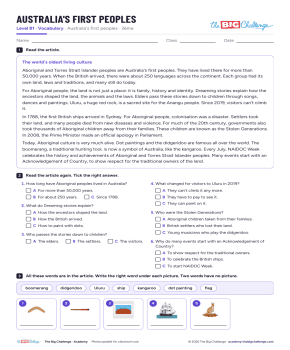
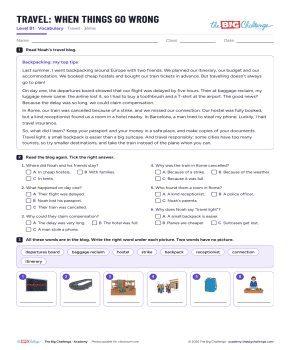
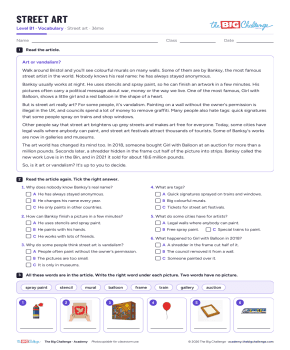
This sheet on migration opens on a magazine article, "Starting a new life". About 280 million people live in a country where they were not born: some move abroad to work, study or join their family, and some flee war, violence or natural disasters as refugees. The article then follows Hamid, whose family left Syria when he was twelve, spent two years in a camp in Lebanon and arrived in Leeds, where neighbours and a volunteer helped them settle in; today he studies at university and works as an interpreter. It carries all the target words in context, from migrants, abroad and flee to homesick, barrier, community and opportunities. By the end, pupils understand and use the words to talk about why people migrate and what it is like to start a new life in another country.
Pedagogical guide
The vocabulary work comes out of the article, never from a list. Page 1 checks understanding with six multiple-choice questions. Page 2 matches eight words with their meanings (a refugee, homesick, to settle in, an interpreter) and uses ten words from a box of twelve in new sentences; two words are extra. Page 3 turns verbs into person nouns with -ant (migrate, migrant), with a worked example and five items, matches six collocations (start a new life, wait for your documents, make someone feel welcome) and ends on a mystery word: seven clues from the article give seven words, and the boxes spell WELCOME. Every task tests words, never grammar. The article holds the hardship and the welcome together; keep the talk calm and on the facts of Hamid's story. Some pupils may have their own migration story: let them share it only if they want to.
Suggested procedure
- (5 min) Ask pupils why people might move to another country; write the reasons they give on the board.
- (10 min) Pupils read the article and answer the six questions.
- (15 min) Page 2: match the meanings, then complete the ten sentences.
- (15 min) Page 3: person nouns with -ant, the collocations, then the mystery word.
- (10 min) Correct with the answer key on page 4; pupils read the mystery word clues aloud with their answers.
Adaptations
[S] Read the article aloud together first; do the first two meanings on page 2 together.
[A] After the collocations, pupils write four sentences on how a school can welcome a new pupil from abroad.
Materials & prerequisites
One copy per pupil of the three pupil pages, in colour or black and white. Page 4 is the answer key with teacher notes: keep it. Pupils should know the past simple, the present perfect, had to and couldn't, and relative clauses. To take it further, pupils interview someone who came to live here from another country, if that person agrees, and report back in English.
Possible adaptations
- Lower levels: Offer segmented listening and additional visual aids.
- Advanced levels: Encourage an oral summary and a debate in English on the theme.
- Large groups: Organise group work with differentiated roles.
🔒 Restricted content
This resource requires a subscription to be viewed.
Unlock the resourceIncluded in the subscription