En bref
Niveau de classe :3ème
Type :Livres audio
Axes culturels :Personnes et personnages, Vie quotidienne, Pays et Paysages, Imagination & Légendes
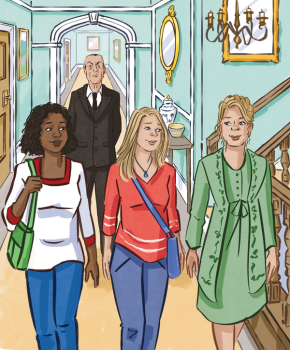
Embarquez vos élèves dans un thriller psychologique haletant où les apparences sont trompeuses. "A Nose for Trouble" mêle enquête généalogique, histoire (le Titanic) et usurpation d'identité dans l'atmosphère feutrée de l'aristocratie britannique. Cet audiobook de 32:58, riche en rebondissements, est idéal pour des élèves qui souhaitent affûter leur écoute et leur esprit critique face à une intrigue à multiples facettes.
Niveau de classe :3ème
Type :Livres audio
Axes culturels :Personnes et personnages, Vie quotidienne, Pays et Paysages, Imagination & Légendes
Offre spéciale pour les inscriptions anticipées. Débloquez cette ressource en inscrivant dès maintenant vos élèves au concours et profitez de nos avantages exclusifs !
Objectif & Résumé de l'Intrigue
Objectif : Amener les élèves à suivre et comprendre une intrigue audio complexe, en identifiant les personnages clés, leurs motivations cachées et les différents niveaux de l'intrigue (passé/présent).
Résumé : Une jeune touriste américaine, Jessica, découvre qu'elle ressemble trait for trait à un portrait dans un manoir gallois. Ce qui commence comme une simple curiosité la plonge au cœur d'un sombre secret de famille lié au Titanic, révélant une usurpation d'identité, un double meurtre, et le fait que sa propre grand-mère est la véritable héritière des lieux.
Déroulé Suggéré
1. Avant l'écoute (~10 min) : METTRE EN PLACE LE MYSTÈRE
Brainstorming : Discuter des mots-clés : stately home (manoir), aristocracy, heir (héritier), impostor (usurpateur), proof (preuve).
Anticipation : Présenter la carte des personnages (page 2) et demander aux élèves de deviner leurs rôles (Who is the hero? The villain?).
2. Pendant l'écoute (~40 min) : SUIVRE L'ENQUÊTE
Écoute fragmentée en 3 actes pour gérer la longueur et la complexité :
Acte 1 (Le mystère) : Écouter jusqu'à la découverte du portrait et la rencontre avec Angela. Pause : "What is the connection between Jessica and the portrait?".
Acte 2 (L'enquête) : Écouter jusqu'à la disparition de la lettre et de la photo. Pause : "Who are the suspects? What are they trying to hide?".
Acte 3 (La résolution) : Écouter le reste pour le dénouement et le twist final.
3. Après l'écoute (~15-20 min) : DÉNOUER L'INTRIGUE
Discussion : "Who was the real villain: Diana or Bernard? Why? What was the biggest surprise?".
Tâche de synthèse : En groupes, créer un schéma ou une frise chronologique qui retrace la machination de Diana (rencontre avec Angela, chirurgie, meurtre de la mère, etc.).
Adaptations
Pour simplifier : Fournir une fiche "Who's who?" à compléter pendant l'écoute (Qui est Diana ? Qui est Grace ?). Révéler les rebondissements un par un avec l'enseignant.
Pour approfondir : Organiser un mini-procès où les élèves jouent les rôles des avocats de la défense (pour Bernard) et de l'accusation (pour Diana), en utilisant des éléments de l'histoire comme preuves.
6 o’clock sharp 6 o’clock exactly
actually (adv.) in fact
amazing (adj.) very surprising
arrow (n.) a thin stick with a sharp point, cf. Robin Hood
batter (n.) a mixture of flour, egg and milk or water.
be in the way to block the way
blame (v.) to hold responsible
butler (n.) The butler is a domestic servant who is in charge of all the other servants.
clear (v.) When you clear a table, you remove the dirty plates and glasses.
conservatory (n.) a large room with a glass roof and walls, attached to a house and used for plants
corridor (n.) a passage between rooms
crack (n.) a small opening
curse (n.) to call on a supernatural power to punish someone
down-to-earth (adj.) very practical, with your feet on the ground
drown (v.) to die in water
duty (n.) Your duty is something you think you are obliged to do.
earl (n.) a member of the British aristocracy, the equivalent of a count
engaged (adj.) If you are engaged, you have a fiancé[e], and you’re going to get married.
expat (n.) a person who lives and works in a foreign country
extra (adj., adv.) more
feel sorry for (v.) to feel pity for
finishing school (n.) a private school where girls are prepared for life in ‘high society’
frown (v.) When you frown, you are worried or doubtful and your eyebrows come together.
gasp (v.) You gasp when you are so surprised that you can’t say anything.
hold someone tight to hold someone very firmly and stop them moving.
housekeeper (n.) A housekeeper ‘keeps house’ for someone, i.e. he/she makes sure everything is clean, well-organised, etc.
illegible (adj.) impossible to read
invaluable (adj.) essential, of very high value
jet lag (n.) tiredness after a long flight that has crossed several time zones
lane (n.) a narrow country road
laundry (n.) a place where they wash dirty clothes, etc.
look forward to (v.) to be impatient for something to happen
luggage (n. sing. inv.) bags, suitcases
maiden voyage (n.) the very first voyage of a ship
odd (adj.) strange on the house You don’t have to pay.
overhear (v.) to hear a conversation when the people who are talking don’t know you are listening
pack (v.) to put things in a suitcase or a bag
plastic surgeon (n.) a doctor who changes people’s faces, noses, etc. and sometimes makes them look younger
plump (adj.) rather fat
pose (v.) to stand in a certain position for a photo or a portrait, for example
priceless (adj.) so valuable that it has no price
proud (adj.) very satisfied with yourself
prove (v.), proof (n.) You prove your identity to someone when you show your identity papers – they are proof of your identity.
purse (n.) You carry a purse or a wallet to put your money in.
recipe (n.) the list of ingredients and the method for cooking something
rent (v.) to pay to use something for a short time
rural (adj.) the opposite of urban, i.e. not in or very close to a town
save (v.) keep safely (especially for computers)
scary (adj.) frightening
scream (v.) to shout loudly when you are very frightened or very excited
search (v.) to look for set the table to put the knives, forks, spoons, plates, glasses, etc. on the table
shadow (n.) a dark area where there is no light because something is blocking the sun, the moon, etc.
sight (n.) the ability to see
sinister (adj.) A person looks sinister when he/she looks frightening and you think he/she might harm you.
sink (sunk, sunk) (v.) When a ship sinks, it goes to the bottom of
tear (tore, torn) (v.) If something is torn, there is a piece missing or it is damaged.
tip (n.) the top, the end or the edge of something
trace (n.) If there is no trace of someone it means nothing is left to show that the person was here or to show where he or she has gone.
train (v.) to learn a job
treasure (n.) something that is very valuable
trouble (n.) difficulty, problems
ugly (adj.) the opposite of beautiful
upset (adj.) worried, unhappy
upset (v.) to worry someone or make someone unhappy
vulture (n.) a large bird that feeds on dead animals
wealth (n.); wealthy (adj.) riches; rich
weird (adj.) strange
wonder (v.) to ask yourself, to be curious to know
yawn (v.) When you are tired, you often open your mouth wide and yawn.
Please wait...