En bref
Niveau de classe :5ème
Type :Livres audio
Axes culturels :Personnes et personnages, Vie quotidienne, Pays et Paysages, Imagination & Légendes
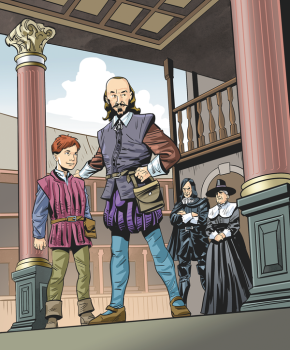
Transportez vos élèves dans le Londres bouillonnant de Shakespeare avec ce polar historique captivant ! "Shakespeare and the Shoemaker" est une histoire audio qui mêle aventure, mystère et culture. Les élèves suivront Edmund, un jeune héros intelligent qui utilise son talent unique pour résoudre une enquête. C'est une excellente ressource pour travailler la compréhension de l'oral sur une intrigue à suspense, tout en découvrant l'univers du plus grand dramaturge anglais.
Niveau de classe :5ème
Type :Livres audio
Axes culturels :Personnes et personnages, Vie quotidienne, Pays et Paysages, Imagination & Légendes
Pour télécharger ce matériel, vous devez être connecté avec un compte enseignant inscrit au jeu-concours The Big Challenge.
Objectif & Résumé de l'Intrigue
Objectif : Amener les élèves à suivre une enquête en anglais, à identifier des suspects à partir d'indices sonores et à comprendre la résolution d'un mystère.
Résumé : Dans le Londres du 16ème siècle, un jeune apprenti cordonnier à la mémoire photographique rencontre son héros, William Shakespeare. Quand la fin de Roméo et Juliette est détruite dans un incendie suspect, Edmund utilise sa ruse et son talent pour piéger le coupable parmi trois suspects et sauver la pièce.
Déroulé Suggéré
1. Avant l'écoute (~10 min) : PLONGER DANS LE LONDRES DU 16ÈME SIÈCLE
Anticipation : Montrer l'illustration des personnages et de la carte (page 3). Qui est Shakespeare ? Où se passe l'action ?
Vocabulaire : Introduire les mots de l'enquête : fire, suspect, guilty (coupable), trap (piège).
2. Pendant l'écoute (~25 min) : SUIVRE LA PISTE
Écoute fragmentée en 3 temps :
Partie 1 (Les suspects) : Écouter jusqu'à la fin des visites de Greenaway, Benson et Hardcastle. Pause : "Who is angry at Shakespeare? Why?".
Partie 2 (Le crime) : Écouter jusqu'à la découverte de l'incendie criminel. Pause : "What happened? Who are the three suspects?".
Partie 3 (La résolution) : Écouter le plan d'Edmund et le dénouement.
3. Après l'écoute (~15 min) : RÉSOUDRE L'ENQUÊTE
Discussion : "Who was the guilty person? Why did he do it? Was Edmund's plan clever?".
Tâche simple : Former 3 groupes, un pour chaque suspect. Chaque groupe prépare une phrase pour clamer son innocence ou accuser un autre. Exemple : "I am Dame Hardcastle. I am not guilty. I think the actor did it!".
Adaptations
Pour simplifier : Au tableau, créer une fiche "Suspects". Après avoir écouté la présentation de chaque suspect, faire une pause et noter leur nom et la raison de leur colère (le mobile).
Pour approfondir : Demander aux élèves d'imaginer être Shakespeare. Ils écrivent une courte note dans leur journal pour raconter l'incendie et leur rencontre avec le "remarquable" Edmund.
Please wait...