Adventure in Loch Ness
An immersive audiobook to enrich your students’ listening comprehension.
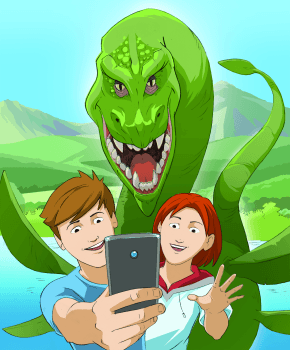
Embark on a thrilling adventure in the heart of Scotland and its most famous legend! "Adventure in Loch Ness" is a fun and easy-to-understand audio story, ideal for young beginners. Students will follow two clever children who use the legend of the Loch Ness Monster to thwart the plan of dishonest visitors. It is a perfect resource for a first approach to aural comprehension through a narrative that blends mystery, humor, and Scottish culture.
Teaching guide
Objective & Plot Summary
Objective: To initiate students into the comprehension of a short story in English, by identifying the characters (good/bad) and the main stages of a plan.
Summary: While on holiday at Loch Ness, two children discover that dishonest tourists want to ruin the local shopkeepers. To drive them away, they decide to use their own weapon: the legend of the monster! With the help of a friend, they stage a nighttime scene to frighten away the unwanted visitors.
Suggested Lesson Flow
1. Before Listening (~5 min): TRIP TO SCOTLAND
-
Anticipation: Show the map of Scotland (page 3). "Where is Loch Ness? What is the monster's name?".
-
Vocabulary: Introduce keywords with images:
loch(lake),monster,guest house,shop.
2. During Listening (~20 min): THE LOCH NESS ADVENTURE
-
Segmented listening in 3 parts:
-
Part 1 (The Problem): Listen until the children overhear the Ropers' conversation.
Pause: "Who are the 'bad guys'? What is their bad plan?".
-
Part 2 (The Idea): Listen to the spider scene.
-
Part 3 (The Plan): Listen to the final scene with the monster staging and the Ropers' departure.
-
3. After Listening (~10 min): MISSION ACCOMPLISHED!
-
Discussion: "Was the children's plan good? Funny? Scary? Are the Ropers coming back?".
-
Simple Task: Ask students to draw either Jock's "fake" monster ("Big Nessie"), or the "real" monster that Sophie sees at the end. They write a word below it: "Big Nessie" or "The real monster".
Adaptations
-
To Simplify: Create two columns on the board: "Good characters" (Adam, Sophie, Mrs Mackintosh...) and "Bad characters" (Mr & Mrs Roper). Students help to classify the characters as they appear in the story.
-
To Extend: In small groups, students imagine and mime Mrs Roper's reaction when she sees the monster at her window.
Possible adaptations
- Lower levels: Offer segmented listening and additional visual aids.
- Advanced levels: Encourage an oral summary and a debate in English on the theme.
- Large groups: Organise group work with differentiated roles.
🔒 Restricted content
This resource requires a subscription to be viewed.
Unlock the resourceIncluded in the subscription