Explorers, Convicts, and Colonies
Episode of the series Australia
- Illustrated slideshow
- Comprehension quiz (45 questions)
- Cultural notes
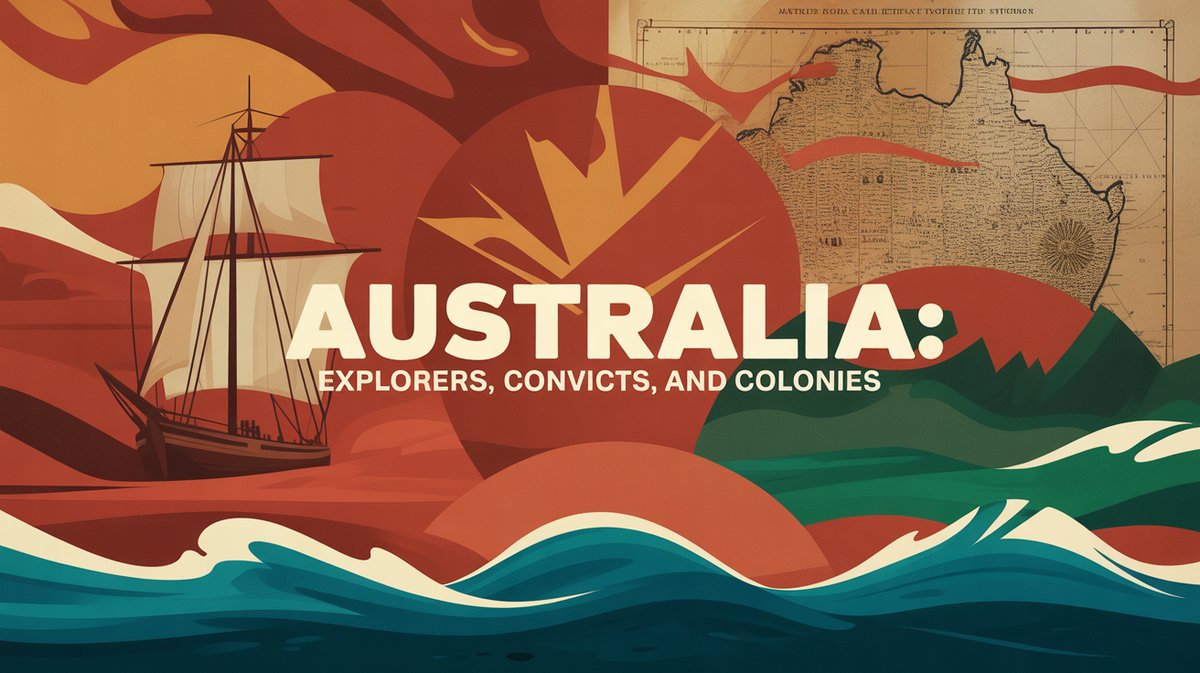

 Extract · 30 s
The episode
Step aboard the ships that first brought new explorers and settlers to Australia. Discover how they landed, built the first colonies, and began life in a vast, new land full of challenges and surprises.
Episode worksheets (2)
- Student sheet In your teacher account
- Teacher sheet In your teacher account
Teaching guide
Objective & content
This A1- documentary covers the British arrival in Australia, told by a single narrator. It follows Captain James Cook and HMS Endeavour in 1770, Captain Arthur Phillip and the First Fleet in 1788, and the move from Botany Bay to Sydney Cove. It also explains what a convict is and mentions Matthew Flinders' maps and the later towns of Melbourne and Perth. The script notes the effect on Aboriginal peoples, including the sickness that came with the settlers. The language focus is the simple past, with "was/were" and regular past verbs, and dates and place names. The main skill is listening comprehension, followed by the in-app quiz. The script defines a key word: "A convict is a person who did something wrong and went to prison."
Materials & prerequisites
- Student sheet and teacher sheet (PDF and HTML versions in `printables/`), plus the sheet source `printable.md`.
- Learners should know the verb "be" and present simple statements. They also need numbers for years and dates.
Curriculum alignment
The episode is tagged `c3-child-and-wider-environment`: cycle 3 (6e). It targets CEFR level A1-.
Possible adaptations
- Lower levels: Offer segmented listening and additional visual aids.
- Advanced levels: Encourage an oral summary and a debate in English on the theme.
- Large groups: Organise group work with differentiated roles.
🔒 Restricted content
This resource requires a subscription to be viewed.
Unlock the resourceIncluded in the subscriptionTags
- Past simple: was / were
- Past simple: regular verbs
- Present simple
- Articles: a / an / the
- Prepositions of place and time
- Countries
- Commonwealth history
- Immigration
- Town & village
- Famous explorers
- Commonwealth
- Child and wider environment
- Listening comprehension
- Vocabulary building
- Cultural awareness
- Past simple: irregular verbs
- Exploring Australia
- World cultures
- Modern history
- Places & Journeys
- Past & Progress