The last line
Interactive exercises to consolidate your students’ learning.
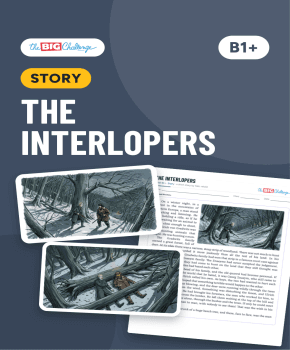
Writing a story towards a given last line, seen through Lucas's competition story about a sat nav that sends his family into a field of cows on the way to a wedding: setting up, building the tension, a twist and a last line that lands. Pupils answer questions on the story, read the useful phrases, match words from the text to their meanings, complete sentences with the past perfect, should have and the third conditional, then write a story towards one of four last lines and tick a checklist; model story and answer key included.
Documents to download (2)
- Worksheet In your teacher account
- Worksheet (black and white) In your teacher account
Teaching guide
Objective & content
This writing sheet teaches pupils to write a story towards a given last line (It was supposed to be...; the past perfect for what had happened before; For the first hour, everything went smoothly. Then...; narrower and narrower; By the time we realised we should have...; speech that shows character; a last line that lands). Pupils read Lucas's competition story, take its techniques and write their own. By the end, they can write a story of 200 to 250 words that builds towards its ending.
Pedagogical guide
Page 1 has Lucas's story, with a photo of curious cows. The competition gave the last line: "I have never trusted a sat nav since." On the way to a cousin's wedding, the family's sat nav sends them down a road that gets narrower and muddier until they are stuck in a field of cows. A farmer pulls them out with his tractor ("Third one this month"), and they reach the church just as the bride walks out, already married. Pupils answer six questions with three options each, read the useful phrases, set out in the order of the story (set it up, calm before the trouble, build the tension, the twist, speech that shows character, land the last line), and match five words from the text to their meanings. Page 2 starts with four sentences to complete with the past perfect, should have or the third conditional. Then pupils choose a last line from a card (a school talent show, the best mistake, a silent house, a mystery sender, each with two questions to get started), write the story and tick the checklist. The answer key gives a model story towards "It was the best mistake I've ever made." The B1- sheet "A story competition" starts from a given first line; this one works backwards from the end.
Suggested procedure
- (5 min) Write the last line on the board and ask "What happened before? Guess the story."
- (10 min) Read the story aloud; pupils answer the questions.
- (10 min) Read the useful phrases with the class; pupils do the word match and underline the past perfect.
- (5 min) Page 2: pupils complete the sentences.
- (25 min) Pupils choose a last line, plan in four steps, write the story and tick the checklist.
- (5 min) Pupils read their story with the last line hidden; the class guesses which card it was.
Adaptations
[S] Pupils answer the two questions on their card, then plan the story in four steps before writing.
[A] Pupils hide one clue early in the story that only makes sense at the end.
Materials & prerequisites
One copy of pages 1 and 2 per pupil. Page 3 is the answer key, the model story and the teacher notes: keep it. Pupils need the past perfect, should have and the third conditional. To take it further, pupils swap stories with the last line covered and guess it.
Possible adaptations
- Lower levels: Offer segmented listening and additional visual aids.
- Advanced levels: Encourage an oral summary and a debate in English on the theme.
- Large groups: Organise group work with differentiated roles.
🔒 Restricted content
This resource requires a subscription to be viewed.
Unlock the resourceIncluded in the subscription