


W skrócie
Poziom klasy :Level 1, Level 2
Typ :Muzyka
Kultura i cywilizacja :Kraje i Krajobrazy, Legendy i wyobrażenia
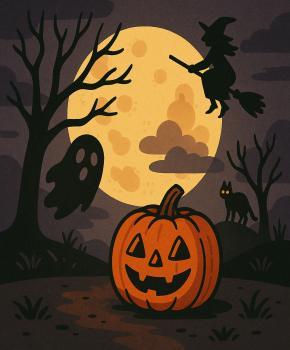
Where does Halloween really come from? This song is much more than just a scary tune: it's a journey through time that explores the roots and traditions of this fascinating celebration. From the ancient Celts to American children, and including Irish bonfires, your students will discover the history behind the pumpkins and ghosts. It is a rich and captivating cultural resource, ideal for a thematic lesson that blends history, civilization, and aural comprehension.
Poziom klasy :Level 1, Level 2
Typ :Muzyka
Kultura i cywilizacja :Kraje i Krajobrazy, Legendy i wyobrażenia
Wykorzystaj muzykę w klasie! Pobierz pełną ścieżkę audio, idealną do nauki słownictwa, rytmu i kultury krajów anglojęzycznych.
To materiały premium, które są częścią The Big Challenge Academy. Wykup roczny abonament, aby uzyskać nieograniczony dostęp do setek zasobów premium.
Resource Objective & Content
The objective is to understand the historical origins and different cultural traditions of Halloween, while reinforcing specific vocabulary related to this holiday.
The song "Trick or treat! It's Halloween" explains the history of the holiday in three parts. It begins with its Celtic origins ("Celtic people"), explaining that October 31st marks the end of summer and the time when ghosts come back ("Ghosts come back"), hence the tradition of wearing masks. Then, the song describes modern American customs: children dress up ("children dress up") and go from house to house asking for candy ("Candy please"). It also mentions typical decorations (ghosts, spiders) and the colors orange and black. Finally, it evokes Irish traditions like bonfires ("bonfires burn") and apple bobbing. The chorus summarizes Halloween imagery: "Black cats jump and witches fly".
Suggested Activity Flow
Before the Activity (~5 min): HALLOWEEN BRAINSTORM
Write "HALLOWEEN" on the board and ask students to list all the words they associate with this holiday. This helps activate their vocabulary.
During the Activity (~15-20 min): THE SONG OF TRADITIONS
First Listening: Provide a worksheet with three columns: "Celtic Origins", "American Traditions", "Irish Traditions". Students listen and note down the words or ideas they understand in the correct column.
Second Listening: Distribute the lyrics with key vocabulary words missing (e.g., "The ______ people", "People wear ______", "Children ask for ______"). Students listen again to fill in the blanks.
Correction: Correct the worksheet as a large group, discussing the meaning of the different traditions mentioned.
After the Activity (~10 min): MATCHING TRADITIONS
On the board, list the traditions (e.g., "Wearing masks", "Asking for candy", "Lighting bonfires") and their reasons/origins (e.g., "To hide from ghosts", "A modern American custom", "An old Irish custom").
Students must connect the traditions to their origins based on the information from the song.
Adaptations
To simplify: Use a worksheet with images (a Celt, an American child trick-or-treating, an Irish bonfire). Students must number the images in the order they are mentioned in the song.
To extend: Ask students to do a short research to compare Halloween traditions with a similar holiday in their own culture (e.g., All Saints' Day, Carnival, etc.) and present their findings to the class.
Please wait...