Plot deck
A teaching resource designed to energise your English lessons.
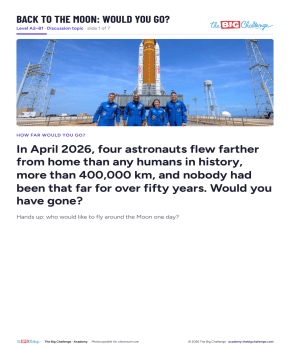
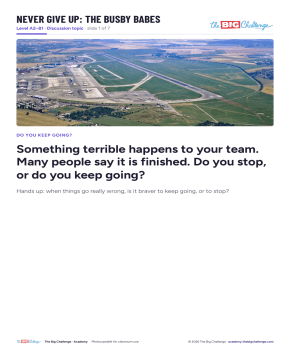
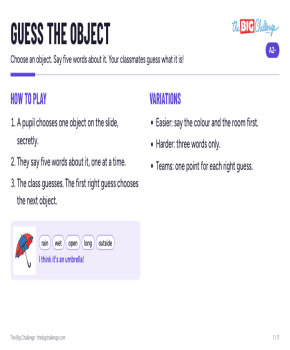
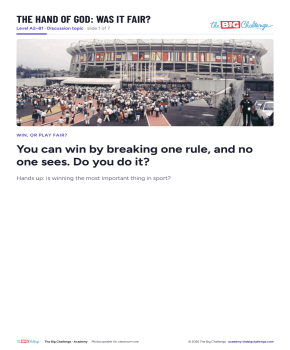
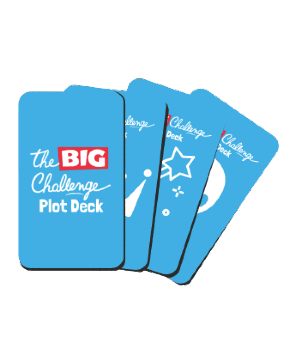
The Plot Deck is a simple and incredibly effective card game for loosening tongues and stimulating your students' imagination. Forget the fear of the blank page! Thanks to inspiring illustrations, students collaboratively build stories that are funny, epic, or completely wild. It's the perfect tool for a dynamic, collaborative, and fun oral production session where every student, regardless of their level, can contribute to the narrative structure.
Documents to download (2)
- Colour version In your teacher account
- Black and white version In your teacher account
Teaching guide
Objective & Principle of the Activity
The main objective is to lead students to collaborate in orally building a coherent and creative narrative in English, using visual prompts.
This is a story creation game based on illustrated cards. The activity does not follow a predefined script but provides the elements to build one. The cards represent various elements (objects, places, concepts) that serve as triggers for the narration. Students are distributed the cards. A first student begins telling the story based on one of their cards, then their classmates continue in turn, integrating the elements from their own cards. The story thus unfolds organically and often surprisingly, shaped by the collective imagination of the group.
Suggested Lesson Flow
Before the Activity (~5 min): PREPARATION
-
Form small groups (3-5 students) to encourage participation from everyone.
-
On the board, review vocabulary useful for narration, as well as logical connectors and the past tense.
During the Activity (~15-25 min): COLLABORATIVE CREATION
-
Distribute an equal number of cards to each student in the group.
-
Explain the rule: one student starts the story by using one of their cards to introduce an element, then the next player continues by integrating one of their cards, and so on.
-
Circulate among the groups as a facilitator to help with vocabulary if needed, but without steering the narration. Encourage students to use complete sentences and follow up on the previous classmate's contribution.
After the Activity (~10-15 min): SHARING
-
Ask a spokesperson from each group to summarize the story they created for the class.
-
Organize a vote for the funniest or most original story. Give brief feedback on well-used grammatical structures and vocabulary.
Adaptations
-
To Simplify: Do a collective brainstorming session on a few cards to provide examples of possible sentences. Students can prepare one or two sentences in writing before speaking.
-
To Extend: Suggest a variation where students only reveal their card when it is their turn to speak to maximize improvisation. Constraints can also be imposed: a literary genre, a specific verb tense to use, or a minimum number of sentences per turn.
Possible adaptations
- Lower levels: Offer segmented listening and additional visual aids.
- Advanced levels: Encourage an oral summary and a debate in English on the theme.
- Large groups: Organise group work with differentiated roles.
🔒 Restricted content
This resource requires a subscription to be viewed.
Unlock the resourceIncluded in the subscription