Yummy or Yucky?
Interactive exercises to consolidate your students’ learning.
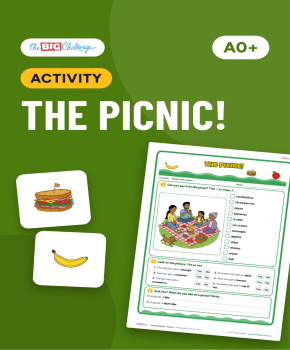
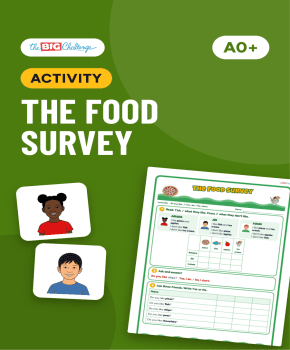
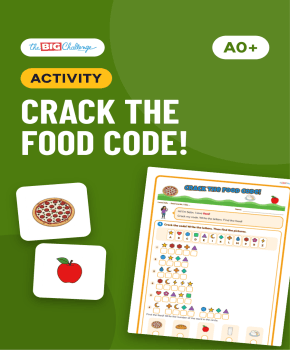
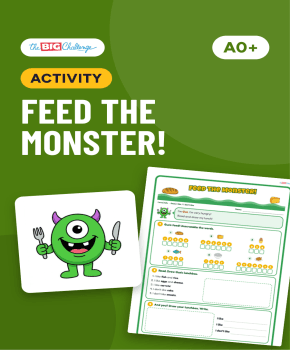
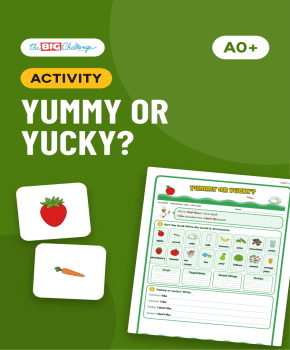
Pupils sort sixteen food words (apple, carrot, cake, milk ...) into four baskets: fruit, vegetables, sweet things and drinks. Then Chef Rosa shows them how to say what they like: pupils write two foods they like, such as I like strawberries., and two they don't like, such as I don't like peas., and read them to a partner. Answer key included.
Documents to download (2)
- Colour version In your teacher account
- Black and white version In your teacher account
Teaching guide
Objective & content
This activity sheet is about food words and saying what you like. Pupils sort sixteen food words into four baskets, with Chef Rosa as their guide, then write two foods they like and two they don't. By the end, pupils say I like strawberries. I don't like peas.
Pedagogical guide
Task 1 gives sixteen pictures with their words: pupils write each word in the right basket (Fruit, Vegetables, Sweet things or Drinks). Every word fits in exactly one basket. In task 2 pupils complete four starters, Yummy! I like ... twice and Yucky! I don't like ... twice, then read them to a partner. Chef Rosa gives the two patterns as a fixed formula (I like strawberries. I don't like peas!). Page 2 gives the answer key and the teacher notes.
Suggested procedure
- (5 min) Hold up (or draw) an apple and a carrot and ask "Is it fruit? Is it a vegetable?".
- (10 min) Task 1: pupils read the sixteen words and write each one in its basket; check with the answer key.
- (10 min) Task 2: pupils write two foods they like and two they don't like, then read them to a partner.
Adaptations
[S] Sort the first word of each basket together.
[A] Pupils add one more word to each basket.
Materials & prerequisites
One copy per pupil of page 1, in colour or black and white. Pupils need a pencil. Page 2 is the answer key with teacher notes: keep it. The sheet gives all sixteen words with pictures, so pupils need no food words beforehand; they meet I like and I don't like here.
Possible adaptations
- Lower levels: Offer segmented listening and additional visual aids.
- Advanced levels: Encourage an oral summary and a debate in English on the theme.
- Large groups: Organise group work with differentiated roles.
🔒 Restricted content
This resource requires a subscription to be viewed.
Unlock the resourceIncluded in the subscription