Feed the Monster!
Interactive exercises to consolidate your students’ learning.
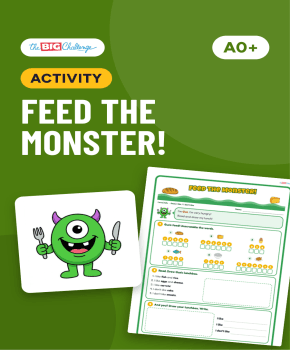
Pupils unscramble six food words (bread, cheese, egg, fish, rice, chicken) with the pictures, then read what Gus the monster likes, such as I like fish and rice., and draw his lunchbox with only the food he likes. Then they draw their own lunchbox and write what they like and don't like. Answer key included.
Teaching guide
Objective & content
This activity sheet is about meal words and saying what you like. Pupils unscramble six food words, read what Gus the monster likes and draw his lunchbox, then draw and write about their own. By the end, pupils say I like fish and rice. I don't like cake.
Pedagogical guide
In task 1 pupils unscramble six food words (bread, cheese, egg, fish, rice, chicken), each with its picture. In task 2 they read five lines by Gus, such as I like fish and rice. and I don't like cake., and draw his lunchbox with only the food he likes (fish, rice, eggs, cheese and carrots): the lines with I don't like tell them what to leave out. In task 3 pupils draw their own lunchbox and complete three starters, I like ... twice and I don't like ... once. The patterns are given as a fixed formula, with a model in Gus's own words. Page 2 gives the answer key and the teacher notes.
Suggested procedure
- (5 min) Ask "What's in your lunchbox?" and let pupils answer in their own words or with a drawing on the board.
- (7 min) Task 1: pupils unscramble the six words with the pictures; check with the answer key.
- (7 min) Task 2: pupils read Gus's five lines and draw his lunchbox, with only the food he likes.
- (6 min) Task 3: pupils draw their own lunchbox and write three lines, then show it to a partner.
Adaptations
[S] Read Gus's lines aloud together and mime yummy / yucky.
[A] Pupils write two more lines for Gus.
Materials & prerequisites
One copy per pupil of page 1, in colour or black and white. Pupils need a pencil, and a rubber for the unscrambling; colouring pencils are optional. Page 2 is the answer key with teacher notes: keep it. The sheet gives the six words with pictures, so pupils need no food words beforehand.
Possible adaptations
- Lower levels: Offer segmented listening and additional visual aids.
- Advanced levels: Encourage an oral summary and a debate in English on the theme.
- Large groups: Organise group work with differentiated roles.