Where's the Cat?
Interactive exercises to consolidate your students’ learning.
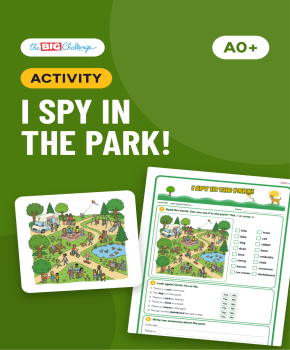
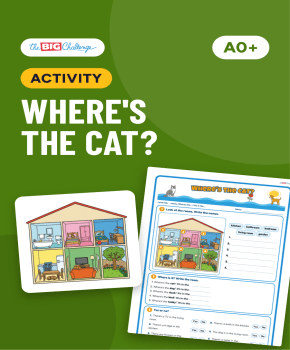
Pupils look at a picture of a house with six numbered rooms and write the name of each room. Then they find a cat, a dog, a duck, a bird and a teddy and answer "Where's the ...?" with "It's in the ...", and circle Yes or No for six sentences about the house. Answer key included.
Documents to download (2)
- Colour version In your teacher account
- Black and white version In your teacher account
Teaching guide
Objective & content
This activity sheet is about the house. A big picture shows a house cut open, with six numbered rooms: a bathroom, two bedrooms, a kitchen, a living room and a garden. There are no people, but there are animals and toys to find: a cat asleep on the sofa, a dog under the kitchen table, a toy duck in the bath, a bird in the tree and a teddy on a bed. Pupils name the rooms, say where things are and check sentences about the house. By the end, pupils name five rooms and ask and answer Where's the cat? It's in the living room.
Pedagogical guide
Everything on the sheet points back to the picture, so pupils check each answer with their eyes. Task 1 gives a word box (kitchen, bathroom, bedroom, living room, garden) and six lines: pupils write the name of each numbered room. Two rooms are bedrooms, so bedroom is written twice: tell pupils before they start. Task 2 asks five questions ("Where's the cat?") and pupils complete "It's in the ..." with the room: the cat is in the living room, the dog in the kitchen, the duck in the bathroom, the bird in the garden and the teddy in a bedroom. Task 3 gives six sentences with There's and There are ("There's a fridge in the kitchen.") and pupils circle Yes or No; three are true and three are not, and one goes back to Task 2 ("The dog is in the living room.": no, it is in the kitchen). The sheet uses only in. Page 2 gives the answer key and the teacher notes.
Suggested procedure
- (5 min) Draw a house on the board and name the rooms with the class.
- (10 min) Task 1: pupils write the name of each numbered room; check together.
- (10 min) Task 2: pupils find each animal or toy and write the room.
- (5 min) Task 3: pupils read the six sentences and circle Yes or No.
- (5 min) In pairs, pupils tell a partner about their own bedroom: "In my bedroom there's a bed."
Adaptations
[S] Point to each room and say its name together first.
[A] Pupils hide a toy in a room of their own drawing and their partner asks: "Is it in the kitchen?"
Materials & prerequisites
One copy per pupil of page 1, in colour if possible, so the rooms and the animals are easy to see. Pupils need only a pencil. Page 2 is the answer key with teacher notes: keep it. Pupils should know a few animal words (cat, dog, bird); the room words are in the word box.
Possible adaptations
- Lower levels: Offer segmented listening and additional visual aids.
- Advanced levels: Encourage an oral summary and a debate in English on the theme.
- Large groups: Organise group work with differentiated roles.
🔒 Restricted content
This resource requires a subscription to be viewed.
Unlock the resourceIncluded in the subscription