How Did It End, and Who Lost?
Episode of the series The American Revolution, Explained
- Illustrated slideshow (25 images)
- Glossary (26 words)
- Comprehension quiz (17 questions)
- 21 cultural notes
 Extract · 30 s
The episode
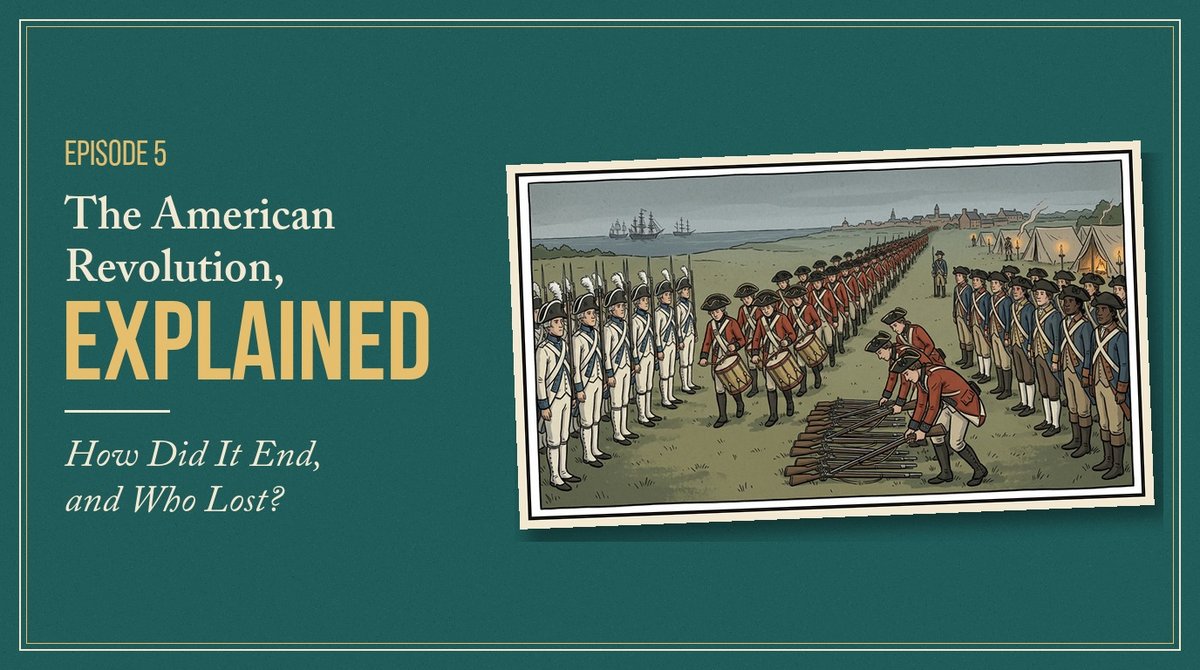
In October 1781, American and French forces trapped a British army at Yorktown, in Virginia, and a French fleet stopped any help arriving by sea. Two years later, the Treaty of Paris made Britain accept the United States as an independent country. But not everyone in America won. Tens of thousands of Loyalists, colonists who stayed with the king, left for Canada and elsewhere; Native nations, most of them allies of Britain, were not part of the treaty that gave their land to the new country; and for many enslaved people, the promise of freedom came from the British side. The two hosts tell how the war ended and look at it from London, from the new United States, and from the people the peace left out.
Episode worksheets (2)
- Student sheet In your teacher account
- Teacher sheet In your teacher account
Teaching guide
Objective & content
Two hosts, one American and one British, tell how the war ended and what the end meant for different groups of people. In 1781 a big British army was trapped at Yorktown, and in 1783 the two sides signed a peace treaty. Then the hosts follow the Loyalists, who wanted to stay part of Britain, the Native nations, and enslaved people, among them Harry Washington and James Armistead. They end with King George meeting John Adams in London. Learners practise the past simple and the grammar of explaining: so, because and but, before and after, who, which and where, reporting with was and could, comparing, and Why, Where and When questions. They listen for dates and names, then answer the quiz in the app and the one-page pupil sheet.
Pedagogical guide
The 45-minute lesson plan starts from a question: did everybody in America win? Learners guess, listen twice (once for the main groups of people, once with four pauses for questions), then practise facts, vocabulary and the grammar of explaining. The two hosts are equals who each bring their own country's view, so the class can say where a pupil's own country would put its view. The episode tells what happened and asks no one to judge anyone: keep the talk on the facts and on the hosts' own idea, "Same war, many different stories." Use the words of the episode ("enslaved people", "the Loyalists", "the Native nations") and name the real people. Most activities have a support path and a stretch path.
Suggested procedure
- Activate knowledge (3 min): write 1781 and 1783 on the board and collect answers to "Who won the American Revolution? Did everybody in America win?"
- Vocabulary preview (5 min): army, border, peace, escape, freedom, Loyalist, treaty, servant.
- First listen (8 min): play the whole episode (about 5 minutes, with the theme tune and the hosts' hello) and ask how the war ended and which groups of people the hosts talk about.
- Second listen (10 min): pause four times, after the peace treaty, after the Native nations' land, after Harry Washington's new town in Africa, and after James Armistead, to ask short questions.
- Comprehension check (5 min): the Facts part of the pupil sheet (questions 1 to 6, as in the app quiz).
- Vocabulary practice (4 min): the Vocabulary part (questions 7 to 12).
- Grammar focus (6 min): join facts with so, because, but, before and after, notice who, which and where, report with was, compare, then the Grammar part (questions 13 to 18).
- Speaking (4 min): in pairs, students play the two hosts and ask and answer questions, ending on the hosts' last exchange.
Materials & prerequisites
- The episode in the app, with its quiz.
- The one-page pupil sheet (18 items: facts, vocabulary, grammar) and its answer key, in the episode's printables.
- Helpful before the lesson: the past simple, was and were, and the connectors so, because and but.
Possible adaptations
- Lower levels: Offer segmented listening and additional visual aids.
- Advanced levels: Encourage an oral summary and a debate in English on the theme.
- Large groups: Organise group work with differentiated roles.
🔒 Restricted content
This resource requires a subscription to be viewed.
Unlock the resourceIncluded in the subscriptionTags
- Documentary
- Past simple: irregular verbs
- Past simple: regular verbs
- Past simple: was / were
- Logical connectors
- Question forms
- Relative pronouns
- Direct and indirect speech
- Historical dates
- Government
- Society & politics
- American Revolution
- History of slavery
- Encountering others
- Listening comprehension
- Cultural awareness
- Vocabulary building
- Citizenship & society
- Modern history
- Our World
- Past & Progress