Australia: Dot paintings
Odcinek serii Look Closer
- Ilustrowany pokaz slajdów (55 ilustracji)
- Słowniczek (14 słów)
- Quiz ze zrozumienia (10 pytań)
- 9 notatek kulturowych
 Fragment · 30 s
O odcinku
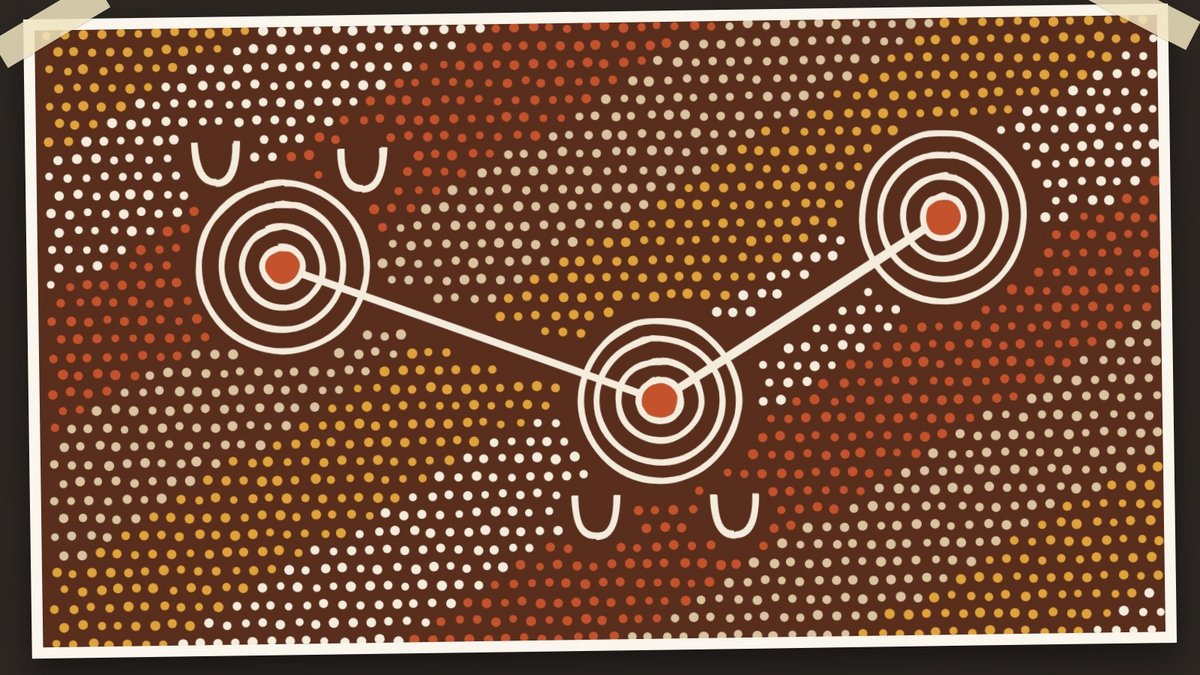
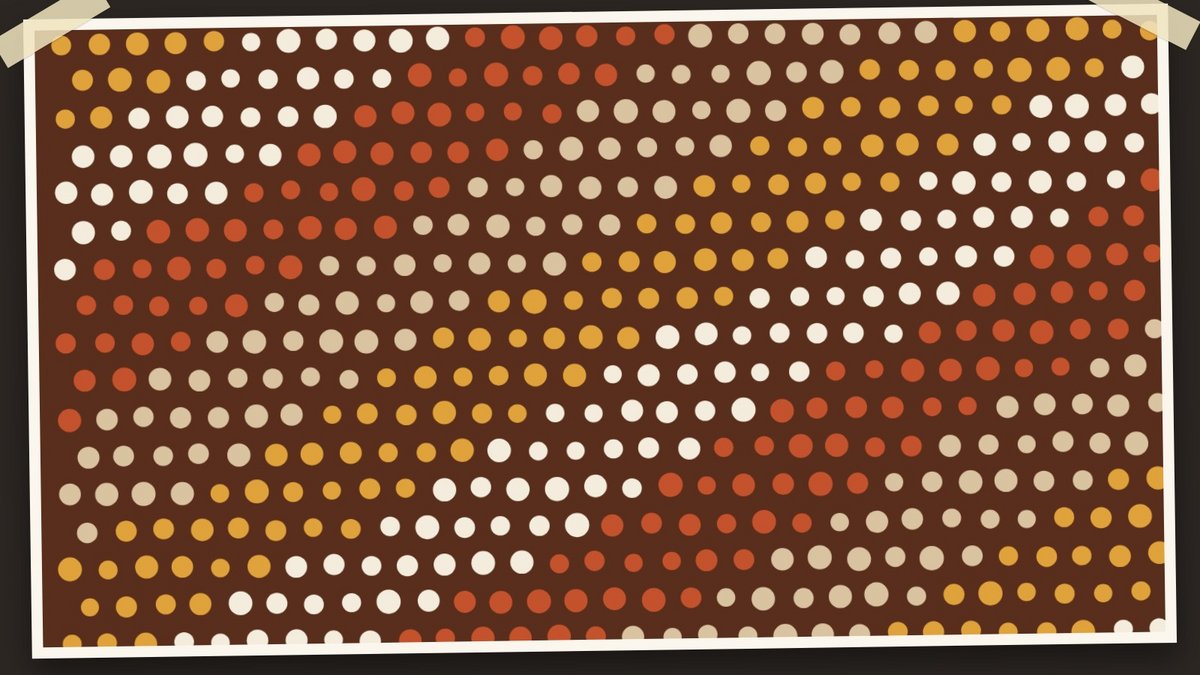
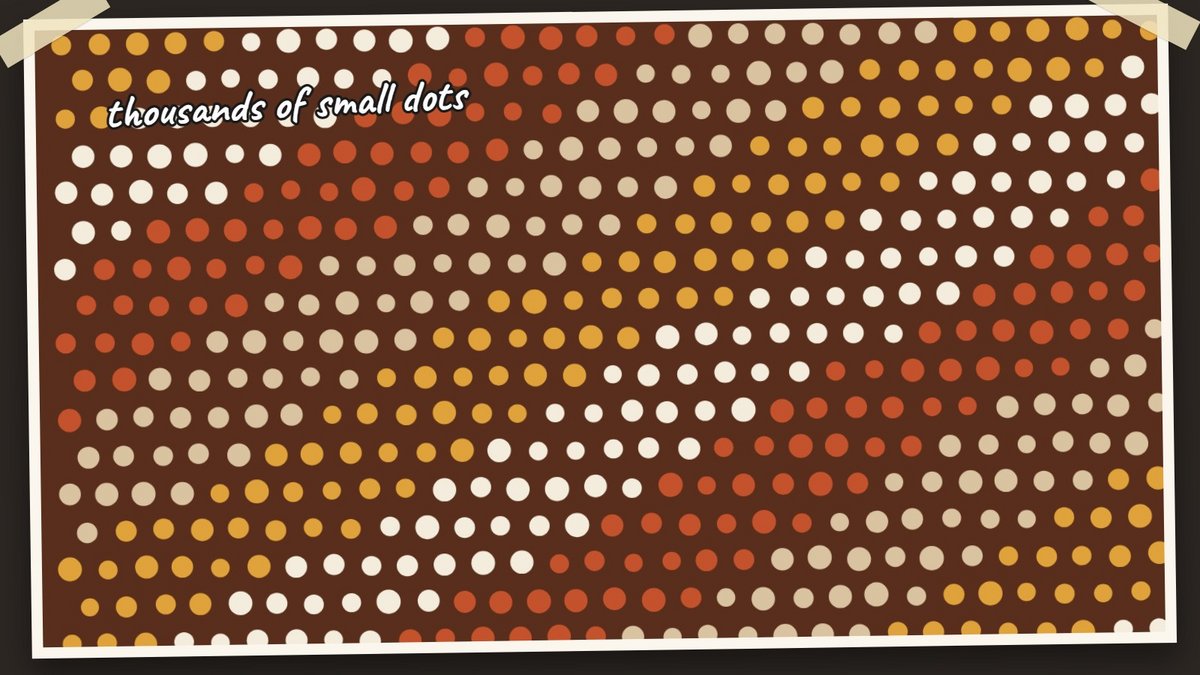
Dot paintings from the desert of central Australia are made of thousands of small dots, and they can also be a kind of map.
Karty pracy do odcinka (2)
- Karta pracy Na Twoim koncie nauczyciela
- Karta nauczyciela Na Twoim koncie nauczyciela
Przewodnik dydaktyczny
Objective & content
This Look Closer episode (Australia mini-series, episode 150) is a short documentary about the dot paintings of the desert in the centre of Australia. A painting made of thousands of small dots can also be a kind of map. Aboriginal people, the first people of Australia, have lived in the desert for tens of thousands of years; for a very long time, they drew pictures in the sand while they told stories, and they painted designs on their bodies and on rocks. In 1971, a teacher called Geoffrey Bardon worked at Papunya and encouraged the older men to paint their designs on boards: this was the start of a famous art movement. Some designs are sacred, so some artists covered them with dots to hide them. The episode then looks closer at three symbols that people often see: circles can show a waterhole or a camp, lines a journey, and a U shape a person who is sitting on the ground, seen from above. It ends with a warning: each artist and each group can use the symbols in a different way, so you need the artist's story too. No Aboriginal artwork is shown: the dots and the symbols are simple diagrams drawn for the episode. The narration is in the present simple, with the past simple for the history, a present perfect (have lived there), relative clauses (which means, who is sitting) and a second conditional in the final question; no grammar point is taught. It is a listening comprehension episode: learners listen, then answer the 10 questions in the app: 7 on facts and 3 on vocabulary (Aboriginal people, sacred, journey).
Materials & prerequisites
The folder holds the audio, the slideshow and the script; there is no lesson plan. The pupil pack and the teacher pack (answers highlighted) are one A4 page each, with the text, three pictures (a photo of a red sand dune in the central Australian desert, a drawing of an older man telling a story in the sand, a drawing of Geoffrey Bardon handing boards to the older men at Papunya), the key words and the 10 questions; a pupil sheet and a teacher sheet with the answer key come with them. The text ends with an open question (If you painted a map of your journey to school, which symbols would you use?). Learners should know the present simple and the past simple of common verbs and be able to read a date. The script explains its new words as it goes (Aboriginal people, sacred).
Curriculum alignment
Tagged c4-travel-and-migration ("Voyages et migrations") and c4-encountering-others ("Rencontre avec l'autre"), Cycle 4 (3e). The episode targets CEFR level B1-.
Możliwe adaptacje
- Słabsze poziomy: zaproponuj słuchanie partiami i dodatkowe materiały wizualne.
- Poziomy zaawansowane: zachęć do ustnego streszczenia i debaty po angielsku na ten temat.
- Liczne klasy: zorganizuj pracę w grupach ze zróżnicowanymi rolami.
🔒 Treść zastrzeżona
Ten zasób wymaga abonamentu, aby z niego skorzystać.
Odblokuj zasóbW cenie abonamentuTagi
- Present simple
- Past simple: regular verbs
- Past simple: irregular verbs
- Present perfect simple
- Relative clauses
- Conditional 2
- Art & photography
- Cultural differences
- Historical dates
- Commonwealth
- Travel and migration
- Encountering others
- Listening comprehension
- Vocabulary building
- Cultural awareness
- Exploring Australia
- World cultures
- Arts & media
- Places & Journeys
- Everyday Life