Working lives: The knocker-up
Odcinek serii Look Closer
- Ilustrowany pokaz slajdów (42 ilustracje)
- Słowniczek (13 słów)
- Quiz ze zrozumienia (10 pytań)
- 9 notatek kulturowych
 Fragment · 30 s
O odcinku
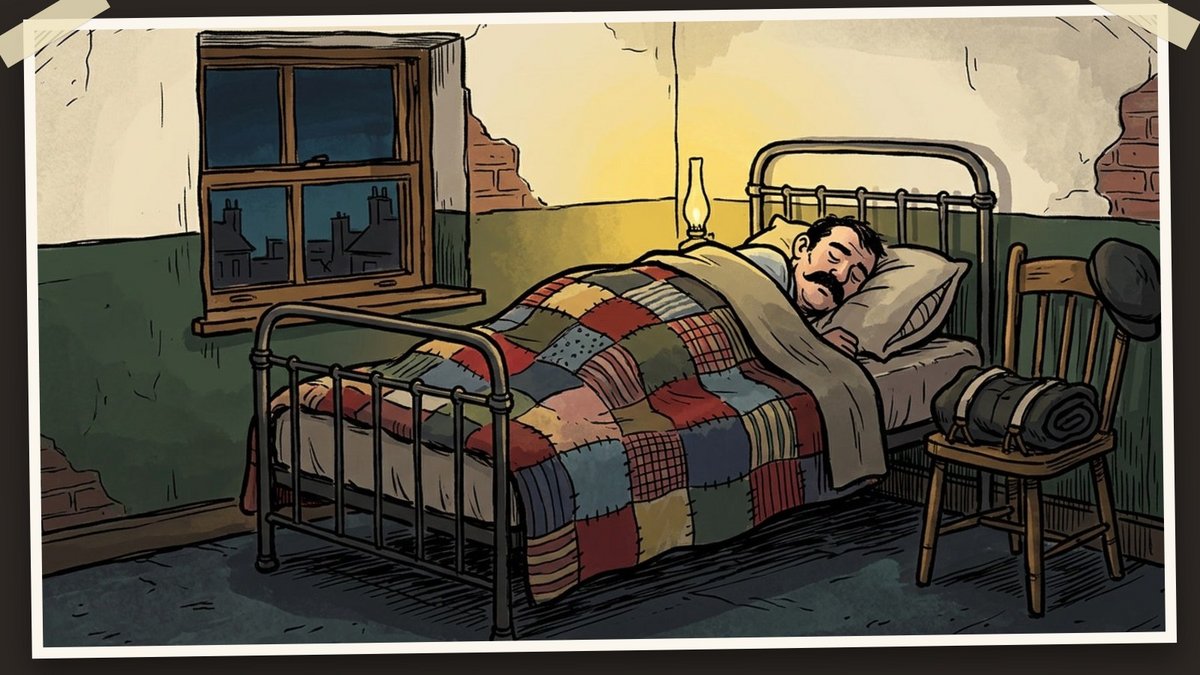
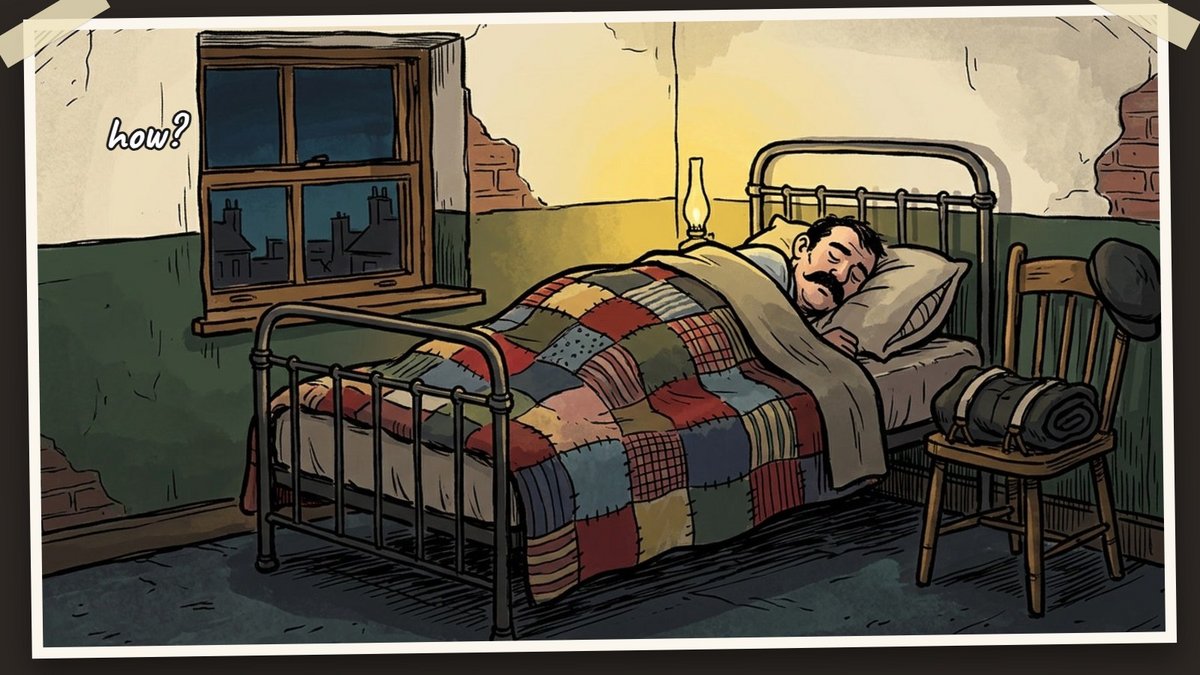
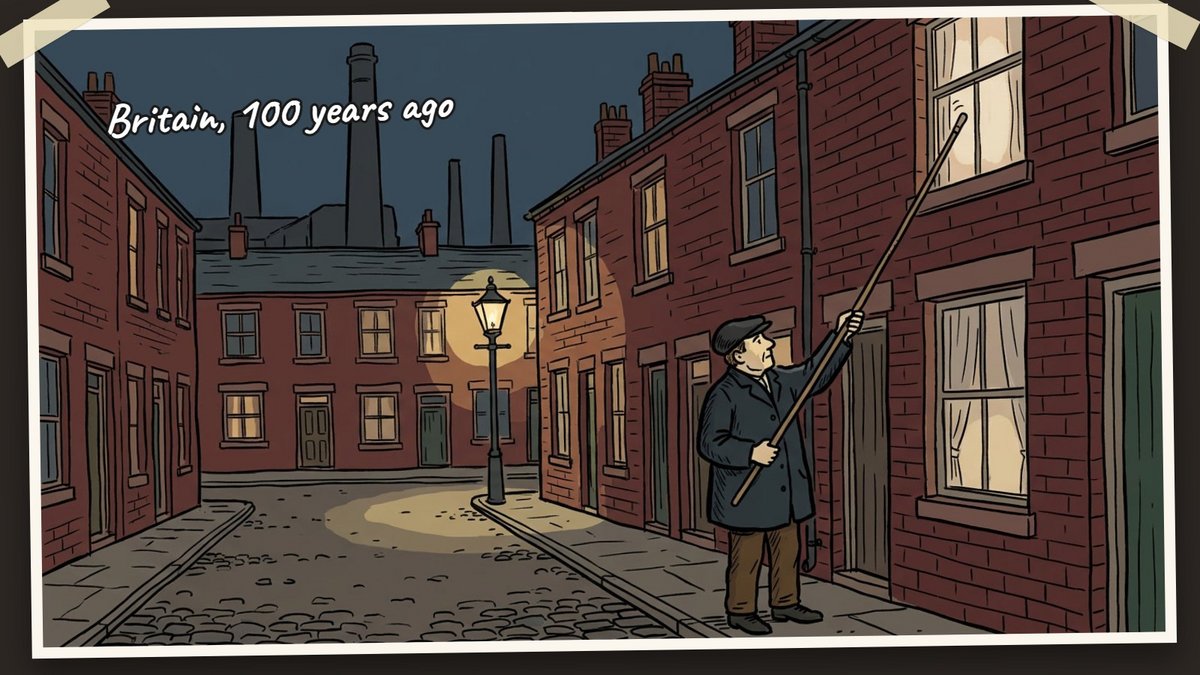
Before alarm clocks, many British workers paid a knocker-up, who tapped on their bedroom windows with a long stick to wake them up in time for the mill.
Karty pracy do odcinka (2)
- Karta pracy Na Twoim koncie nauczyciela
- Karta nauczyciela Na Twoim koncie nauczyciela
Przewodnik dydaktyczny
Objective & content
This Look Closer episode (Working lives mini-series, episode 100) is a short documentary about the knocker-up, a job in Britain a hundred years ago. It opens on a question: before alarm clocks, how did people wake up in time for work? In the 1800s, thousands of people worked in mills, which the script explains as big factories where people make thread or cloth; work started very early, and workers who arrived late could lose part of their pay. Alarm clocks were expensive and did not always work, so every morning, before the sun came up, the knocker-up walked through the streets with a long stick of wood or bamboo, tapped on the bedroom windows of the clients, the people who paid, and stayed until someone came to the window, so that nobody could say "I didn't hear you!". In London in the 1930s, Mary Smith used a different tool: a pea shooter, a long tube she blew dried peas through, and each client paid her sixpence a week. A 1947 photo from the Netherlands, where a knocker-up is called a porder, shows a man holding a long pole and looking up at a window. When cheap alarm clocks arrived, the job slowly disappeared, and by the 1950s it had almost gone. The narration is in the past simple, with the passive (was taken, is called) and relative clauses (a big factory where people make thread or cloth); no grammar point is taught. It is a listening comprehension episode: learners listen, then answer the 10 questions in the app, 7 on facts and 3 on vocabulary (mill, client and pea shooter). The study topic is how work has changed: jobs and workers a hundred years ago.
Materials & prerequisites
The folder holds the audio, the slideshow and the script; there is no lesson plan. The pupil pack and the teacher pack (answers highlighted) are one A4 page each, with the text, three pictures (a drawing of a knocker-up tapping on an upstairs window with a long pole, a drawing of Mary Smith blowing peas at a window, and the 1947 photo of a porder in Leeuwarden, in the Netherlands), the key words and the 10 questions; a pupil sheet and a teacher sheet with the answer key come with them. The text ends with an open question (Think about it: Who or what wakes you up in the morning?). Learners should know the past simple of common verbs and be able to read dates. The pack's key words explain the new words (knocker-up, alarm clock, mill, thread, cloth, pay, stick, client).
Curriculum alignment
Tagged c4-school-and-society ("École et société"), Cycle 4 (3e). The episode targets CEFR level B1-.
Możliwe adaptacje
- Słabsze poziomy: zaproponuj słuchanie partiami i dodatkowe materiały wizualne.
- Poziomy zaawansowane: zachęć do ustnego streszczenia i debaty po angielsku na ten temat.
- Liczne klasy: zorganizuj pracę w grupach ze zróżnicowanymi rolami.
🔒 Treść zastrzeżona
Ten zasób wymaga abonamentu, aby z niego skorzystać.
Odblokuj zasóbW cenie abonamentuTagi
- Past simple: regular verbs
- Past simple: irregular verbs
- Passive voice basics
- Relative clauses
- Jobs: basics
- Business & work
- Daily routine
- Historical dates
- London
- School and society
- Listening comprehension
- Vocabulary building
- Cultural awareness
- Work & jobs
- Modern history
- Everyday Life
- Past & Progress