Segregation: Jim Crow laws
Odcinek serii Look Closer
- Ilustrowany pokaz slajdów (40 ilustracji)
- Słowniczek (14 słów)
- Quiz ze zrozumienia (10 pytań)
- 6 notatek kulturowych
 Fragment · 30 s
O odcinku
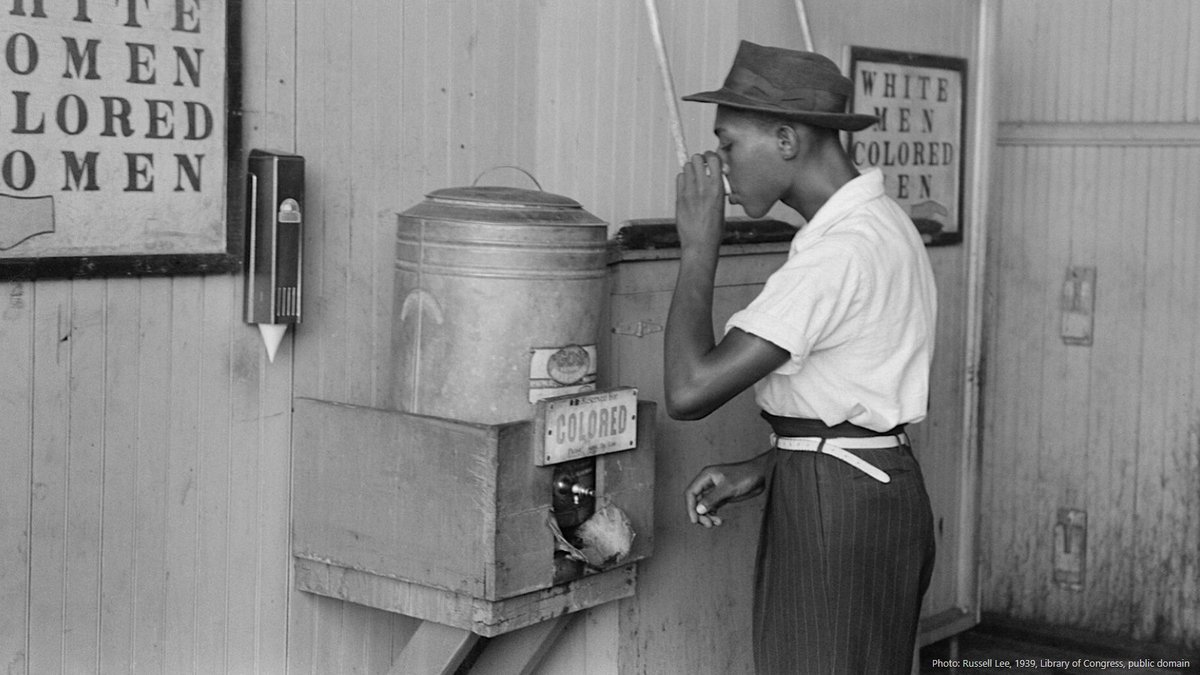
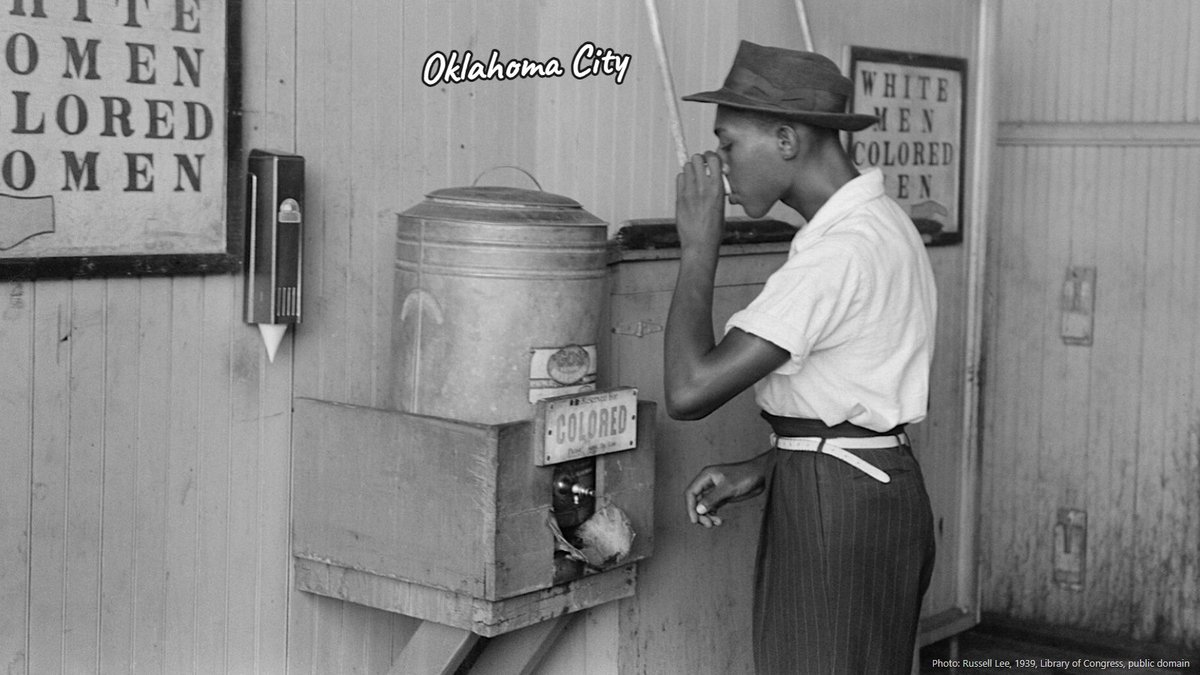
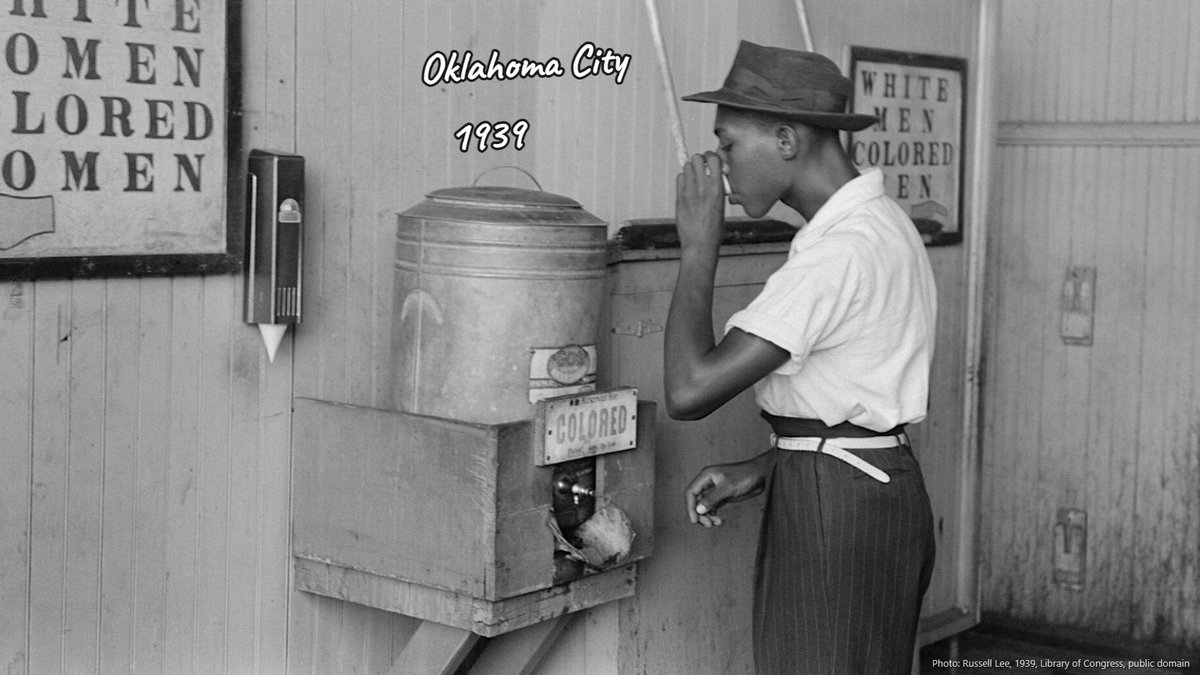
A 1939 photo of a water cooler marked "Colored" opens the story of the Jim Crow laws, which kept black and white people apart in the south of the United States until the Civil Rights Act of 1964.
Karty pracy do odcinka (2)
- Karta pracy Na Twoim koncie nauczyciela
- Karta nauczyciela Na Twoim koncie nauczyciela
Przewodnik dydaktyczny
Objective & content
This Look Closer episode (Segregation mini-series, episode 247) is a short documentary about the Jim Crow laws. Pupils look closer at a 1939 photo from Oklahoma City: a man drinks from a water cooler with a sign that says "Colored", a word for black people in those days that people don't use any more, because black people were not allowed to use the white people's water cooler. A narrator explains that in the south of the United States these rules were called Jim Crow laws, after a character in old songs that made fun of black people, and that keeping black and white people apart is called segregation. Real signs and photos show the rules at work: different schools, the back of the bus or separate train carriages, restaurants, hotels and swimming pools for white people only, even separate doors at hospitals. The law said the places were "separate but equal", but they were almost never equal: schools for black children had less money, older books and fewer teachers. Black Americans fought these laws in the streets and in the courts, and in 1964 the Civil Rights Act made segregation illegal. The hard facts are stated once, plainly, with no verdict, and the episode ends on what changed.
The narration uses the past simple, with obligation and ban in the past (had to go, were not allowed to use) and a few passives (were called, were kept apart); no grammar point is taught. Learners listen, then answer the 10 questions in the app: 7 on facts and 3 on vocabulary (segregation, Jim Crow, illegal). The closing question (How do you think people felt when they saw these signs every day?) opens a short class discussion.
Materials & prerequisites
The folder holds the audio, the slideshow and the script; there is no lesson plan. The pupil pack and the teacher pack (answers highlighted) are one A4 page each, with the text, three pictures, the key words and the 10 questions. The folder also holds a one-page pupil sheet and a teacher sheet with the answer key. Learners should know the past simple of common verbs. The script explains its new words as it goes.
Możliwe adaptacje
- Słabsze poziomy: zaproponuj słuchanie partiami i dodatkowe materiały wizualne.
- Poziomy zaawansowane: zachęć do ustnego streszczenia i debaty po angielsku na ten temat.
- Liczne klasy: zorganizuj pracę w grupach ze zróżnicowanymi rolami.
🔒 Treść zastrzeżona
Ten zasób wymaga abonamentu, aby z niego skorzystać.
Odblokuj zasóbW cenie abonamentuTagi
- Past simple: regular verbs
- Past simple: irregular verbs
- Past simple: was / were
- Modals in the past
- Passive voice basics
- Present simple
- Civil rights
- Historical dates
- Government
- School life
- Transport
- Encountering others
- Forms of commitment
- Listening comprehension
- Vocabulary building
- Cultural awareness
- Fairness
- Citizenship & society
- Modern history
- Exploring America
- Heroes & Values
- Our World
- Past & Progress
- Places & Journeys