Lucky mistakes: Penicillin
Odcinek serii Look Closer
- Ilustrowany pokaz slajdów (30 ilustracji)
- Słowniczek (12 słów)
- Quiz ze zrozumienia (10 pytań)
- 9 notatek kulturowych
 Fragment · 30 s
O odcinku
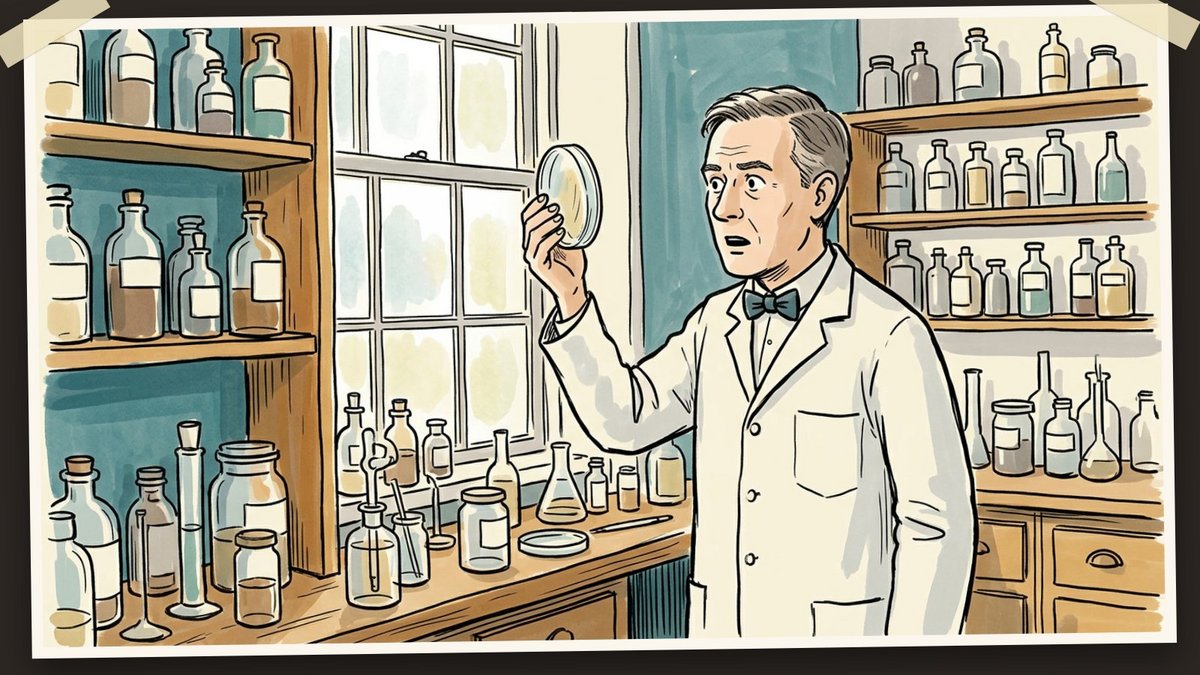
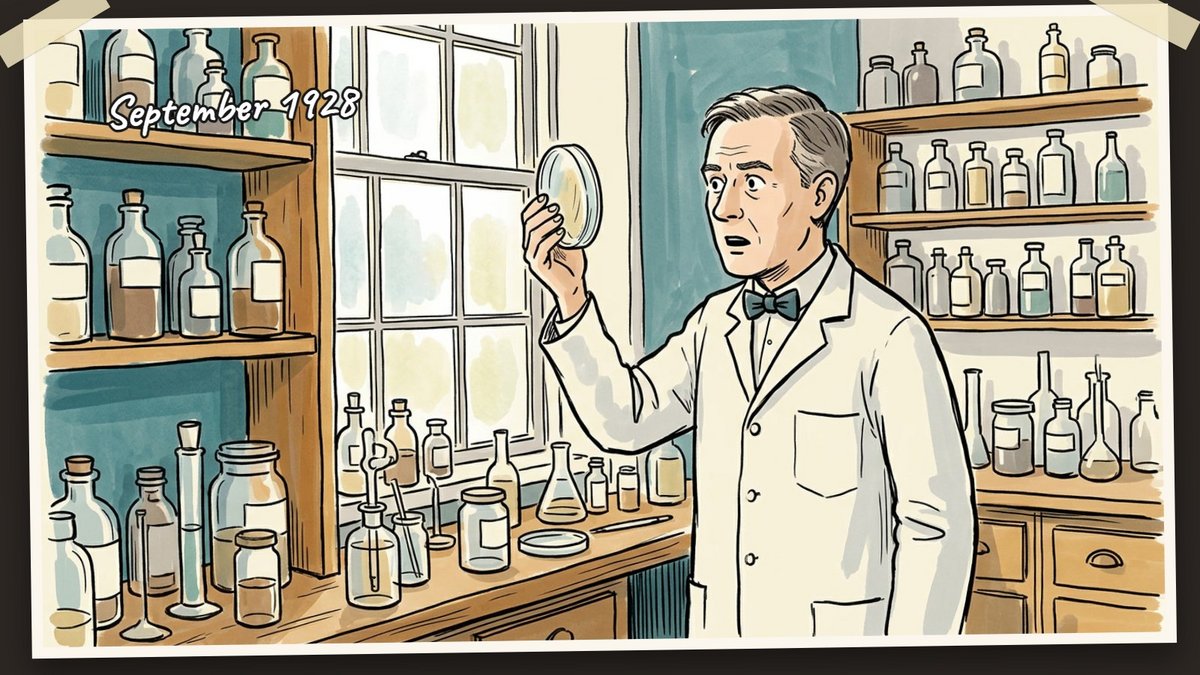
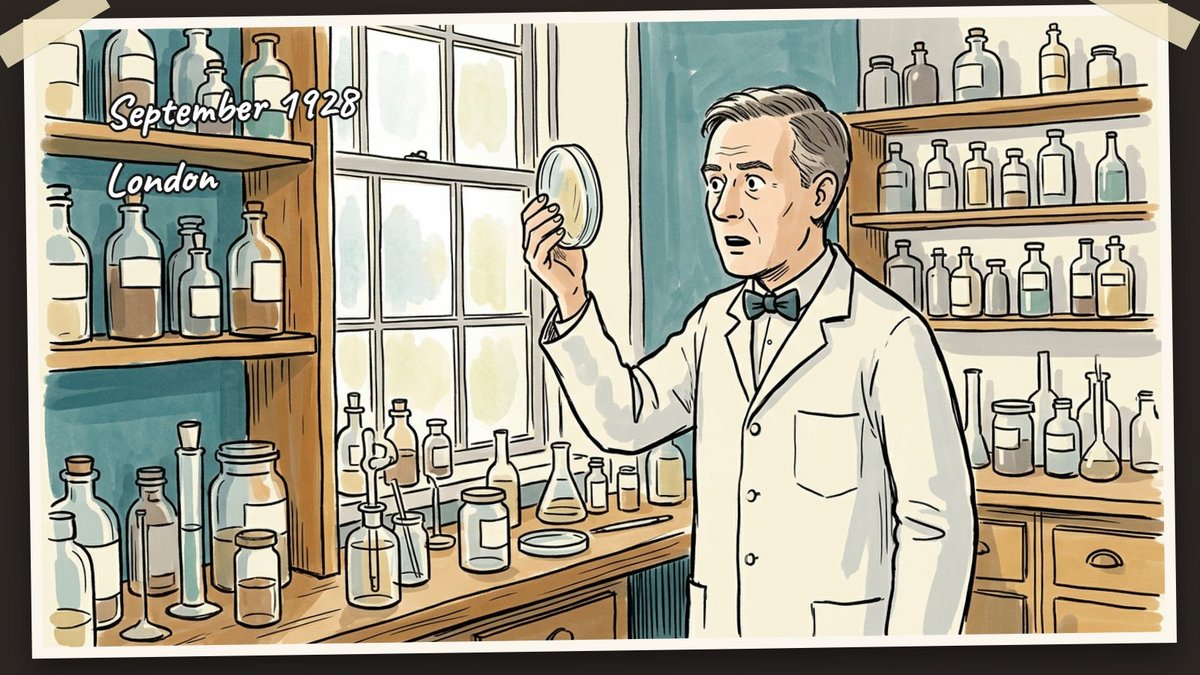
In 1928, Alexander Fleming came back from his holiday and found a mould on a dish of bacteria, with a clear circle where no bacteria grew: the discovery of penicillin.
Karty pracy do odcinka (2)
- Karta pracy Na Twoim koncie nauczyciela
- Karta nauczyciela Na Twoim koncie nauczyciela
Przewodnik dydaktyczny
Objective & content
This Look Closer episode (Lucky mistakes mini-series, episode 94) is a short documentary about the discovery of penicillin. In September 1928, Alexander Fleming, a Scottish doctor and scientist at St Mary's Hospital in London, came back from his summer holiday and found a blue-green mould on one of the dishes of bacteria he had left on his bench; all around the mould there was a clear circle with no bacteria. He called the substance penicillin, but it was very hard to make, and for about ten years nobody used it as a medicine. Around 1940, a team at Oxford University with Howard Florey and Ernst Chain found a way to make it and tested it on mice, then on people; during the Second World War, factories in the USA made millions of doses, and in 1945 the three men shared the Nobel Prize. Today, penicillin and other antibiotics have saved millions of lives. The narration is in the past simple, with the present simple for today; no grammar point is taught. It is a listening comprehension episode: learners listen, then answer the 10 questions in the app: 8 on facts and 2 on vocabulary (bacteria and antibiotics). The study topic is inventions and discoveries that began with a mistake or an accident.
Materials & prerequisites
The folder holds the audio, the slideshow and the script; there is no lesson plan. The pupil pack and the teacher pack (answers highlighted) are one A4 page each, with the text, three pictures (a drawing of the 1928 dish with its clear circle around the mould, a photo of Alexander Fleming in his laboratory, a photo of a worker making penicillin in 1943), the key words and the 10 questions; a pupil sheet and a teacher sheet with the answer key come with them. The text ends with an open question (Think about it: Was Fleming just lucky, or was he a good scientist too? What do you think?). Learners should know the past simple of common verbs and be able to read dates. The pack's key words explain the new words (scientist, lab, holiday, bench, dish, mould, bacteria, circle, medicine, mouse, dose, antibiotic).
Curriculum alignment
Tagged c4-school-and-society ("École et société"), Cycle 4 (4e). The episode targets CEFR level A2+.
Możliwe adaptacje
- Słabsze poziomy: zaproponuj słuchanie partiami i dodatkowe materiały wizualne.
- Poziomy zaawansowane: zachęć do ustnego streszczenia i debaty po angielsku na ten temat.
- Liczne klasy: zorganizuj pracę w grupach ze zróżnicowanymi rolami.
🔒 Treść zastrzeżona
Ten zasób wymaga abonamentu, aby z niego skorzystać.
Odblokuj zasóbW cenie abonamentuTagi
- Past simple: regular verbs
- Past simple: irregular verbs
- Present simple
- Past inventions
- Famous people
- Historical dates
- Health & illness
- School and society
- Listening comprehension
- Vocabulary building
- Cultural awareness
- Inventions & discoveries
- Health & body
- Past & Progress
- Everyday Life