The Telephone: Voices Across the Wire
Episode of the series Amazing Inventions
- Illustrated slideshow (57 images)
- Glossary
- Comprehension quiz (45 questions)
- Cultural notes


 Extract · 30 s
The episode
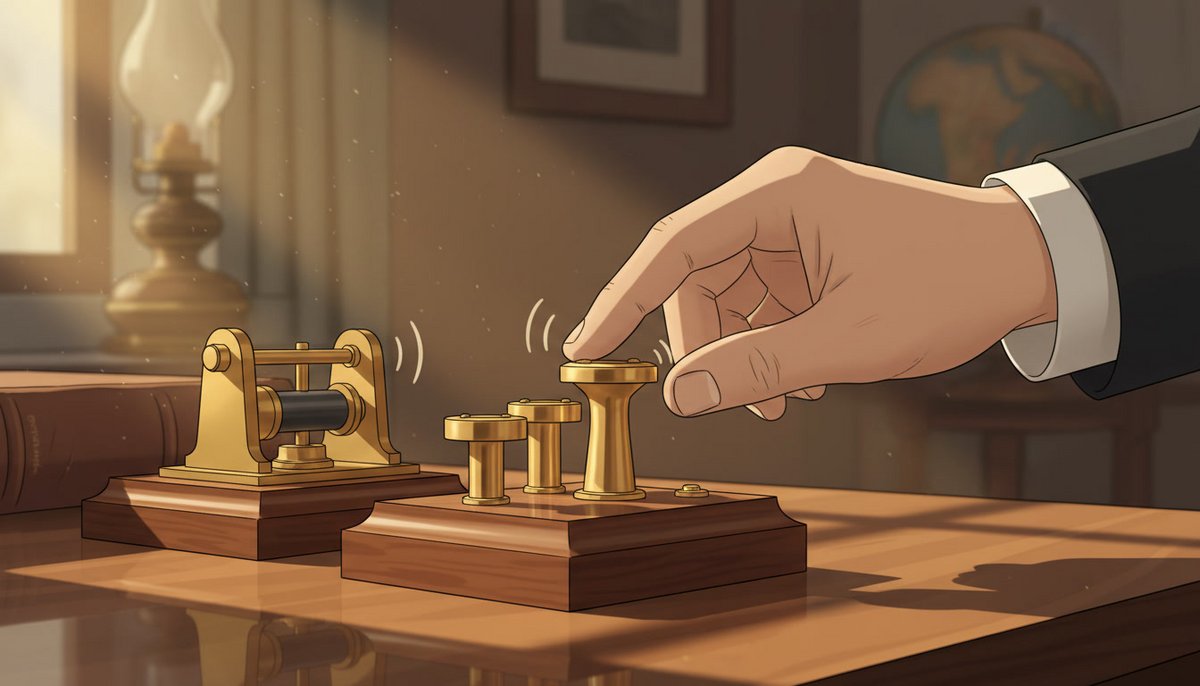
Nine words down a wire. A teacher of deaf children in Boston wanted to send a voice, not beeps, down a wire; in March 1876 his assistant heard the words "Mr Watson, come here" from the next room.
Episode worksheets (2)
- Student sheet In your teacher account
- Teacher sheet In your teacher account
Teaching guide
Objective & content
This documentary episode tells the story of the telephone. Alexander Graham Bell, born in Edinburgh in 1847, becomes a teacher of deaf students in Boston; his mother and his wife Mabel are deaf too, so he thinks about sound and the human voice every day. With his assistant Thomas Watson, he speaks the first clear words through a wire on 10 March 1876. The script explains how the telephone works with two paper cups and a string, then with electricity, and ends on what it changed: "Bell's invention changed the way the world talks." The language focus is the past simple (regular and irregular verbs) with present simple explanations, plus could for past ability and vocabulary on inventions and famous people. The skills are listening comprehension and vocabulary building.
Materials & prerequisites
- Student sheet and teacher sheet (HTML and PDF, in `printables/`).
- Prerequisites: the present simple and the past simple of common verbs such as was, had and came.
Possible adaptations
- Lower levels: Offer segmented listening and additional visual aids.
- Advanced levels: Encourage an oral summary and a debate in English on the theme.
- Large groups: Organise group work with differentiated roles.
🔒 Restricted content
This resource requires a subscription to be viewed.
Unlock the resourceIncluded in the subscription