Vaccination: Changing our take on health
Episode of the series Amazing Inventions
- Illustrated slideshow (28 images)
- Glossary (19 words)
- Comprehension quiz (45 questions)
- Cultural notes
 Extract · 30 s
The episode
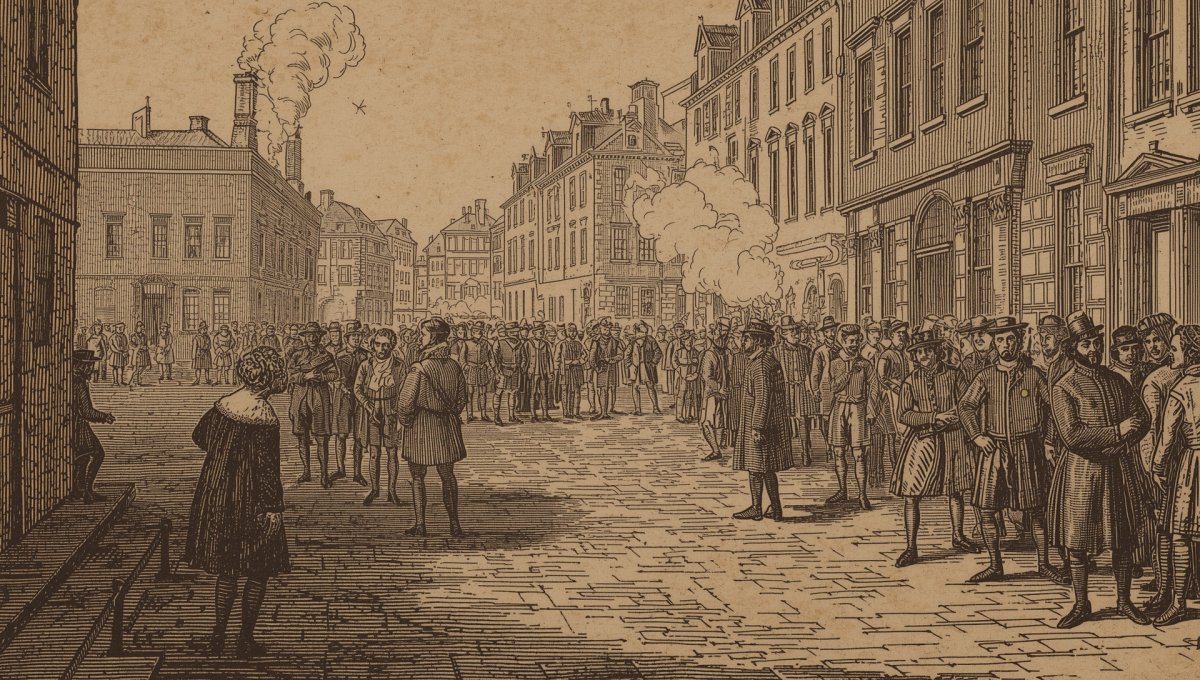
Journey back to a time of medical mystery and meet a brave 18th-century doctor. We’ll learn how his curious observation of a disease from cows became the unlikely key to fighting smallpox, a breakthrough that forever changed public health and inspired some very amusing historical cartoons.
Episode worksheets (2)
- Student sheet In your teacher account
- Teacher sheet In your teacher account
Teaching guide
Objective & content
This documentary episode tells the story of the first vaccine. It opens in 18th-century London, where smallpox kills many people, then moves to a Gloucestershire village where the country doctor Edward Jenner observes that milkmaids never catch smallpox. It follows his 1796 experiment on James Phipps, the doubt of other doctors, the origin of the word "vaccination" (from the Latin "vacca", cow) and the end of smallpox in 1980. Learners practise the past simple (regular, irregular and was/were) alongside present simple scene-setting, and the vocabulary of health and illness. The main skill is listening comprehension, followed by the in-app quiz. The subject is real disease and a risky experiment on a child, so allow a moment for questions.
Materials & prerequisites
- A student sheet and a teacher sheet, each as a PDF and an HTML file, plus the printable in Markdown (all in the episode's `printables/` folder).
- Learners should already know the present simple and recognise basic past simple forms.
Possible adaptations
- Lower levels: Offer segmented listening and additional visual aids.
- Advanced levels: Encourage an oral summary and a debate in English on the theme.
- Large groups: Organise group work with differentiated roles.
🔒 Restricted content
This resource requires a subscription to be viewed.
Unlock the resourceIncluded in the subscriptionTags
- Past simple: regular verbs
- Past simple: irregular verbs
- Past simple: was / were
- Present simple
- Health & illness
- Past inventions
- Famous people
- School and society
- Listening comprehension
- Vocabulary building
- Cultural awareness
- Health & body
- Inventions & discoveries
- Everyday Life
- Past & Progress