En resumen
Nivel de clase :2° ESO
Tipo :Audiolibros
Ejes culturales :Personas y Personajes, Vida cotidiana, Países y Paisajes, Imaginación y Leyendas
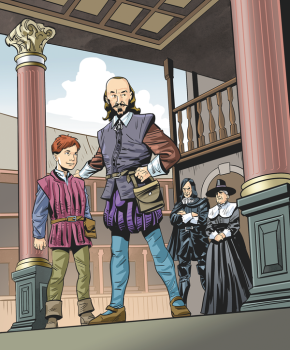
¡Transporte a sus alumnos al bullicioso Londres de Shakespeare con esta apasionante novela policíaca histórica! «Shakespeare and the Shoemaker» es una historia en audio que combina aventura, misterio y cultura. Los alumnos seguirán a Edmund, un joven héroe inteligente que utiliza su talento único para resolver una investigación. Es un recurso excelente para trabajar la comprensión oral con una trama llena de suspense, al tiempo que se descubre el universo del mayor dramaturgo inglés.
Nivel de clase :2° ESO
Tipo :Audiolibros
Ejes culturales :Personas y Personajes, Vida cotidiana, Países y Paisajes, Imaginación y Leyendas
Para descargar este material, debe haber iniciado sesión con una cuenta de profesor de un centro inscrito en el Concurso The Big Challenge.
Objetivo y Resumen de la Trama
Objetivo : Lograr que los alumnos sigan una investigación en inglés, identifiquen a los sospechosos a partir de indicios sonoros y comprendan la resolución de un misterio.
Resumen : En el Londres del siglo XVI, un joven aprendiz de zapatero con memoria fotográfica conoce a su héroe, William Shakespeare. Cuando el final de Romeo y Julieta es destruido en un incendio sospechoso, Edmund utiliza su astucia y su talento para tender una trampa al culpable entre tres sospechosos y salvar la obra.
Desarrollo Sugerido
1. Antes de la escucha (~10 min) : SUMERGIRSE EN EL LONDRES DEL SIGLO XVI
Anticipación : Muestre la ilustración de los personajes y del mapa (página 3). ¿Quién es Shakespeare? ¿Dónde se desarrolla la acción?
Vocabulario : Introduzca las palabras de la investigación : fire, suspect, guilty (culpable), trap (trampa).
2. Durante la escucha (~25 min) : SEGUIR LA PISTA
Escucha fragmentada en 3 tiempos :
Parte 1 (Los sospechosos) : Escuche hasta el final de las visitas de Greenaway, Benson y Hardcastle. Pausa : "Who is angry at Shakespeare? Why?".
Parte 2 (El crimen) : Escuche hasta el descubrimiento del incendio provocado. Pausa : "What happened? Who are the three suspects?".
Parte 3 (La resolución) : Escuche el plan de Edmund y el desenlace.
3. Después de la escucha (~15 min) : RESOLVER LA INVESTIGACIÓN
Discusión : "Who was the guilty person? Why did he do it? Was Edmund's plan clever?".
Tarea simple : Formen 3 grupos, uno para cada sospechoso. Cada grupo prepara una frase para clamar su inocencia o acusar a otro. Ejemplo : "I am Dame Hardcastle. I am not guilty. I think the actor did it!".
Adaptaciones
Para simplificar : En la pizarra, cree una ficha "Sospechosos". Después de haber escuchado la presentación de cada sospechoso, haga una pausa y anote su nombre y la razón de su cólera (el móvil).
Para profundizar : Pida a los alumnos que imaginen ser Shakespeare. Escriben una nota corta en su diario para relatar el incendio y su encuentro con el "notable" Edmund.
Please wait...