How do you count rhinos?
Episode of the series Look Closer
- Illustrated slideshow (24 images)
- Glossary (11 words)
- Comprehension quiz (10 questions)
- 11 cultural notes

 Extract · 30 s
The episode
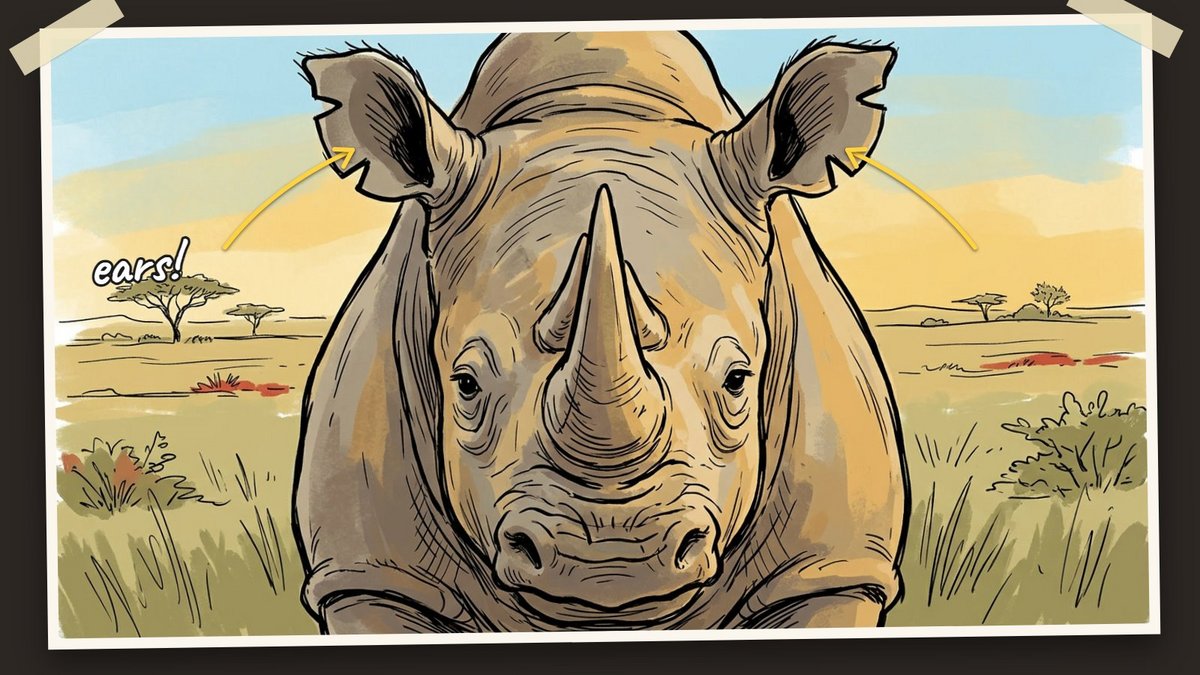
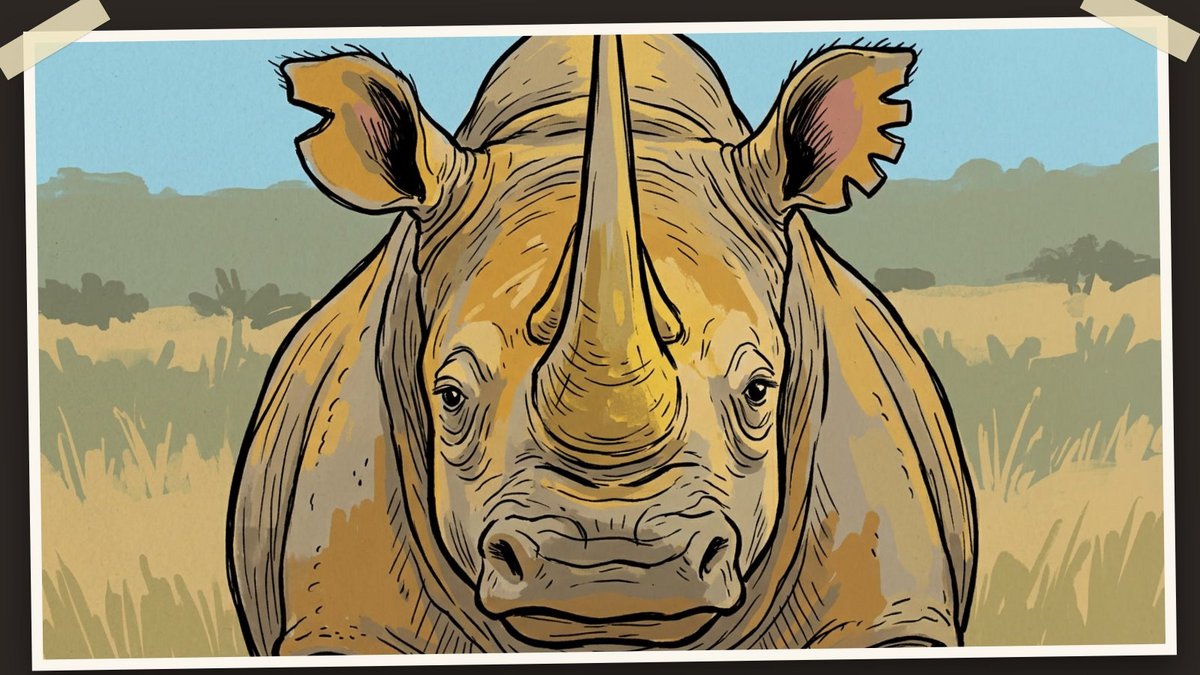
How rangers in Kenya recognise and protect rhinos: ear marks, daily watching, numbers rising from 1,603 in 2020 to 2,100 in 2024, keepers feeding orphan calves.
Episode worksheets (2)
- Student sheet In your teacher account
- Teacher sheet In your teacher account
Teaching guide
Objective & content
This Look Closer episode (Kenya mini-series, episode 4) answers one question in three steps: how do you count rhinos? Rangers make small marks in each rhino's ears, so the marks work like a name for each animal; they walk and watch every day with binoculars and write down each rhino they see. The narrator explains that people hunt rhinos for their horns, gives the figures for 2020 and 2024, and then shows keepers who feed orphan calves. The language is present simple, one past form (had) and question words, with vocabulary for jobs, body parts and large numbers. Learners listen, then answer the 10 questions in the app. The closing question is "Would you like to be a ranger? Why?"
Materials & prerequisites
The folder holds the audio, the slideshow, the script, a pupil sheet with the 10 questions (7 on facts, 3 on vocabulary) and a teacher sheet with the answer key (PDF); it has no lesson plan. A short episode works well as a lesson opener: play it twice, hand out the pupil sheet, then use the closing question for class discussion. Learners should know basic job words, body parts and the numbers above 1,000.
Curriculum alignment
Tagged countries-and-landscapes (6e, "Pays et paysages"; study topic: Kenya's national parks). The episode also fits the theme of protecting nature. The episode targets CEFR level A1+.
Possible adaptations
- Lower levels: Offer segmented listening and additional visual aids.
- Advanced levels: Encourage an oral summary and a debate in English on the theme.
- Large groups: Organise group work with differentiated roles.
🔒 Restricted content
This resource requires a subscription to be viewed.
Unlock the resourceIncluded in the subscriptionTags
- Present simple
- Past simple: irregular verbs
- Question words
- Jobs: basics
- Body parts
- Large numbers
- Environment
- National parks
- Countries and landscapes
- Listening comprehension
- Vocabulary building
- Cultural awareness