The prisoner who became president
Episode of the series Look Closer
- Illustrated slideshow (31 images)
- Glossary (16 words)
- Comprehension quiz (10 questions)
- 9 cultural notes
 Extract · 30 s
The episode
A narrator tells the story of Nelson Mandela, from a small prison cell on Robben Island to his first vote and the presidency of South Africa in 1994.
Episode worksheets (2)
- Student sheet In your teacher account
- Teacher sheet In your teacher account
Teaching guide
Objective & content
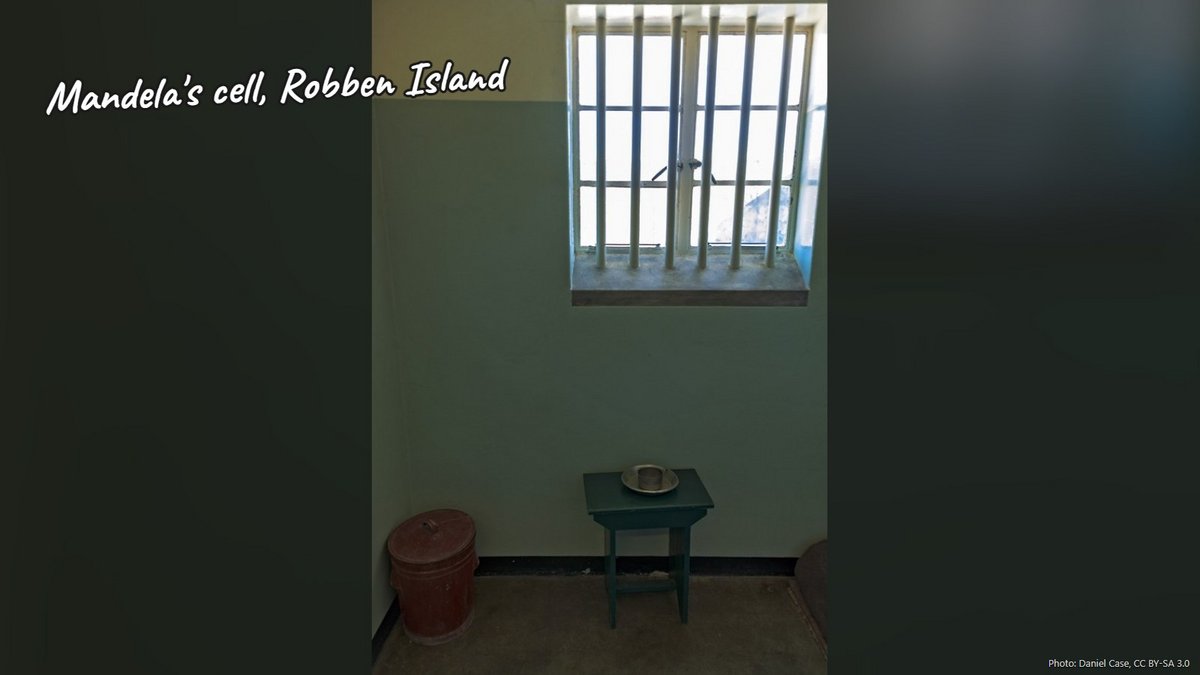
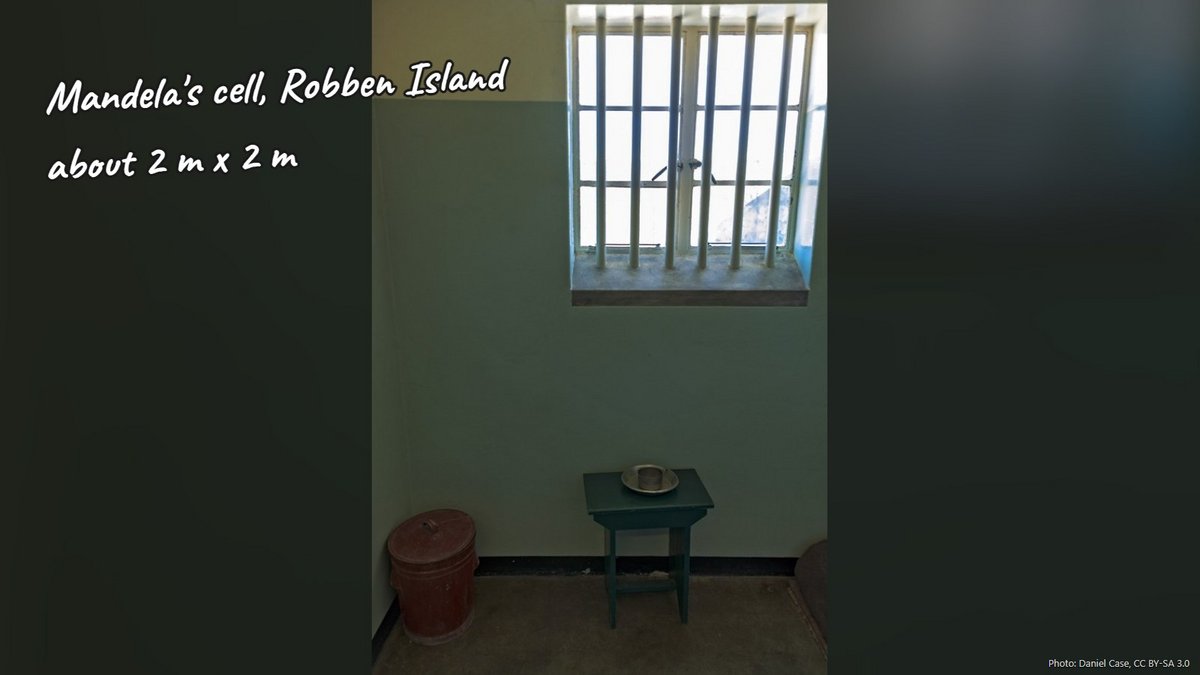
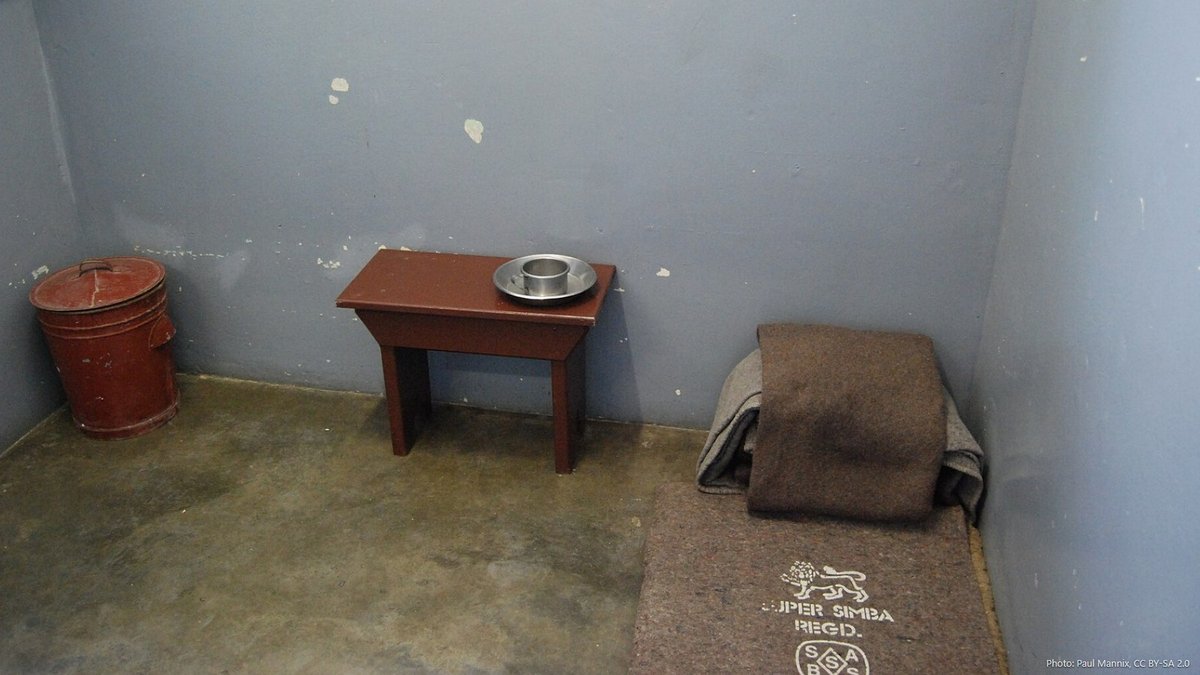
This Look Closer episode (Civil rights mini-series, episode 22) is a short documentary about Nelson Mandela, who was born in South Africa in 1918 and became one of the first Black lawyers in the country. It opens on his small cell, about two metres long and two metres wide, then explains apartheid, the system that kept Black and white South Africans apart and did not allow Black South Africans to vote. A single narrator follows the main dates: his arrest in 1962, his life sentence in 1964, twenty-seven years in prison, his release in 1990, the Nobel Peace Prize he shared with Frederik de Klerk in 1993, and his first vote in April 1994, at seventy-five, a few weeks before he became president. The narration tells his life in the past simple, with was arrested, had to and were not allowed to; no grammar point is taught. It is a listening comprehension episode: learners listen, then answer the 10 questions in the app: 8 on facts and 2 on vocabulary (cell and apartheid). The study topic is people who stood up for equal rights: who they were, what they did, what changed.
Materials & prerequisites
The folder holds the audio, the slideshow and the script. Each pack is a one-page PDF with the text, three photos (Mandela in 1937, his cell, Mandela in 1994), the key words and the 10 questions: a pupil pack and a teacher pack with the answers highlighted. It also has a pupil sheet and a teacher sheet with the answer key. It has no lesson plan. The reading text on the pupil pack ends with the closing question (Think about it: How many years did Nelson Mandela spend in prison?); the answer, twenty-seven years, is in the text and in the teacher copy. Learners should know the past simple of common verbs and be able to read years such as 1918 and 1990. The pack's key words explain the new words (prisoner, lawyer, apartheid, vote, arrest); cell is not a key word but the label on the slideshow picture of the small room.
Curriculum alignment
Tagged c4-encountering-others ("Rencontre avec l'autre") and c4-school-and-society ("École et société"), Cycle 4 (4e). The episode targets CEFR level A2+.
Possible adaptations
- Lower levels: Offer segmented listening and additional visual aids.
- Advanced levels: Encourage an oral summary and a debate in English on the theme.
- Large groups: Organise group work with differentiated roles.
🔒 Restricted content
This resource requires a subscription to be viewed.
Unlock the resourceIncluded in the subscriptionTags
- Past simple: irregular verbs
- Past simple: regular verbs
- Passive voice basics
- Civil rights
- Famous people
- Historical dates
- Government
- Large numbers
- South Africa
- Encountering others
- School and society
- Listening comprehension
- Vocabulary building
- Cultural awareness