How Did the First World War Change Things?
Episode of the series Votes for Women, Explained
- Illustrated slideshow (30 images)
- Glossary (29 words)
- Comprehension quiz (18 questions)
- 18 cultural notes
 Extract · 30 s
The episode
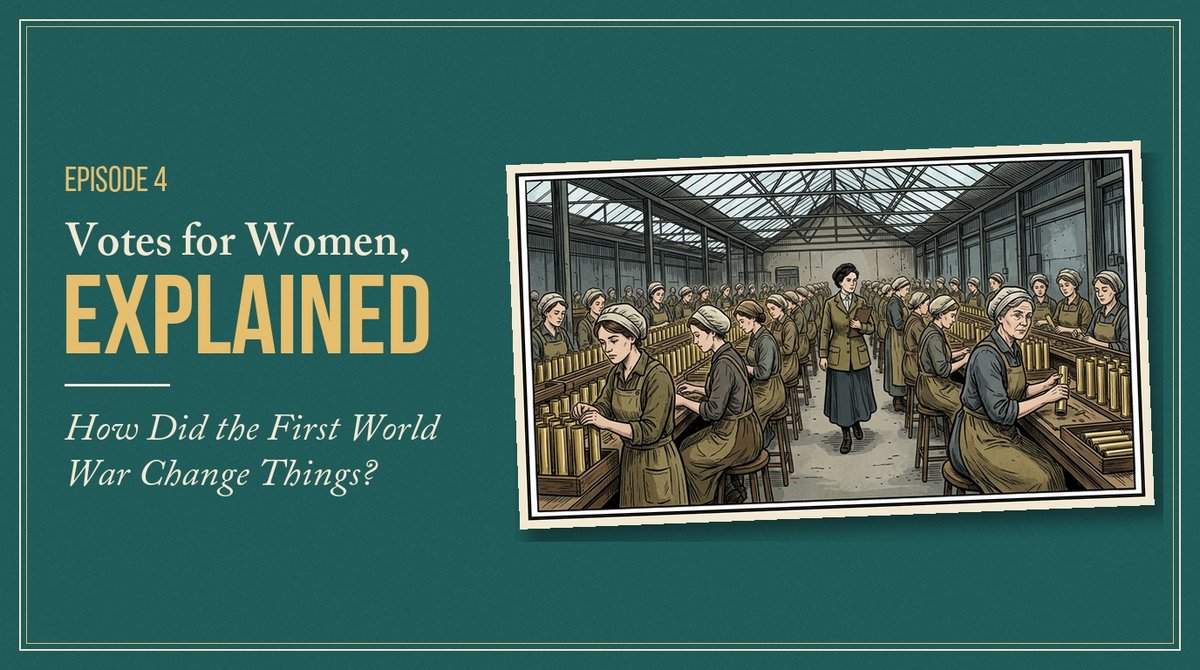
In August 1914 the campaigns paused and both groups helped the war effort without dropping their claim. Women took men's jobs: buses, railways, the Women's Land Army, and almost a million in munitions by 1918, and some MPs changed their minds. The 6 February 1918 law gave the vote to almost all men over 21 and to women over 30 who met a property test (about 8.5 million women); MPs said openly that 30 was chosen so women would not be a majority of voters, so many of the young war workers were left out. Markievicz was elected in December 1918; Astor was the first to sit (1919). In the US, the Hello Girls and others served; Wilson called suffrage 'a vitally necessary war measure' (September 1918); Congress passed the 19th Amendment in 1919; Tennessee, tied 48-48 in August 1920, ratified it when Harry Burn, 24, changed his vote after his mother's letter.
Episode worksheets (2)
- Student sheet In your teacher account
- Teacher sheet In your teacher account
Teaching guide
Objective & content
Two hosts, one American and one British, ask how the First World War changed things, and who finally got the vote, in Britain and in America. Learners practise the past simple (began, took, drove, grew, passed, went, spoke, changed, got), could and couldn't for what was allowed or not allowed (almost all men over twenty-one could vote; many of the women in the factories still couldn't vote), more ... than to compare two groups (there were more women than men in Britain) and past simple questions with did (What did he say? Why did he change it?). They listen for names, years and the changes in each country, then answer the quiz in the app and the one-page pupil sheet. The story follows these beats:
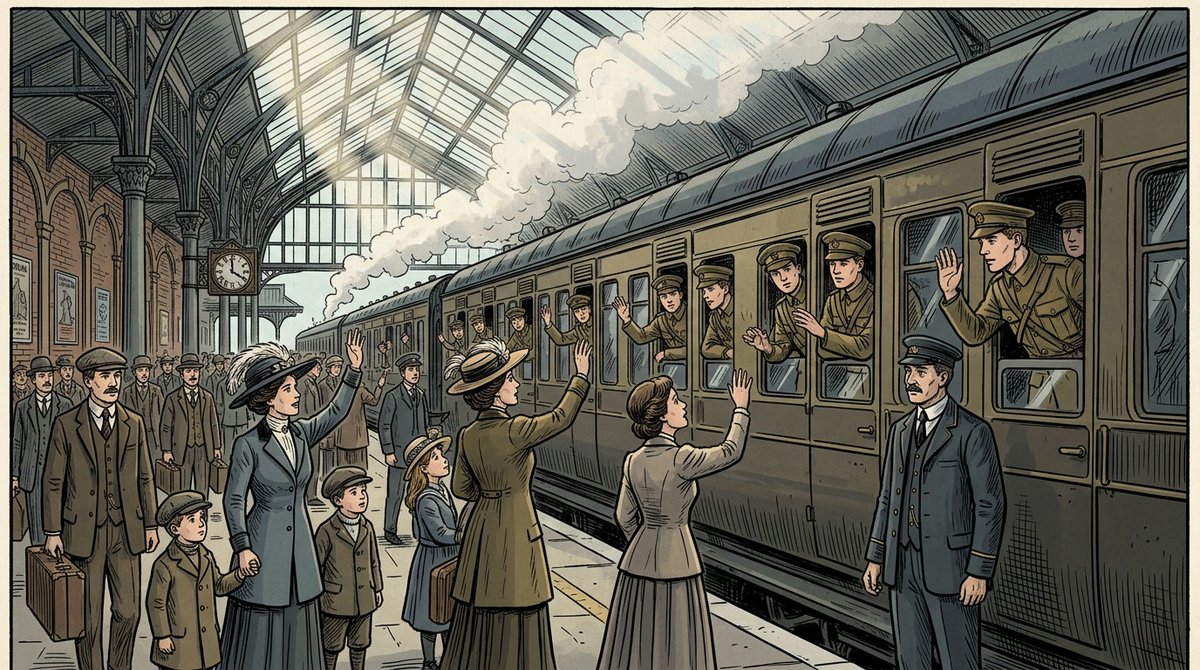
- August 1914: the war began and the suffragettes stopped; women in prison were set free, and both groups helped with the war, but they put the vote on hold, they didn't forget it.
- Women took men's jobs: they drove buses and worked on the railways, on farms (the Women's Land Army grew food) and in factories. People noticed, and some MPs who were against women's votes started to change their minds because of the war work.
- February 1918: a new law let almost all men over twenty-one vote, and women over thirty if they or their husbands had some property. MPs said openly why thirty: with younger women, women would be the majority of voters. So many of the young, single women who did the war work still couldn't vote, but it was a real start.
- December 1918: Constance Markievicz won a seat in Ireland but didn't take it; the first woman to sit in Parliament was Nancy Astor, in 1919, who was born in America.
- America joined the war in April 1917: the "Hello Girls" put through telephone calls for the American army in France, and other women worked for the navy or as nurses. President Wilson, who didn't support votes for women for years, changed his mind because of the war and spoke to the Senate in September 1918 ("a vitally necessary war measure"; women were partners in the war, so why not in the vote).
- The Senate fell short that day, but in 1919 the House and then the Senate said yes, and thirty-six states also had to say yes. In August 1920 the vote in Tennessee was a tie, forty-eight to forty-eight, until a young lawmaker, Harry Burn, changed his vote after a letter from his mother; a few days later the Nineteenth Amendment became law. The hosts' answer: the war helped, but the campaign came first, since Seneca Falls in 1848.
The hosts open and close this episode with a short hello and goodbye.
Pedagogical guide
The 45-minute lesson plan starts from a question for the class: can a big event change people's minds? Learners give ideas, listen twice (once for who finally got the vote in each country, once with four pauses for questions), then practise facts, vocabulary and the grammar of the past: the past simple, could and couldn't, more ... than and questions with did. The two hosts are equals who each bring their own country's view. The idea to repeat is that the war changed minds, but the campaign came first: a "Britain" column and an "America" column on the board, and the surprise of the age of thirty, which left out many of the young women who did the war work. The war is told through the work women did: the plan sets no question or task on the fighting or on the people who died. President Wilson's words and Harry Burn's mother's letter are said as the hosts quote them, never tested word for word, and the numbers the hosts give as approximate stay out of tests. Most activities have a support path and a stretch path.
Suggested procedure
- Activate knowledge (3 min): ask whether a big event can change people's minds, and collect ideas.
- Vocabulary preview (4 min): factory, war effort, on hold, property, majority, support, amendment, state, tie, lawmaker.
- First listen (9 min): play the whole episode (about 6 minutes 10 seconds, with the theme tune and the hosts' hello) and ask who finally got the vote in each country.
- Second listen (11 min): pause four times, after "They were doing it every day.", after "It wasn't every woman, but it was a real start.", after "So why not partners in the vote?" and after "A few days later, the Nineteenth Amendment became law.", to ask short questions.
- Comprehension check (4 min): the Facts part of the pupil sheet (questions 1 to 6, as in the app quiz).
- Vocabulary practice (4 min): the Vocabulary part (questions 7 to 12).
- Grammar focus (6 min): put facts of the story in the past simple, review could and couldn't, more ... than and a question with did, then the Grammar part (questions 13 to 18).
- Speaking (4 min): in pairs, students play the two hosts and ask and answer questions about the war work, the 1918 law and Tennessee, ending on the hosts' last lines.
Materials & prerequisites
- The episode in the app, with its quiz.
- The one-page pupil sheet (18 items: facts, vocabulary, grammar) and its answer key, in the episode's printables.
- The two-sided differentiated worksheet and its answer key, for homework or a second lesson.
- Prerequisites: the past simple of regular and irregular verbs, was and were, can and can't, and years in English.
Possible adaptations
- Lower levels: Offer segmented listening and additional visual aids.
- Advanced levels: Encourage an oral summary and a debate in English on the theme.
- Large groups: Organise group work with differentiated roles.
🔒 Restricted content
This resource requires a subscription to be viewed.
Unlock the resourceIncluded in the subscriptionTags
- Documentary
- Past simple: regular verbs
- Past simple: irregular verbs
- Past simple: was / were
- Modals in the past
- Wh- questions
- Society & politics
- Government
- Civil rights
- Jobs: basics
- Historical dates
- Women's suffrage
- Forms of commitment
- Encountering others
- Listening comprehension
- Cultural awareness
- Vocabulary building
- Citizenship & society
- Modern history
- Our World
- Past & Progress