Who Still Had to Wait?
Episode of the series Votes for Women, Explained
- Illustrated slideshow (30 images)
- Glossary (31 words)
- Comprehension quiz (18 questions)
- 18 cultural notes
 Extract · 30 s
The episode
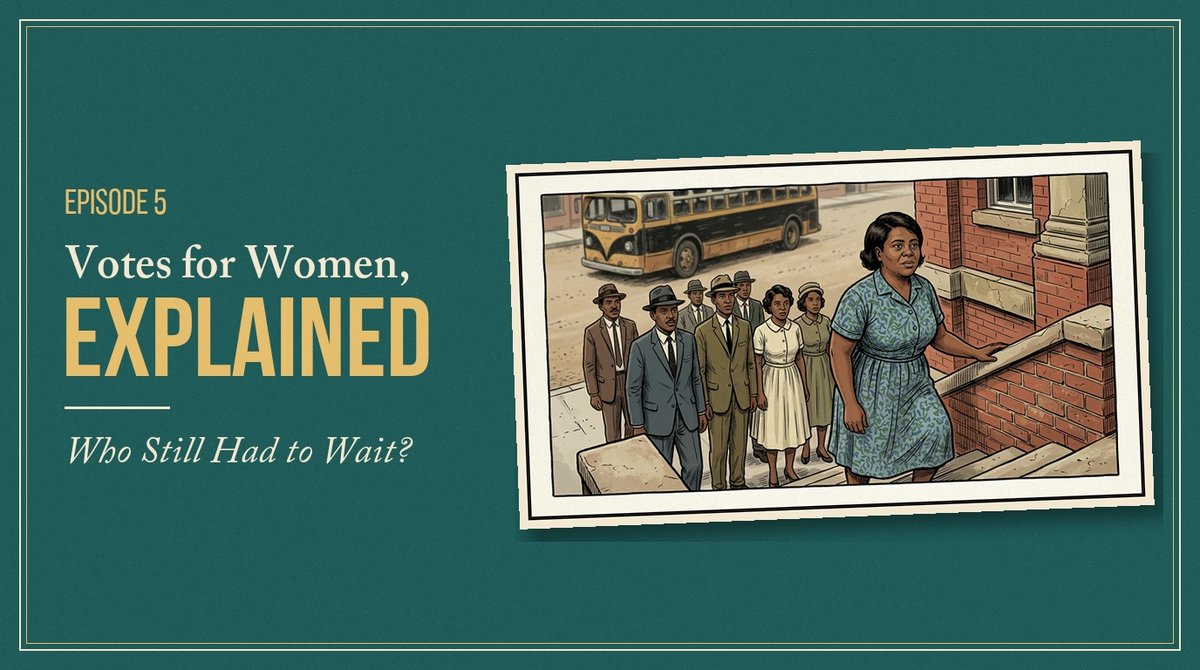
1918 and 1920 were not the end. Britain gave women the vote at 21 like men in July 1928 (about five million more women); Pankhurst died weeks before. In the US, the 19th Amendment barred refusing the vote because of sex, not race: in the South, poll taxes, reading tests run by white officials, threats and lost jobs kept many Black women and men from voting until the Voting Rights Act of August 1965 (Fannie Lou Hamer as an example). Native Americans, citizens from 1924, were barred in some states until 1948 and 1957; Asian immigrants could not become citizens until 1943 and 1952. Around the world: New Zealand 1893, Germany November 1918, France April 1944 (after the Senate said no), Switzerland 1971 (Appenzell 1990).
Episode worksheets (2)
- Student sheet In your teacher account
- Teacher sheet In your teacher account
Teaching guide
Objective & content
In the last episode of the series, two hosts, one American and one British, ask who still had to wait for the vote after 1918 and 1920, in Britain, in America and around the world. Learners practise the past simple (watched, tried, failed, passed, banned, voted, gave, became, got, led, said), had to for a rule in the past (in 1918, British women had to be thirty to vote), could and couldn't for what was possible or not (many immigrants from Asia couldn't become citizens at all), from ... until for a period (from 1920 until 1965) and past simple questions with did (Did Emmeline Pankhurst see it? So why did it take so long?). They listen for names, years and countries, then answer the quiz in the app and the one-page pupil sheet. The story follows these beats:
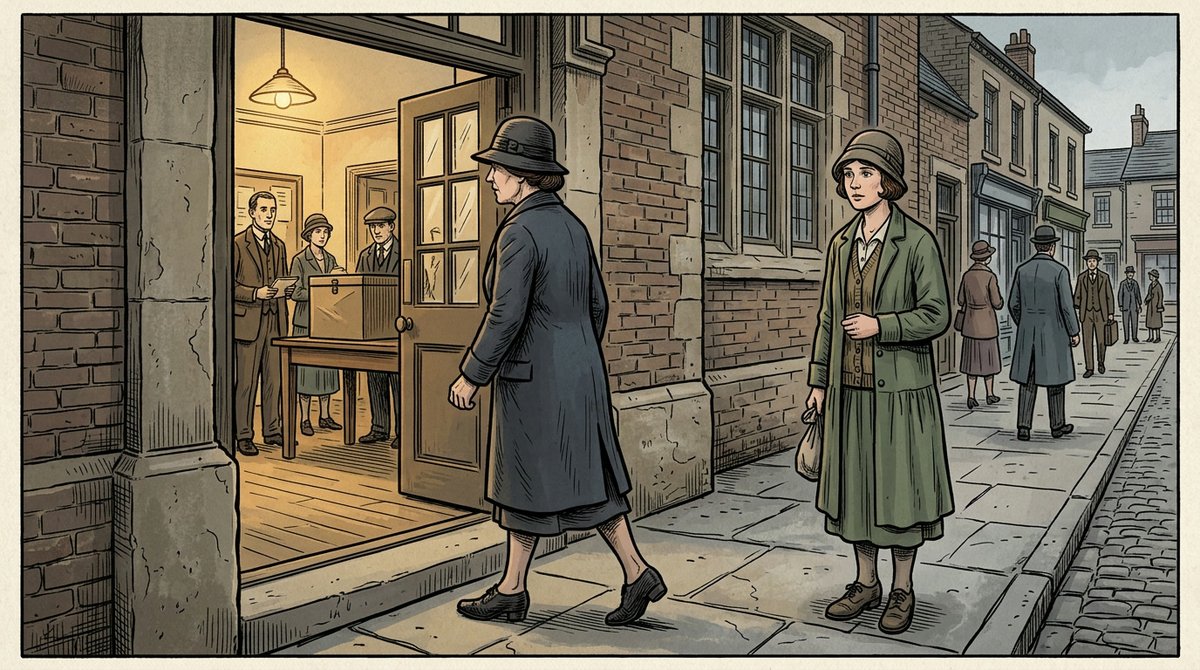
- Britain: in 1918 women had to be thirty to vote and men only twenty-one, so the campaign went on. In July 1928 a new law gave women the vote at twenty-one, just like men. Emmeline Pankhurst died in June 1928, a few weeks before the new law; Millicent Fawcett watched it happen in Parliament.
- America: the Nineteenth Amendment became law in 1920, but its words say that no one could lose the vote because of their sex, not their race. In the South there were already rules to stop Black men from voting: a poll tax, reading tests run by white officials, and threats. Black women in the South met the same rules, and for many of them the vote of 1920 was a promise on paper, from 1920 until 1965.
- Fannie Lou Hamer tried to register to vote in Mississippi in 1962 and failed the reading test; that same day she lost her job and her home. She tried again, and in 1963 she passed. In August 1965 the Voting Rights Act banned the reading tests.
- Native Americans became citizens in 1924, but some states didn't let them vote until 1948 (Arizona and New Mexico) and 1957 (Utah). Many immigrants from Asia couldn't become citizens at all: Chinese immigrants could from 1943, and most others from 1952.
- Round the world: New Zealand was the first self-governing country to give women the vote, in 1893, after a campaign led by Kate Sheppard. German women got the vote in November 1918 and voted for the first time in January 1919; in February 1919 Marie Juchacz was the first woman to speak there ("Gentlemen and ladies."). In France the Senate said no every time, and women got the vote in April 1944. Swiss men voted on it in 1971, and a court made Appenzell change in 1990.
- The hosts' answer: after 1918 and 1920, a lot of women still had to wait, some for ten years and some for more than fifty.
The hosts open and close this episode with a short hello and goodbye, and thank listeners for the series.
Pedagogical guide
The 45-minute lesson plan starts from a question for the class: is a new law always the end of the story? Learners give ideas, listen twice (once for who still had to wait, once with four pauses for questions), then practise facts, vocabulary and the grammar of the past: the past simple, had to, could and couldn't, from ... until and questions with did. The two hosts are equals who each bring their own country's view, and the British host then goes round the world. The idea to repeat is that after 1918 and 1920 a lot of women still had to wait: a "Britain", an "America" and a "The world" column on the board, and the surprise in the words of the amendment, "Their sex. Not their race." The plan also asks the teacher to say plainly that in America the voting rules were set state by state: the Southern states used poll taxes, reading tests and threats to keep Black people from voting until the 1965 law, while in northern states (for example Illinois and New York) Black women voted from 1920. Slide 8 of the slideshow, from about 1:18, shows a Black woman voting in Chicago in 1920 on purpose, just before the hosts turn to the rules in the South. This is background for the teacher, not a test point: the episode does not say it. The poll tax, the reading tests, the threats and Fannie Lou Hamer losing her job and her home are said as plain facts; the plan sets no question or task on them and never asks pupils to guess anyone's motive. The numbers the hosts give as approximate stay out of tests. Most activities have a support path and a stretch path.
Suggested procedure
- Activate knowledge (3 min): ask whether a new law is always the end of the story, and collect ideas.
- Vocabulary preview (4 min): campaign, equal, at last, poll tax, official, on paper, register, ban, citizen, immigrant.
- First listen (9 min): play the whole episode (about 6 minutes 40 seconds, with the theme tune and the hosts' hello) and ask which countries the hosts talk about and who still had to wait.
- Second listen (11 min): pause four times, after "She watched it happen in Parliament.", after "That's almost half a century.", after "It did." and after "Women finally got the vote in April 1944.", to ask short questions; when slide 8 comes up just after the first pause, stop for a few seconds and say how the rules differed from state to state.
- Comprehension check (4 min): the Facts part of the pupil sheet (questions 1 to 6, as in the app quiz).
- Vocabulary practice (4 min): the Vocabulary part (questions 7 to 12).
- Grammar focus (6 min): put facts of the story in the past simple, review had to, couldn't, from ... until and a question with did, then the Grammar part (questions 13 to 18).
- Speaking (4 min): in pairs, students play the two hosts and ask and answer questions about Britain in 1928, the Voting Rights Act and New Zealand, ending on the hosts' last lines.
Materials & prerequisites
- The episode in the app, with its quiz.
- The one-page pupil sheet (18 items: facts, vocabulary, grammar) and its answer key, in the episode's printables.
- The two-sided differentiated worksheet and its answer key, for homework or a second lesson.
- Prerequisites: the past simple of regular and irregular verbs, was and were, can and can't, and years in English.
Possible adaptations
- Lower levels: Offer segmented listening and additional visual aids.
- Advanced levels: Encourage an oral summary and a debate in English on the theme.
- Large groups: Organise group work with differentiated roles.
🔒 Restricted content
This resource requires a subscription to be viewed.
Unlock the resourceIncluded in the subscriptionTags
- Documentary
- Past simple: regular verbs
- Past simple: irregular verbs
- Past simple: was / were
- Modals in the past
- Wh- questions
- Society & politics
- Government
- Civil rights
- Countries
- Historical dates
- Women's suffrage
- Forms of commitment
- Encountering others
- Listening comprehension
- Cultural awareness
- Vocabulary building
- Citizenship & society
- World cultures
- Modern history
- Our World
- Places & Journeys
- Past & Progress