Lyrebird
Episode of the series Animals & Creatures of Australia
- Illustrated slideshow
- Glossary
- Comprehension quiz (45 questions)
- Cultural notes
 Extract · 30 s
The episode
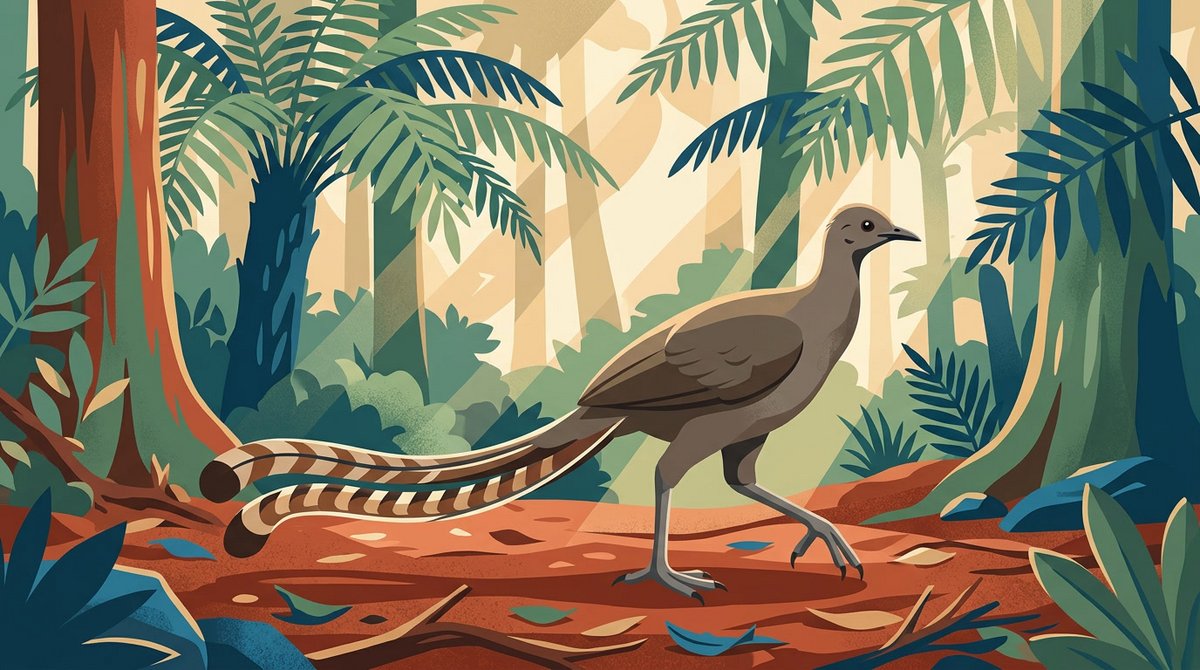
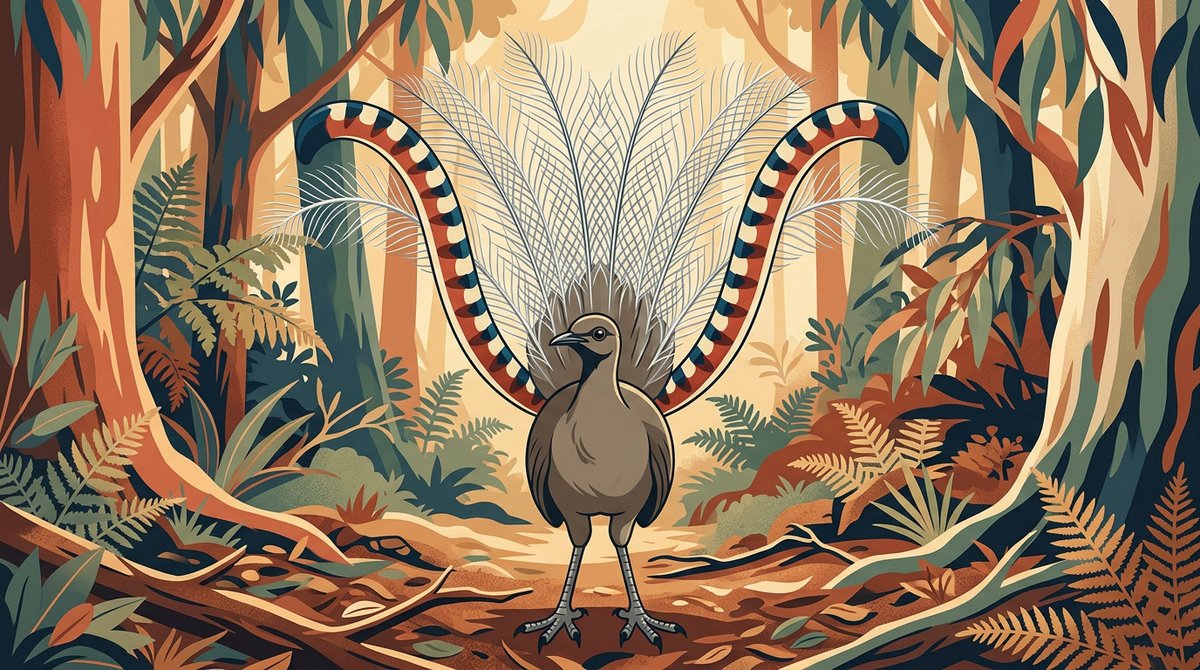
The bird that copies every sound. The male lyrebird opens a tail shaped like an old musical instrument, and he can sing the song of other birds, or the sound of a camera or a car.
Episode worksheets (2)
- Student sheet In your teacher account
- Teacher sheet In your teacher account
Teaching guide
Objective & content
This documentary episode presents the lyrebird, a large bird of the forests of south and east Australia. The narrator explains where its name comes from (the tail has the shape of a lyre), what it looks like, and why it is famous: it can copy the sounds it hears. The episode also covers the male's dance on a small mound, the single egg and the chick, its food, and the loss of forest that threatens it. The language focus is the present simple for facts, can for ability and prepositions of place, with vocabulary on wild animals and the forest. Learners work on listening comprehension.
Materials & prerequisites
The episode folder holds a student sheet and a teacher sheet (PDF and HTML) and the printable text in markdown. Learners should already know be and have in the affirmative, simple adjectives, and in, on and at for place.
Curriculum alignment
Tagged c3-child-and-living-world (cycle 3, 6e): the child and the living world. The episode targets CEFR level A1-.
Possible adaptations
- Lower levels: Offer segmented listening and additional visual aids.
- Advanced levels: Encourage an oral summary and a debate in English on the theme.
- Large groups: Organise group work with differentiated roles.
🔒 Restricted content
This resource requires a subscription to be viewed.
Unlock the resourceIncluded in the subscriptionTags
- Present simple
- Be (affirmative)
- Can: ability
- Adjectives: basics
- Prepositions of place and time
- Wild animals
- Physical description
- Environment
- Australian animals
- Child and living world
- Listening comprehension
- Vocabulary building
- Cultural awareness
- Animals & nature
- Protecting nature
- Exploring Australia
- Our World
- Places & Journeys