Wombat
Episode of the series Animals & Creatures of Australia
- Illustrated slideshow
- Glossary
- Comprehension quiz (45 questions)
- Cultural notes
 Extract · 30 s
The episode
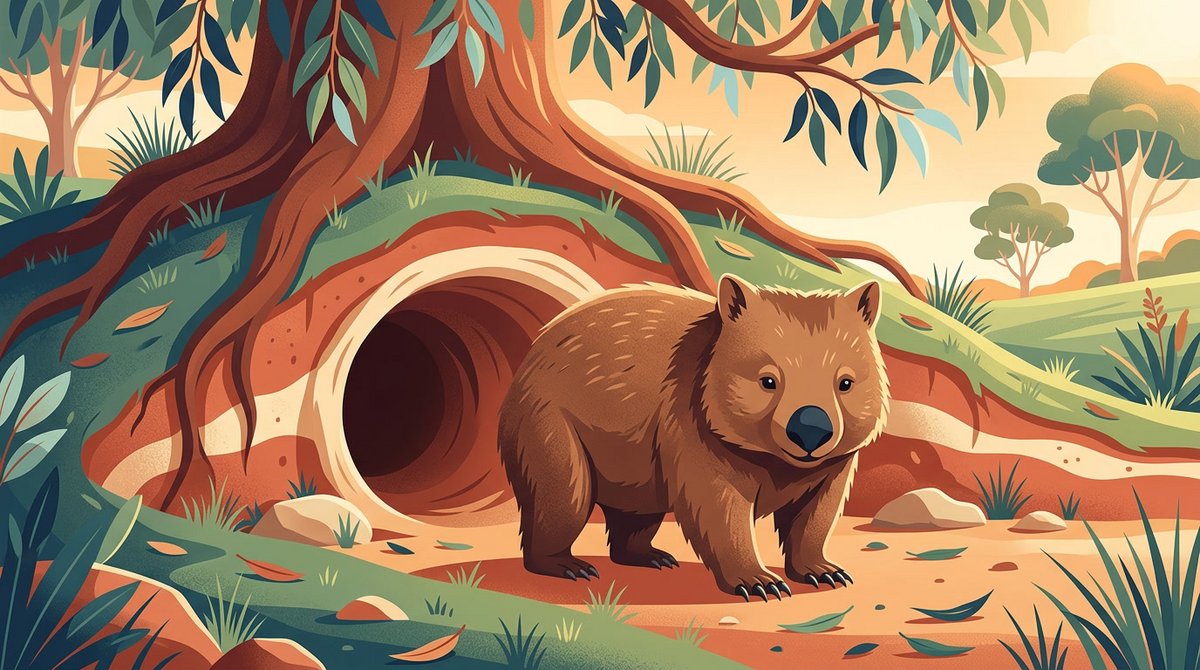
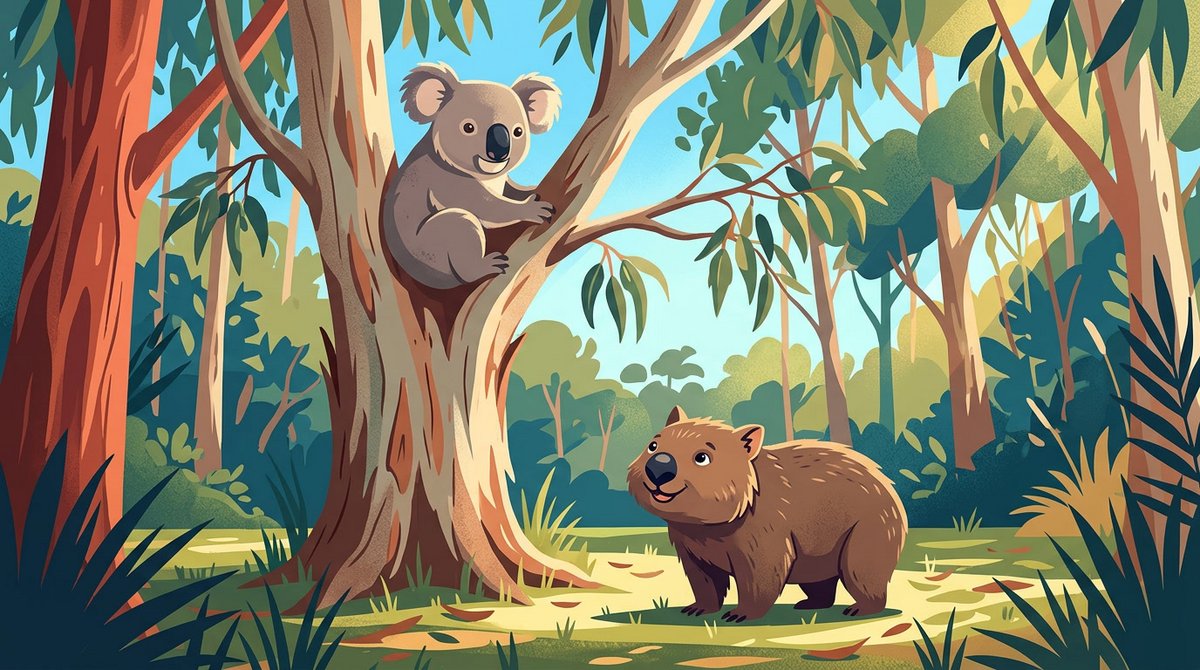
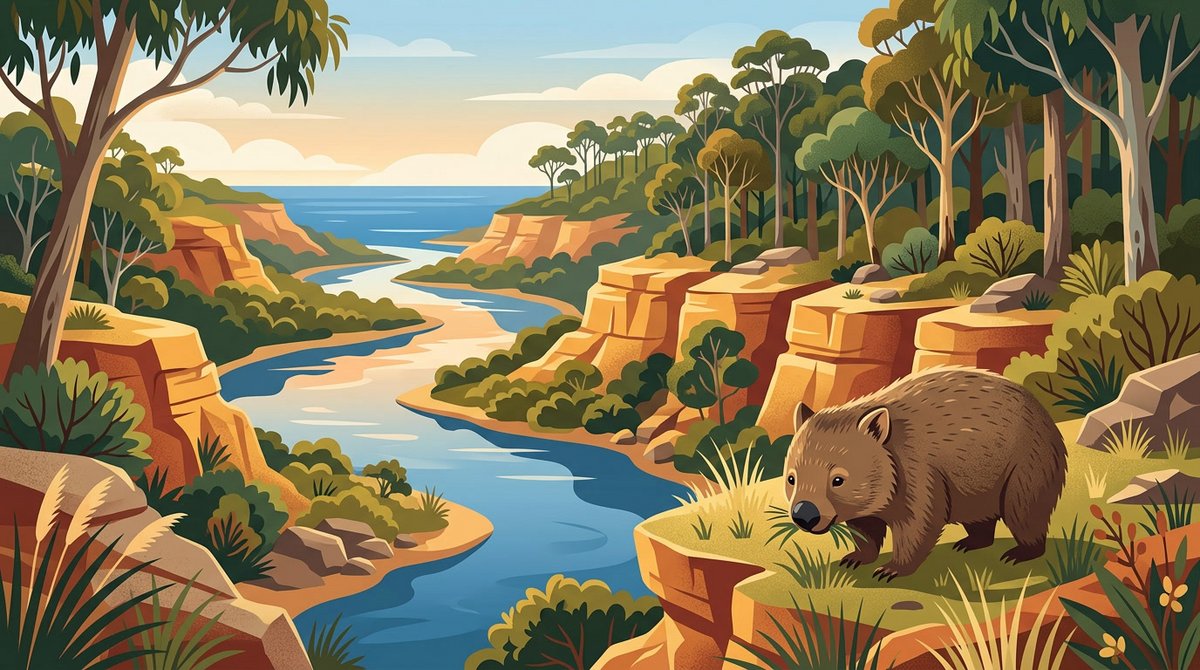
The animal with square poo. The wombat makes its house under the land. It sleeps sixteen hours a day, and it can run very fast on its short legs.
Episode worksheets (2)
- Student sheet In your teacher account
- Teacher sheet In your teacher account
Teaching guide
Objective & content
This documentary episode presents the wombat, a marsupial related to the koala. The narrator describes its strong body and short legs, the underground houses it digs, its habit of sleeping about sixteen hours a day, and the names of the mother (a jill) and the baby (a joey). It also covers the box-shaped droppings wombats leave as a message, the giant wombats of the past, and what to do if you see a baby wombat near a road. The language focus is the present simple for facts, can for ability and adjectives of size and colour, with vocabulary on wild animals and body parts. Learners work on listening comprehension.
Pedagogical guide
The 25-minute lesson plan starts from a picture of the wombat and the question "Is it big or small? Where does it live?". Learners preview six words (pouch, joey, safe, square, rock, marsupial), listen twice (once for the main idea, once with two pauses for questions), then check comprehension, practise is + adjective and can for ability, and speak in pairs. Support and stretch paths are given for each activity, and an optional writing task has learners make two sentences for a class poster.
Suggested procedure
- Pre-listening, activate knowledge (3 min): show a picture of a wombat and ask where it lives.
- Pre-listening, vocabulary preview (2 min): present pouch, joey, safe, square, rock and marsupial.
- First listen (3 min): play the whole episode and ask whether the wombat is fast or slow.
- Second listen (5 min): pause at 2:41 (its speed) and 3:50 (the square poo) to ask questions.
- Comprehension check (3 min): five oral or written questions from the student sheet.
- Vocabulary practice (3 min): match the six preview words to their definitions.
- Grammar focus (3 min): complete sentences with is + adjective and can + verb.
- Speaking extension (3 min): pairs give three facts about an animal for a partner to guess.
- Optional writing: two sentences about the wombat for a class poster, one fact and one opinion.
Materials & prerequisites
The episode folder holds a student sheet and a teacher sheet (PDF and HTML) and the printable text in markdown. Learners should already know be and have in the affirmative, numbers and measurements, and basic colour adjectives.
Curriculum alignment
Tagged c3-child-and-living-world (cycle 3, 6e): the child and the living world. The episode targets CEFR level A1-.
Possible adaptations
- Lower levels: Offer segmented listening and additional visual aids.
- Advanced levels: Encourage an oral summary and a debate in English on the theme.
- Large groups: Organise group work with differentiated roles.
🔒 Restricted content
This resource requires a subscription to be viewed.
Unlock the resourceIncluded in the subscriptionTags
- Present simple
- Be (affirmative)
- Can: ability
- Adjectives: basics
- Wild animals
- Physical description
- Environment
- Australian animals
- Child and living world
- Listening comprehension
- Vocabulary building
- Cultural awareness
- Animals & nature
- Protecting nature
- Exploring Australia
- Our World
- Places & Journeys