One treaty, two texts
Episode of the series Look Closer
- Illustrated slideshow (29 images)
- Glossary (15 words)
- Comprehension quiz (10 questions)
- 9 cultural notes
 Extract · 30 s
The episode
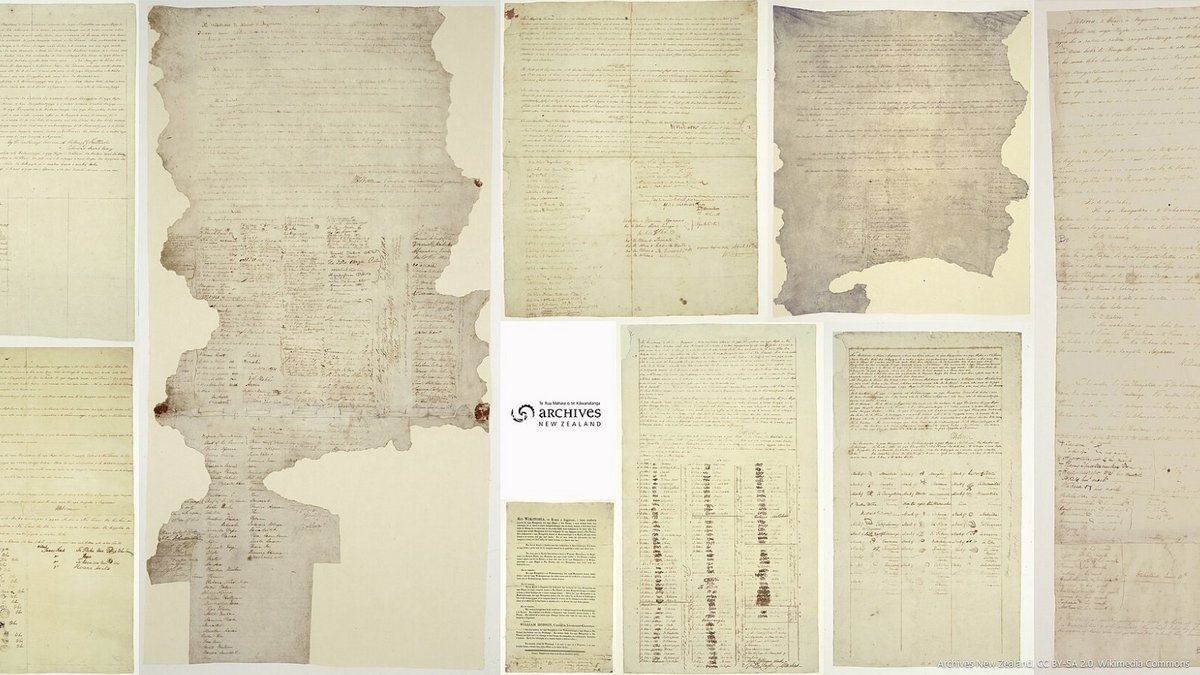
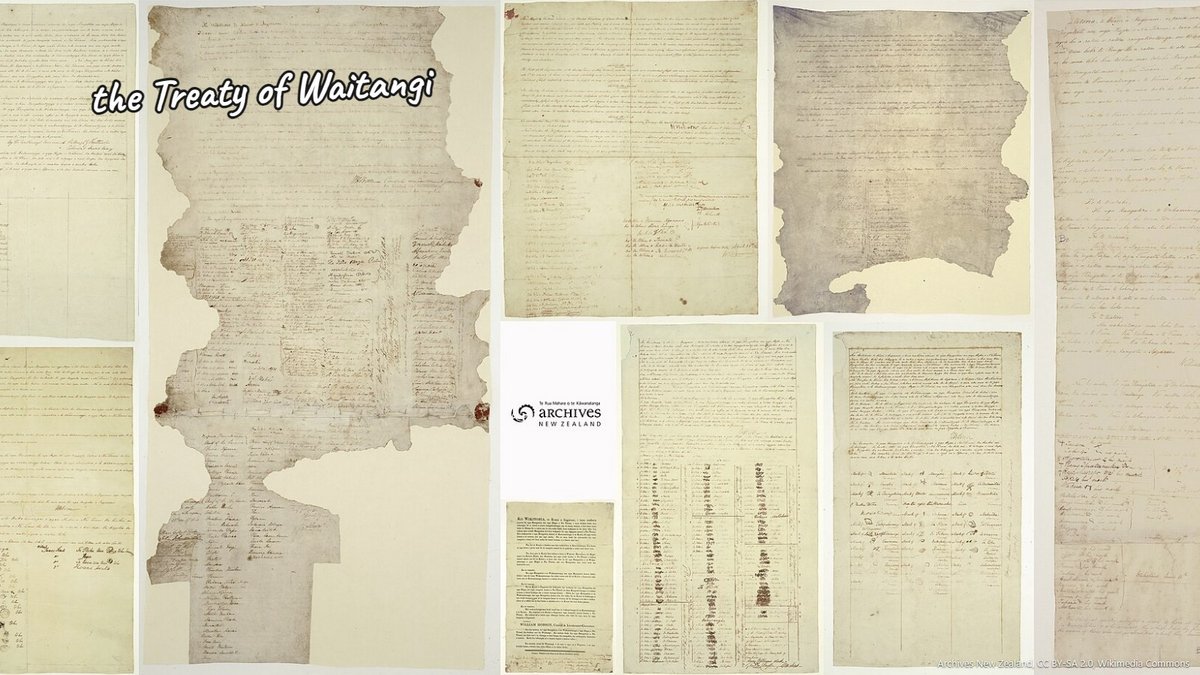
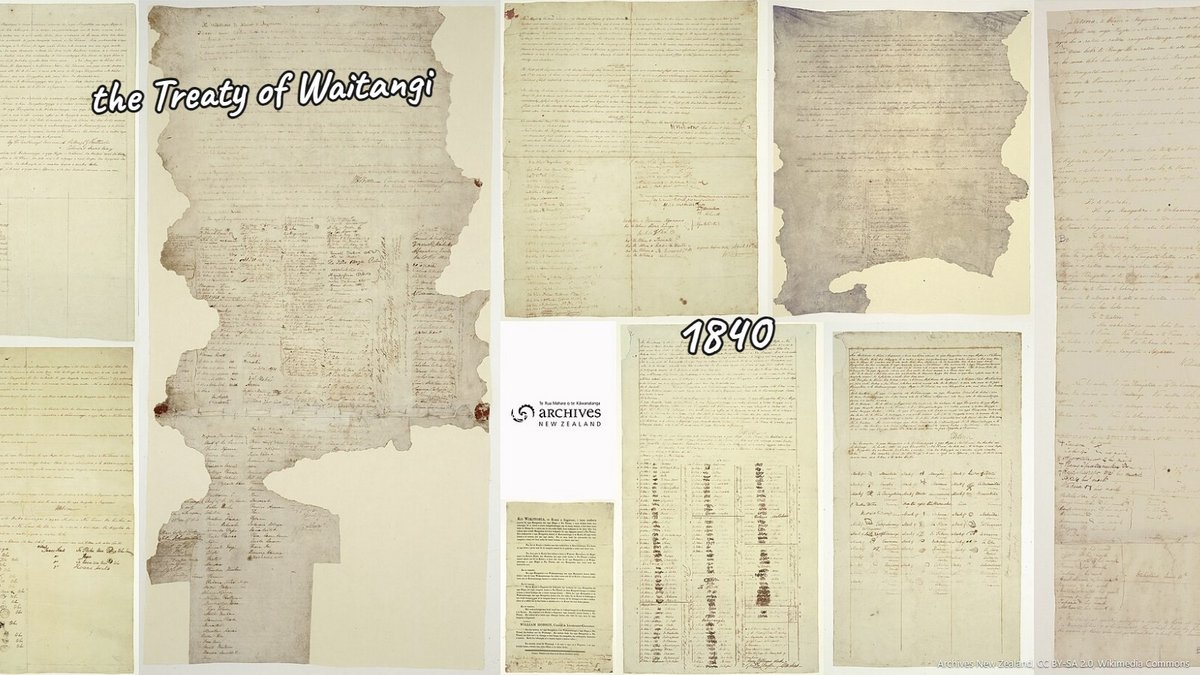
A narrator presents the Treaty of Waitangi of 1840, an agreement between Britain and the Māori chiefs, written in English and translated into Māori in one night.
Episode worksheets (2)
- Student sheet In your teacher account
- Teacher sheet In your teacher account
Teaching guide
Objective & content
This Look Closer episode (episode 49 of the mini-series New Zealand, two languages) is a short documentary about the Treaty of Waitangi, an important paper from 1840: an agreement between Britain and the Māori chiefs. A single narrator explains that in February a British officer gave the English text to Henry Williams, an Englishman who spoke Māori, and that Williams and his son Edward had only one night to write it in Māori. Two days later about forty chiefs signed it at Waitangi, and in the end more than five hundred chiefs signed, almost all in Māori. The narrator then looks closely at one word: in the English text the chiefs gave the Queen their "sovereignty", the power to rule the whole country, but the Māori text uses another word, "kāwanatanga", the power of a governor, a smaller power. Many chiefs understood that they kept the power over their own people and land, so one treaty says two different things, and people still talk about it today. The episode tells this as a question of translation, with no blame. It is a comprehension episode: the narration uses the past simple and the present simple, with smaller, and no grammar point is taught. Learners listen, then answer the 10 questions in the app: 7 on facts and 3 on vocabulary (treaty, sovereignty, kāwanatanga). The study topic is Māori and English in New Zealand: one treaty in two languages.
Materials & prerequisites
The folder holds the audio, the slideshow and the script. Each pack is a one-page PDF with the text, three photos, the key words and the 10 questions: a pupil pack, and a teacher pack with the answers highlighted. It also has a pupil sheet and a teacher sheet with the answer key. It has no lesson plan. Play the episode twice, hand out the pupil pack, then use the closing question (Was one night enough time to translate the treaty?) for a short class discussion about translation. Learners should know the words paper, word, night and country, and be able to read years such as 1840. The pack's key words explain the new words (treaty, agreement, translate, sovereignty, rule).
Curriculum alignment
Tagged languages-places-stories (5e, "Des langues, des lieux, des histoires", Cycle 4). The episode targets CEFR level A2-.
Possible adaptations
- Lower levels: Offer segmented listening and additional visual aids.
- Advanced levels: Encourage an oral summary and a debate in English on the theme.
- Large groups: Organise group work with differentiated roles.
🔒 Restricted content
This resource requires a subscription to be viewed.
Unlock the resourceIncluded in the subscriptionTags
- Past simple: regular verbs
- Past simple: irregular verbs
- Past simple: was / were
- Present simple
- Comparatives: short adjectives
- Government
- Historical dates
- Commonwealth history
- Society & politics
- New Zealand
- Commonwealth
- Languages, places, stories
- Listening comprehension
- Vocabulary building
- Cultural awareness