Famous for a Day
- A comparison
 Preview · 3 of 11
Objective & content
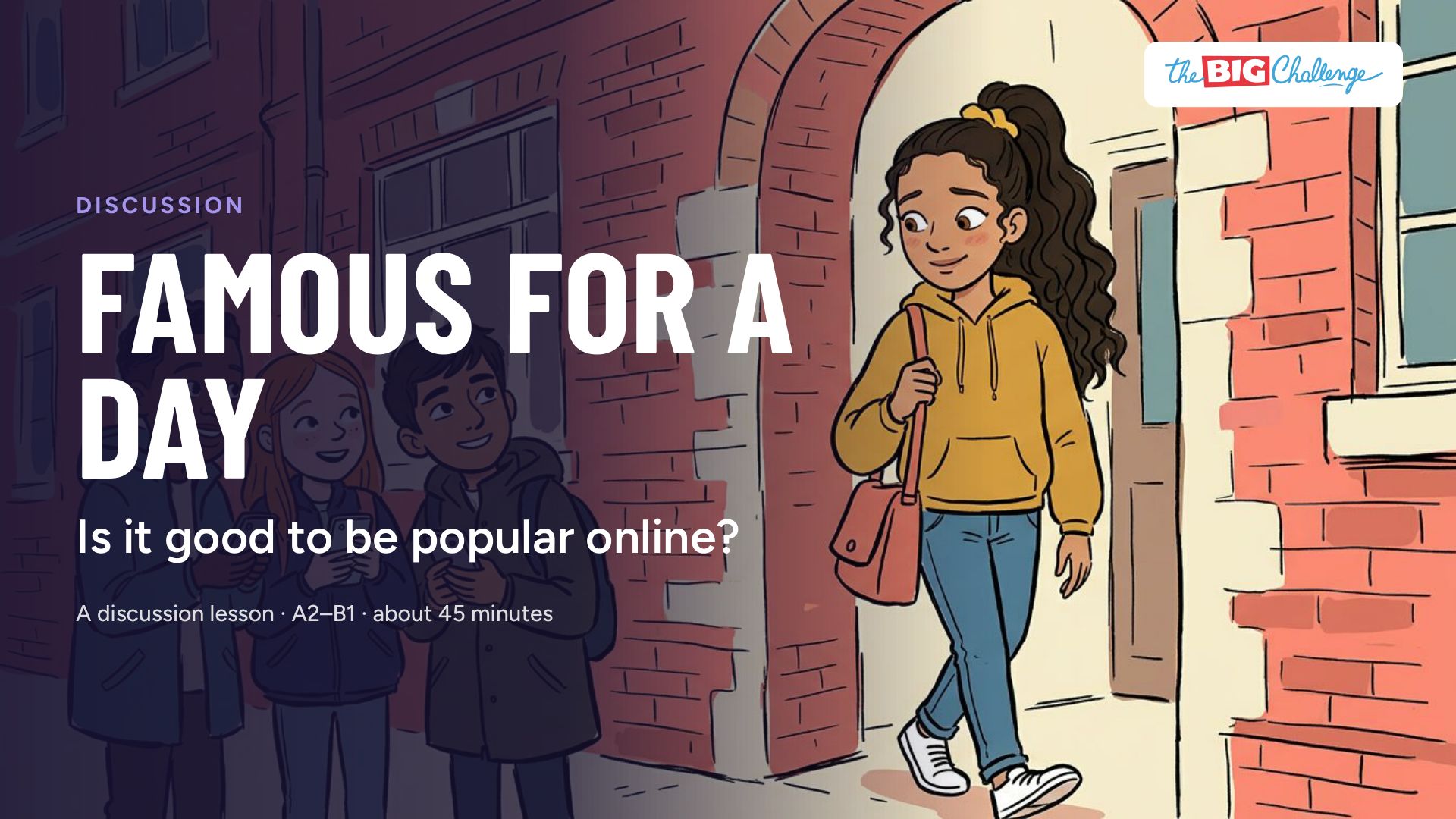
Is it good to be popular online? This 45-minute discussion lesson follows one path: the pupils first, then two stories about sudden attention, then what the class thinks. The first story is Tiago, 14, who loves his new fan club at his school in California (Golden Bay). The second is Amira, 13, who posts a dance video and reads the kind and unkind comments of strangers: a short story written for this lesson. By the end, pupils can talk about fame, attention and being popular online, compare two stories, defend an opinion and put six things in order of importance.
Documents to download (2)
- Pupil sheet In your teacher account
- Colour version In your teacher account
Pedagogical guide
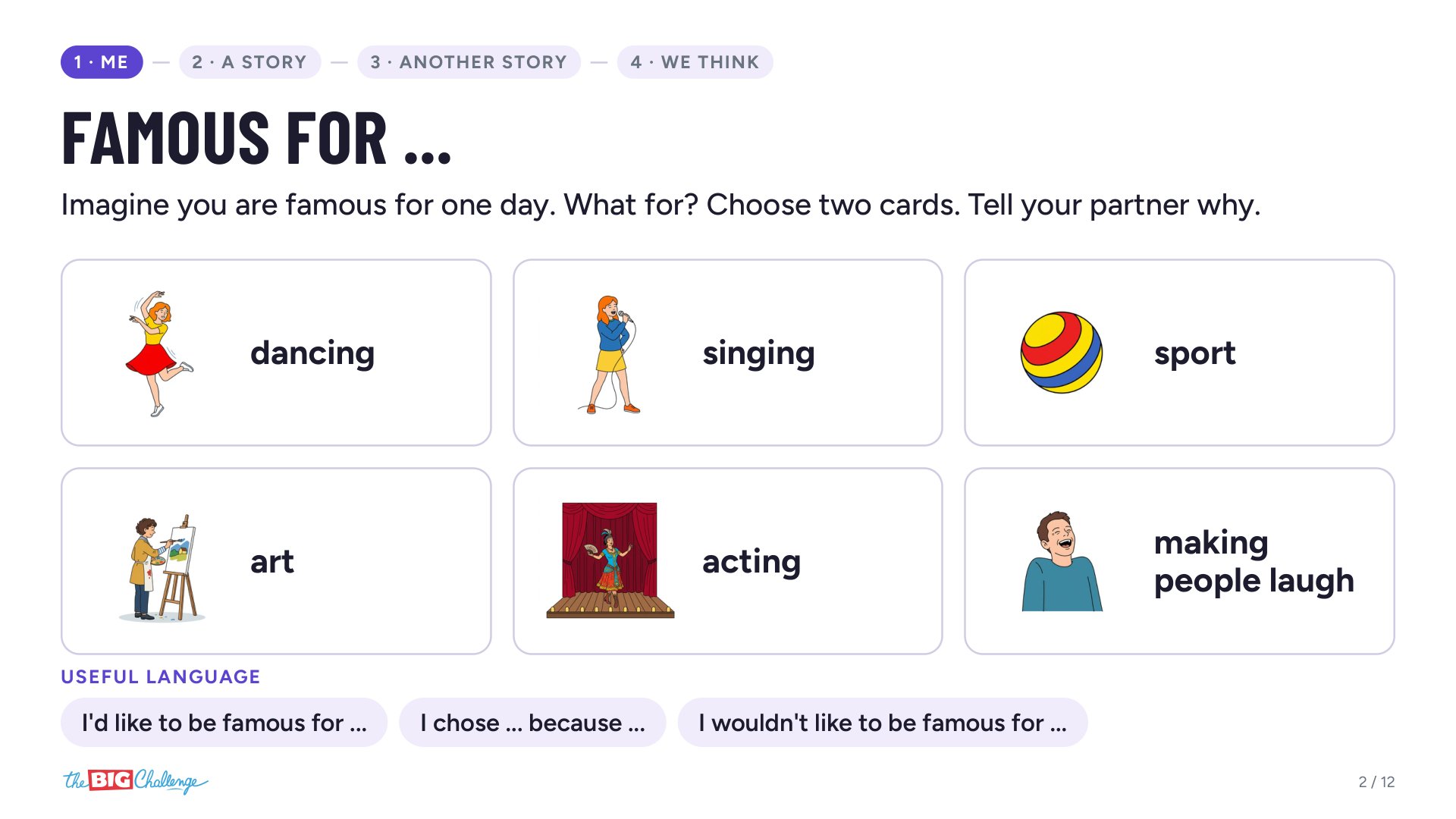
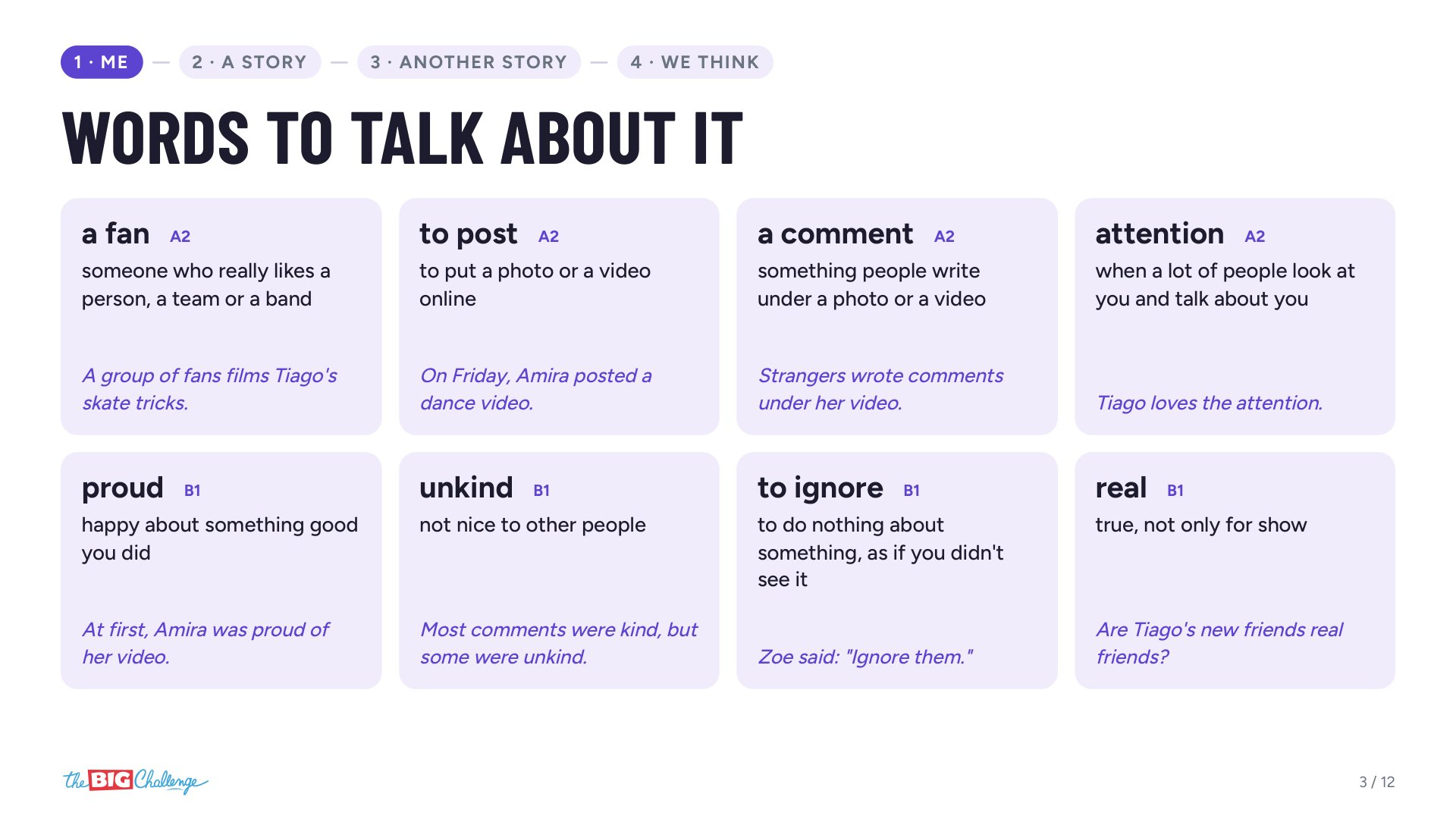
Every slide asks the class to do something: choose two picture cards, read four characters' words and say who they agree with, pick three feeling words, compare Amira and Tiago in three boxes, choose three ways to help Amira, stand on a line from 1 to 5, put six cards in order. The words come before the talking, and each question has an A2 version for everyone and a B1 one for stronger pupils. The pupil sheet follows the slides, so every pupil leaves with something written. The subject needs care: the questions are always about Tiago, Amira or a friend, never about a pupil's own accounts, followers, likes or comments. The unkind comments in Amira's story come from strangers, not from her school. Amira's story ends open, so the class decides what she should do. If a pupil mentions unkind comments online, they tell a trusted adult.
Suggested procedure45 min
- 2 min
Show the cover and read the big question: "Is it good to be popular online?" No answers yet.
- 7 min
Famous for ...: pairs choose two cards each and say why. Then read the eight words and their examples together.
- 10 min
Tiago's fan club and the four voices: read the three lines and the quote, then the bubbles aloud; pairs choose the voice they agree with most.
- 12 min
Amira's video: read the story and check the four facts, choose three feeling words, then compare Amira and Tiago in the three boxes on the pupil sheet.
- 8 min
Help Amira, then "Where do you stand?": pupils choose alone, explain to a partner, then stand on the line from 1 to 5. Come back to the big question.
- 6 min
When you post a video: pupils put six cards in order on the sheet, then defend their number 1 to a partner.
Adaptations
- SupportKeep the word slide on screen during the voices and the Amira slides, and accept one-sentence answers built on the useful language. Pupils can draw or number their choices instead of writing them.
- ExtensionAsk stronger pairs the B1 question on the voices slide ("What does Harper mean? Is she right?"), and have them argue for a place on the line from 1 to 5 that is not their own, or defend the order of someone else's cards.
🔒 Restricted content
This resource requires a subscription to be viewed.
Unlock the resourceIncluded in the subscriptionTags
- Present simple
- Past simple: regular verbs
- Past simple: irregular verbs
- want / would like to
- Comparatives: long / irregular
- Feelings & emotions
- Social media
- School life
- Debate & opinion
- US teen life
- Digital citizenship
- Encountering others
- Spoken interaction
- Spoken production
- Writing practice
- Reading comprehension
- Classroom practice
- Differentiation