Part-time Jobs
- A comparison
 Preview · 3 of 11
Objective & content
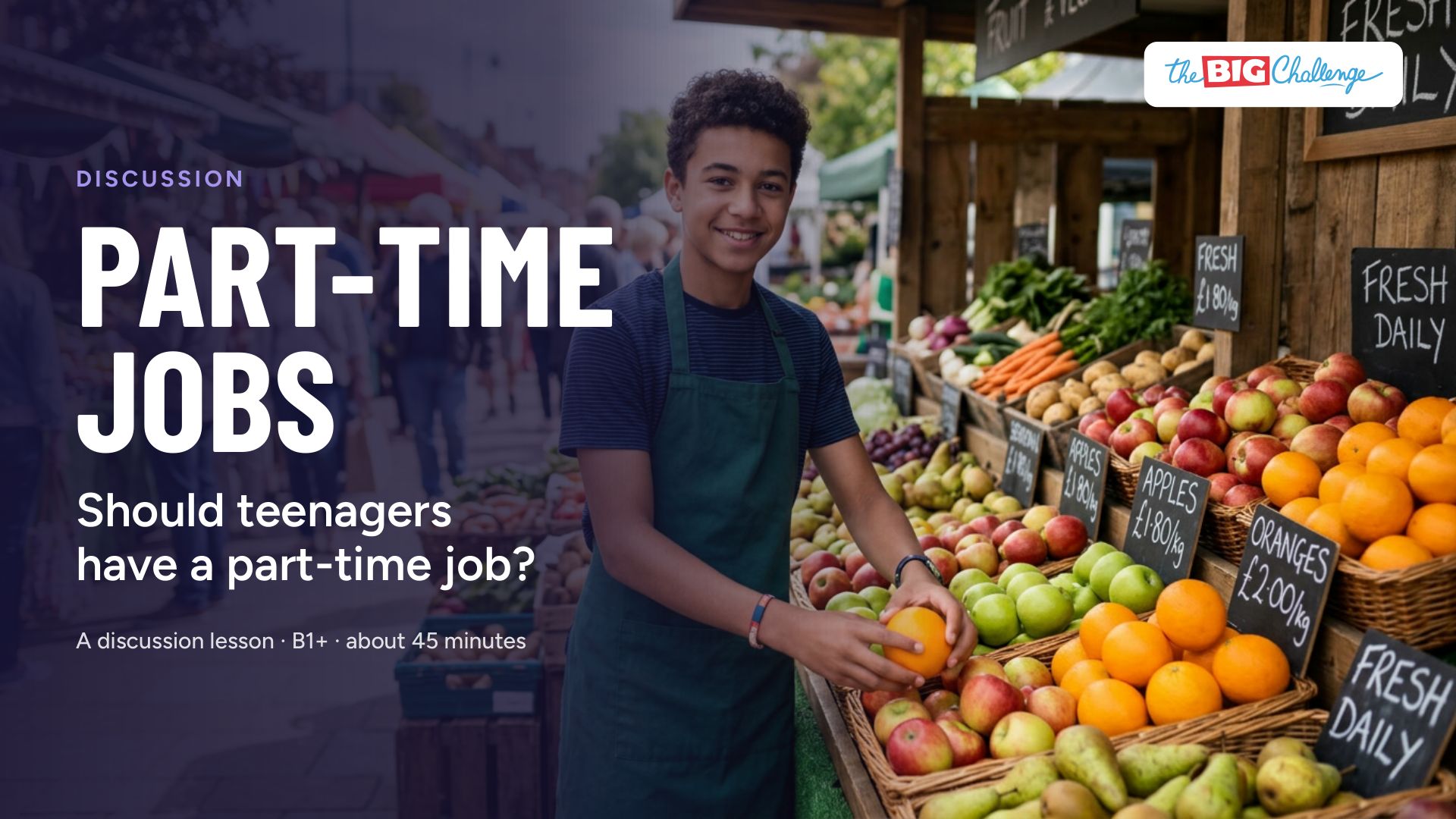
Should teenagers have a part-time job? This 45-minute discussion lesson follows one path: the pupils first, then a story, then the world, then what the class thinks. The story is Maya, 15, who lives in Bristol: in September she starts a Saturday job in a café to save up for a festival ticket. By November she has saved £250 and she talks to customers without feeling shy, but she is tired on Mondays, her maths marks have gone down and she has missed her best friend's party (a short story written for this lesson). Then the class looks at the real rules: from 13 in England, with a limit in term time; from 14 and in the school holidays only in France; from 13, two hours a day, in Germany. By the end, pupils can talk about the good and bad sides of a job at their age, compare rules, defend an opinion and give advice in a short written reply.
Documents to download (2)
- Pupil sheet In your teacher account
- Discussion lesson (slides) In your teacher account
Pedagogical guide
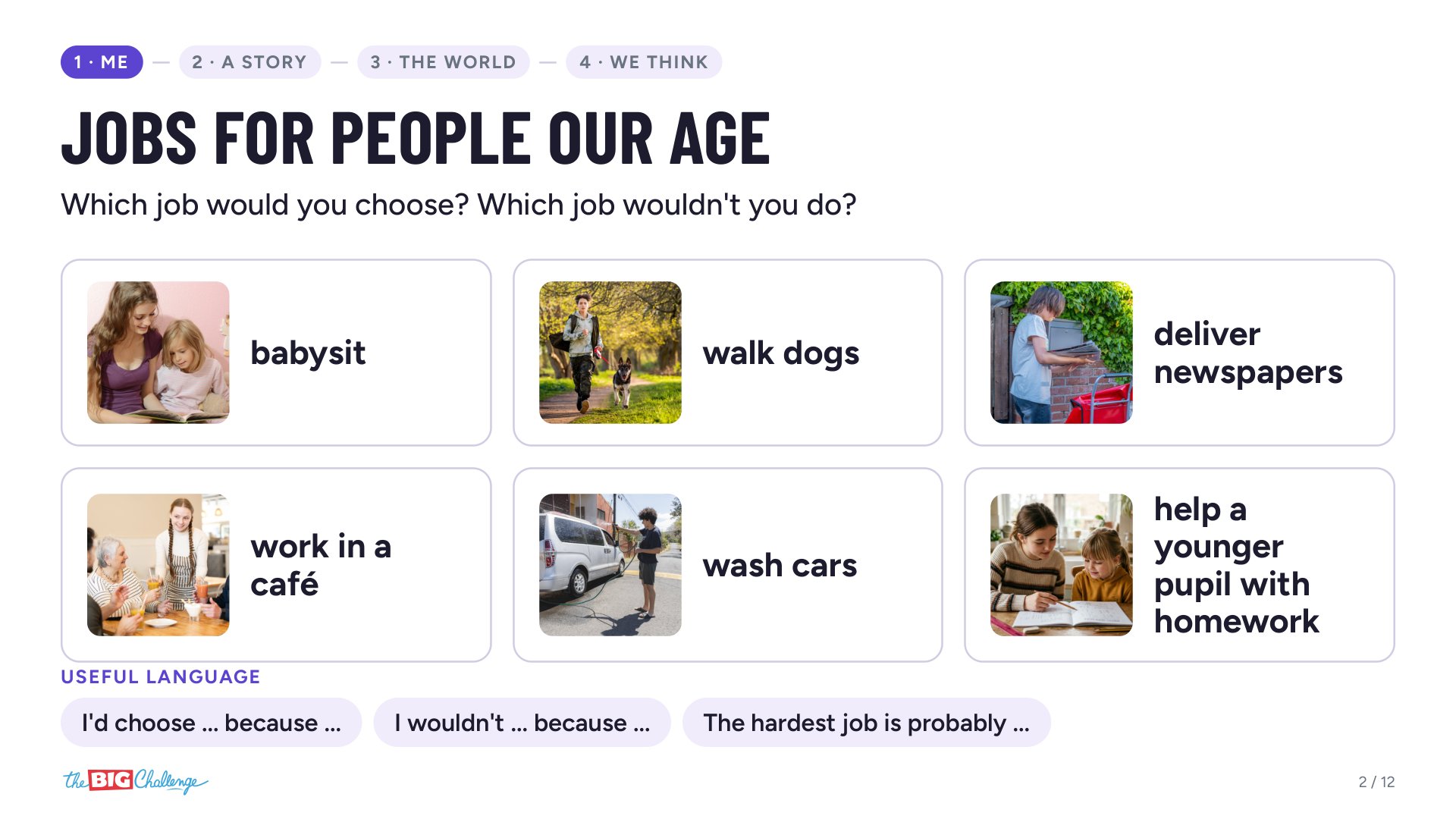
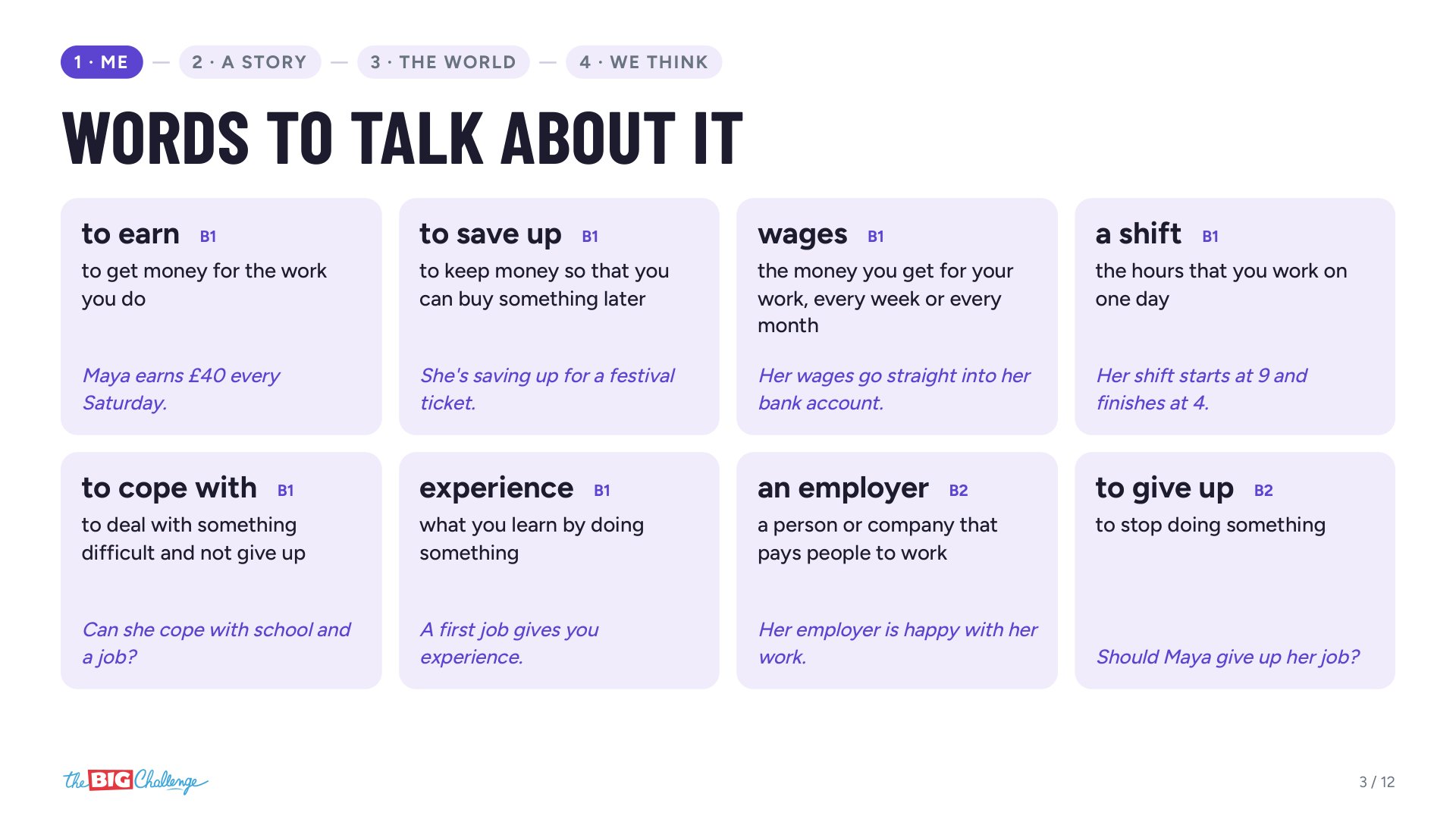
Every slide asks the class to do something: choose a job they would and would not do, learn eight words, pick feeling words for Maya on her first Saturday and in November, read the rules of three countries, say which of four invented voices they agree with, choose the three things that matter most in a first job, compare school, money and free time in three boxes, stand on a line from 1 to 5, and write a reply to Maya. The words come before the talking, and each question has a B1 version for everyone and a B2 one for stronger pupils. The pupil sheet follows the slides, so every pupil leaves with something written. The rules come from the UK government (gov.uk), the French government (service-public.fr) and the German Youth Employment Protection Act, and the sources are on the slide. The four voices are invented opinions and are labelled as such. Some pupils already work, sometimes because their family needs the money, and others are not allowed to work: the cards ask about people their age, never about the pupil's own family or money. Maya lives in England, where a Saturday job at 15 is ordinary; in France she could only work in the holidays, which the class discovers on the rules slide.
Suggested procedure45 min
- 2 min
Show the cover and read the big question: "Should teenagers have a part-time job?" No answers yet.
- 8 min
Jobs for people our age: pairs choose one job they would do and one they would not, and say why. Then read the eight words and their examples together.
- 8 min
Maya's Saturday job: read the story and check the four facts, then choose feeling words for her first Saturday and for November.
- 10 min
What are the rules? and Four opinions: read the rules (which country is strictest?), then the bubbles aloud; pairs choose the voice they agree with most.
- 11 min
The perfect first job, then the three boxes and "Where do you stand?": pupils choose three things, compare school, money and free time, then stand on the line from 1 to 5. Come back to the big question.
- 6 min
Dear Maya: pupils write a short reply with one piece of advice and a reason ("If I were you, I'd ...").
Adaptations
- SupportKeep the word slide on screen during the story and the voices, and accept one-sentence answers built on the useful language. Pupils can number their three things instead of writing them.
- ExtensionAsk stronger pairs the B2 question on the voices slide ("Should Maya give up her job? What would you advise?"), and have them argue for a place on the line from 1 to 5 that is not their own.
🔒 Restricted content
This resource requires a subscription to be viewed.
Unlock the resourceIncluded in the subscription