Is a festival ticket worth it?
- A comparison
- A debate
 Preview · 3 of 11
Objective & content
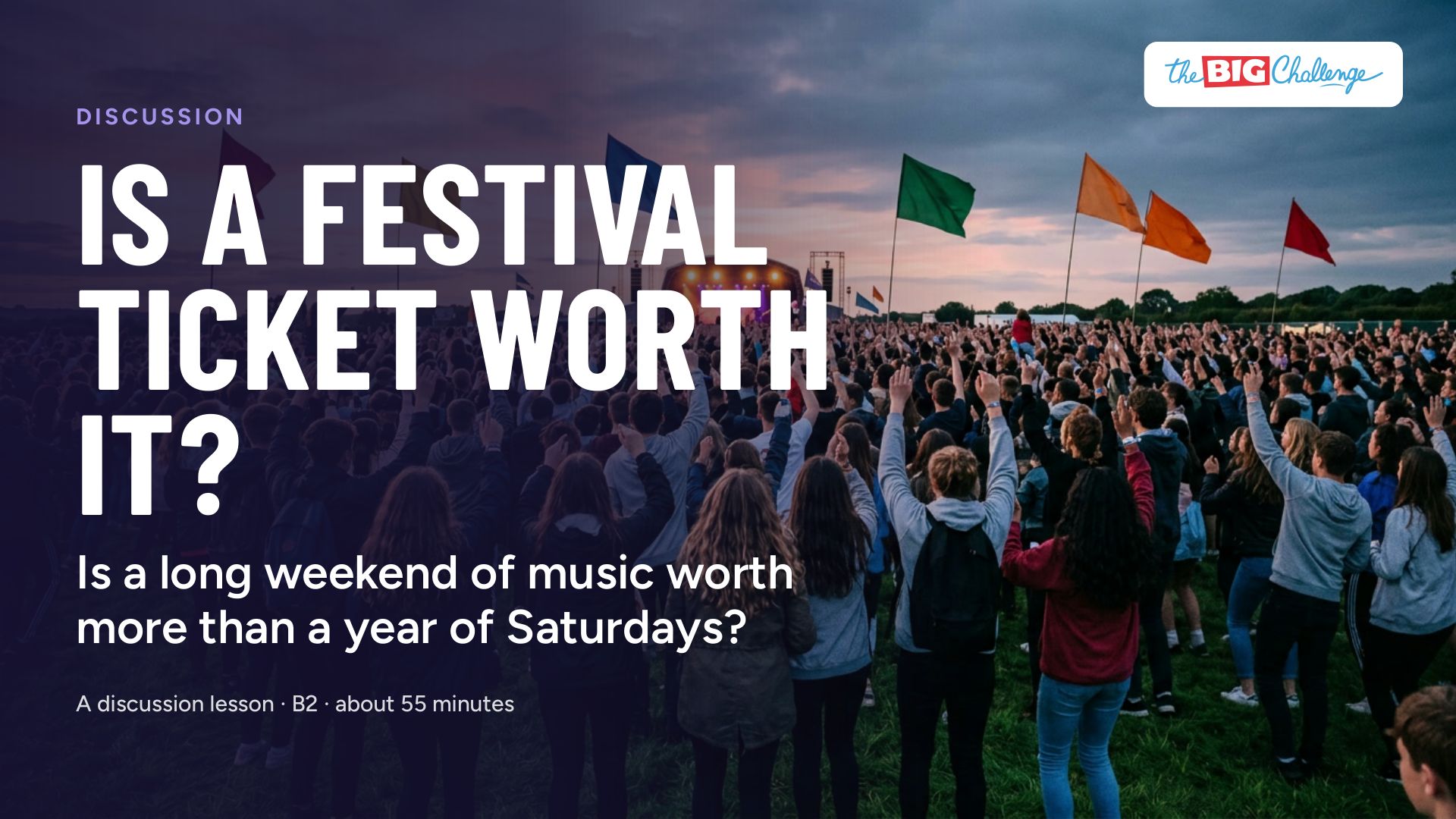
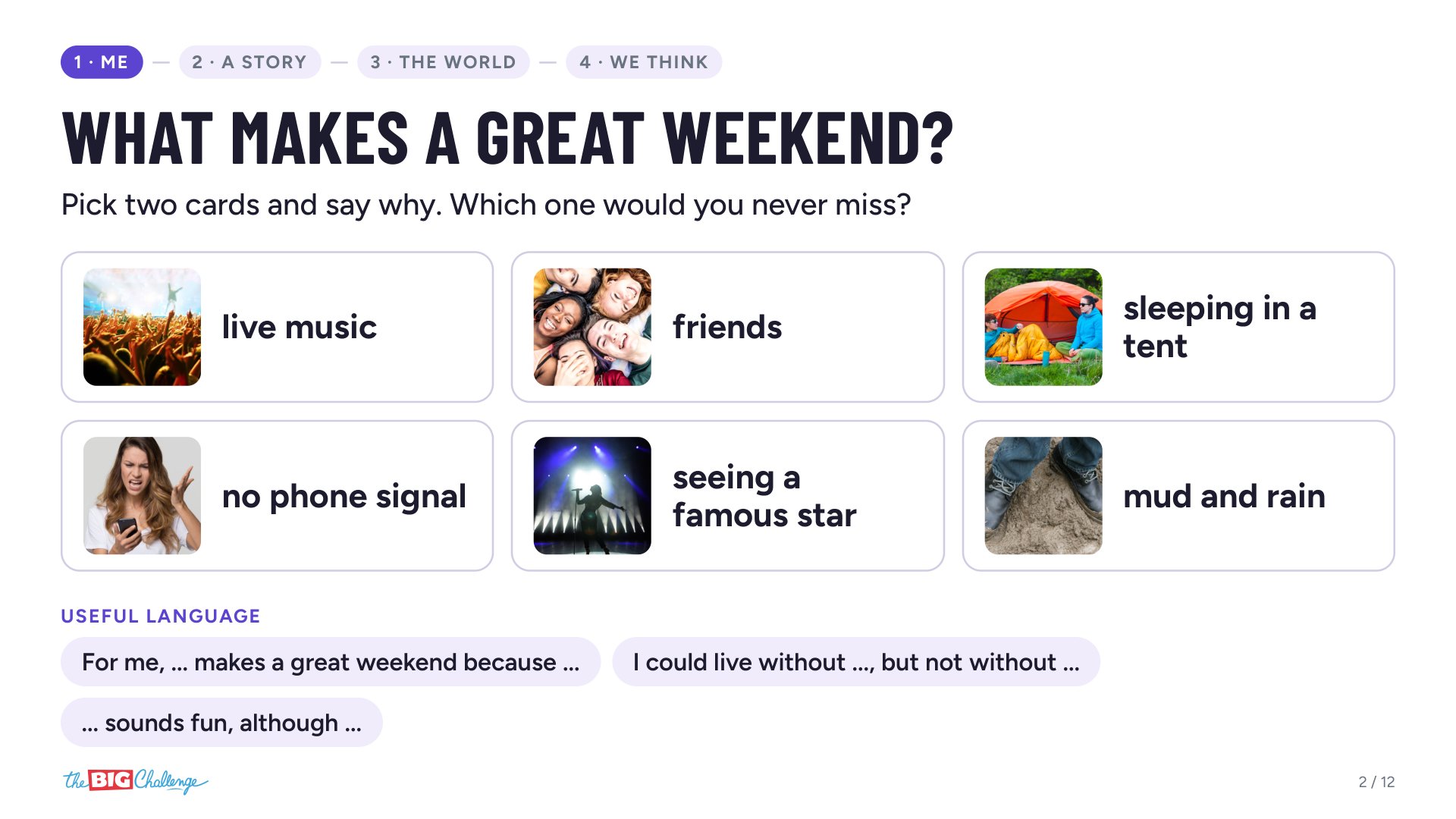
Is a festival ticket worth it? This 55-minute B2 discussion lesson follows one path: the pupils first, then a story, then the world, then what the class thinks. It starts with what makes a great weekend: live music, friends, sleeping in a tent, no phone signal, seeing a famous star, mud and rain. The story, written for this lesson, is Maya, 17, from Bristol, who works Saturdays in a bakery and has saved for a year to go to Glastonbury, the biggest music festival in Britain. On a Sunday morning in October, after 40 minutes on the website queue, the page says "Sold out": two of her friends got tickets, she didn't. Now she has £408 and a choice. Then the real facts: the first festival in 1970 cost £1, a ticket now costs £408 and the 2027 tickets sold out in less than 45 minutes, the festival gives millions to charity, and millions watch it free at home; Solidays in Paris and Rock am Ring in Germany give two other answers. By the end, pupils can argue and concede: defend a position with nuance, answer an objection and vote.
Documents to download (2)
- Pupil sheet In your teacher account
- Discussion lesson (slides) In your teacher account
Pedagogical guide
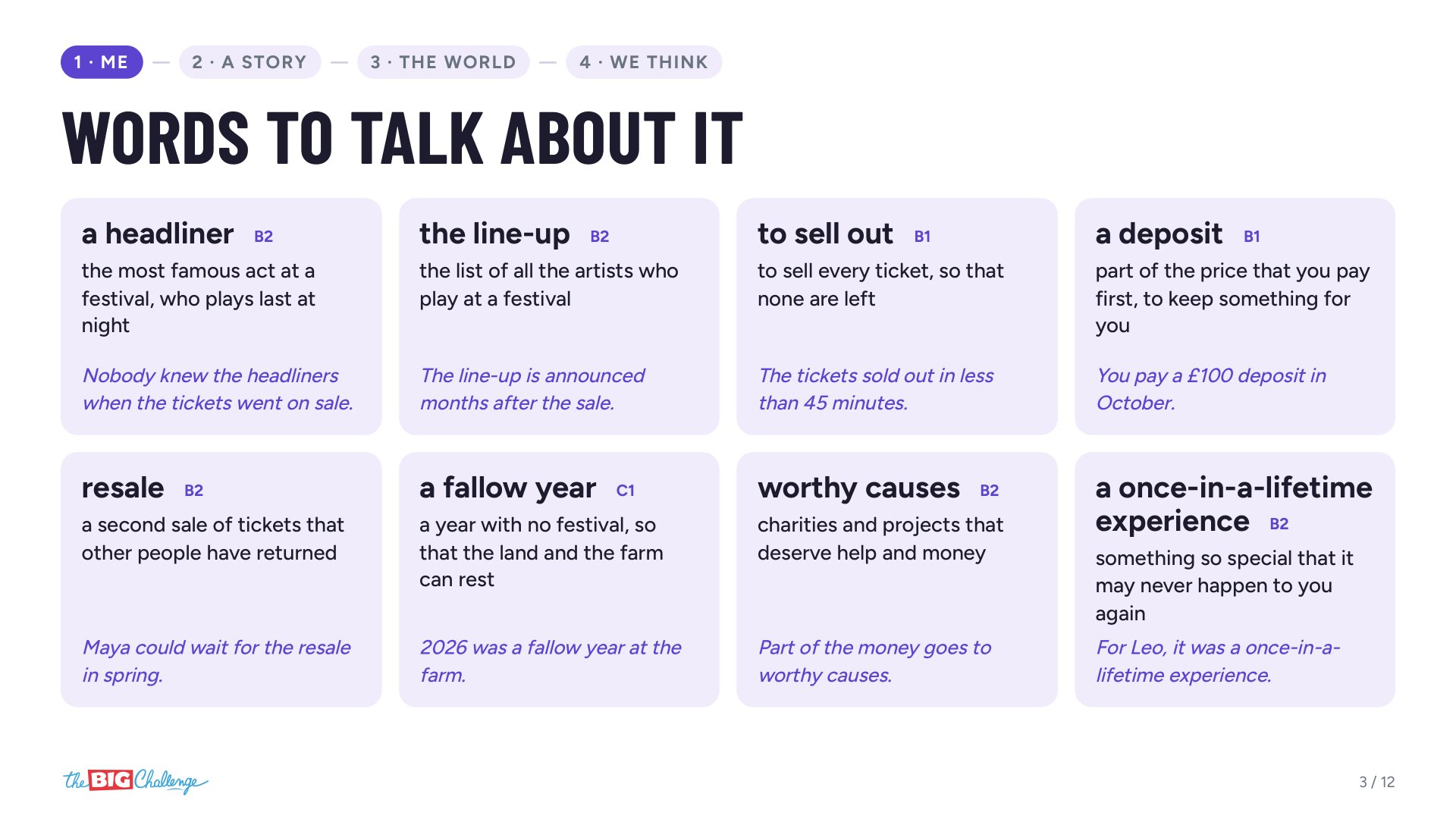
Every slide asks the class to do something: pick two cards, learn eight words, answer questions on Maya's story, choose feeling words, fill in the facts on the sheet, say to what extent they agree with four invented voices (Leo, 18; Ruth, Maya's mum; Sam, 17; Priya, 19, who volunteered as a litter picker), plan how they would spend £400, weigh money, fairness and experience, stand on a line from 1 to 5 and, last, debate a motion before a class vote: "Big festivals should keep a share of cheap tickets for young people." The teaching point is contrast and concession (although, that said, admittedly ..., but ..., it depends on whether ...), and the language help on every slide adds nuance. The lesson takes no side: the mother who counts the cost and the boy who watches at home have real arguments, and Maya's choice stays open. Never ask what pupils' families can afford: the plan is about what pupils would choose. The story and the four voices are invented and labelled as such; the figures are real and sourced on the teacher slide.
Suggested procedure55 min
- 12 min
Cover, "What makes a great weekend?" and the words.
- 9 min
Maya's £408 and "How did Maya feel?".
- 11 min
"What do you get for £408?" (pupils fill in the numbers) and the four voices.
- 13 min
"Your weekend", the three questions to weigh and "Where do you stand?".
- 10 min
The debate, then the vote. Back to the big question.
Adaptations
- SupportKeep the word slide and the nuance phrases on screen during the debate, and let each side read its arguments from the sheet.
- ExtensionPupils design the fairest way to sell festival tickets (a draw, a quota for young people, a limit per person) and defend it in five sentences.
🔒 Restricted content
This resource requires a subscription to be viewed.
Unlock the resourceIncluded in the subscription