Arms down, feet fast
Episode of the series Look Closer
- Illustrated slideshow (31 images)
- Glossary (17 words)
- Comprehension quiz (10 questions)
- 15 cultural notes
 Extract · 30 s
The episode
In Irish dancing, the arms stay down and the feet move very fast. Discover soft shoes and hard shoes, the dancing teachers of long ago, the real reason for the still arms, and the 1994 show that took Irish dancing around the world.
Episode worksheets (2)
- Student sheet In your teacher account
- Teacher sheet In your teacher account
Teaching guide
Objective & content
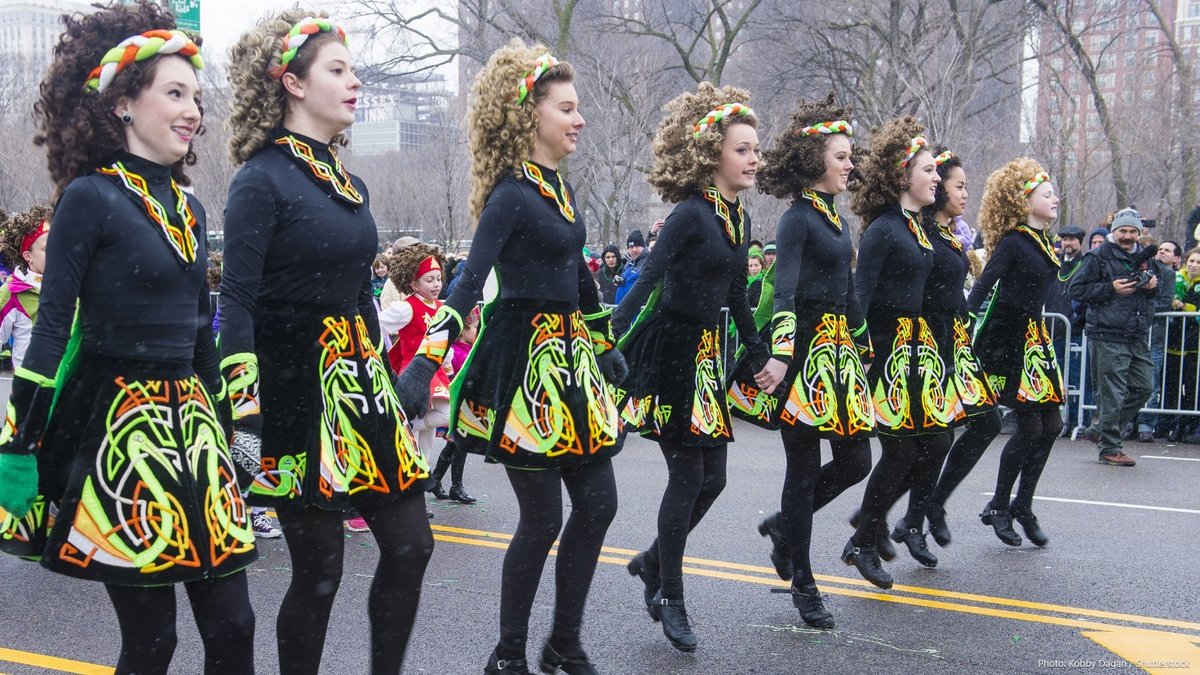
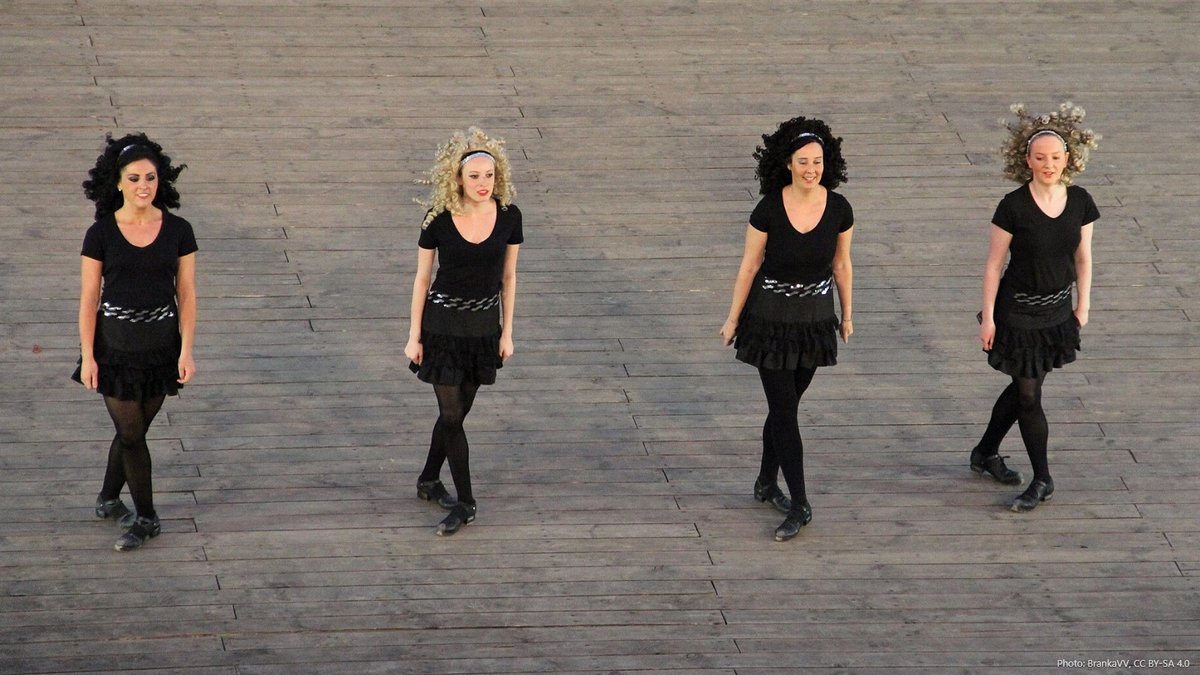
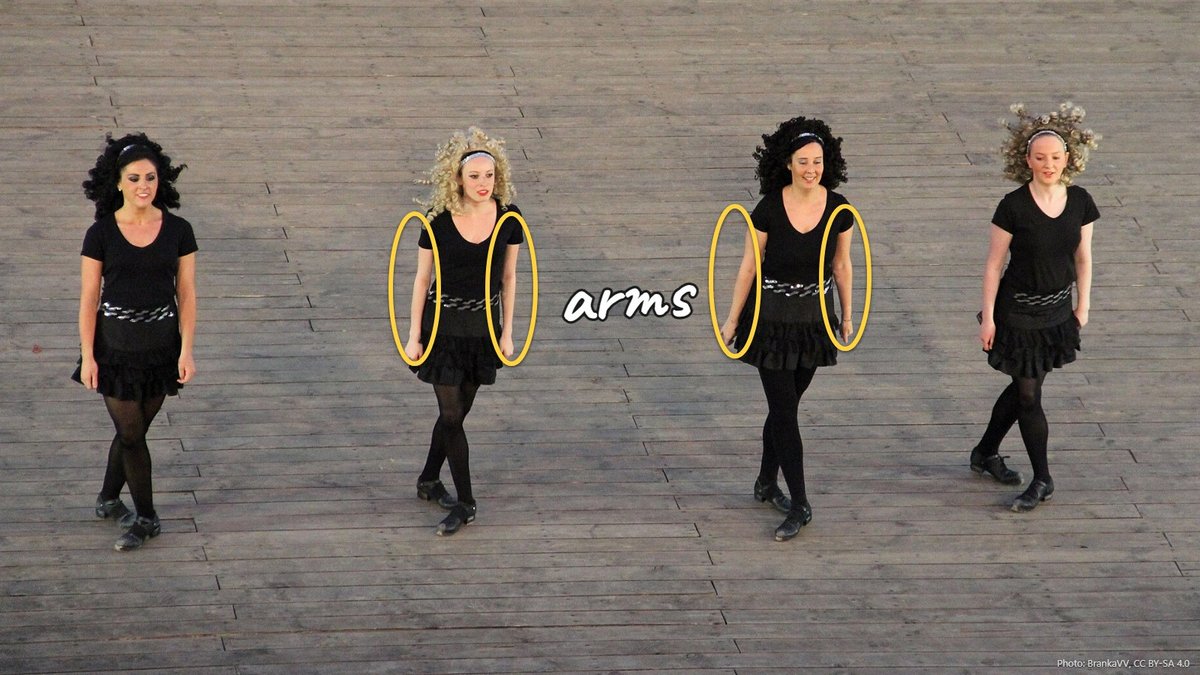
This Look Closer episode (Ireland, myths and legends mini-series, episode 54) is a one-minute documentary about Irish dancing, with real photos and one drawing of a dancing teacher of long ago. A single narrator asks learners to look closer at the dancers' arms: they don't move, they stay down by the dancers' sides, but the feet move very fast. Some dancers wear soft shoes with laces, and these shoes are very quiet; others wear hard shoes, which hit the floor and make music too. Long ago, in Ireland, dancing teachers walked from village to village and taught people to dance in their homes. So why don't the arms move? Some people say the dancers wanted to hide their dancing, but the narrator says that is only a story: in fact, the dancing teachers wanted a very good dance, so they stopped the arm movements, and later the rule in competitions was "arms down!". Today, children dance in competitions in beautiful dresses with old Irish patterns, and in 1994 a show called Riverdance was on TV, so people in many countries saw Irish dancing. The episode closes on a question learners can try: can you dance with your arms down and your feet fast?
The present simple describes the dance (stay, move, wear, hit), with this is to point at a picture, and the past simple tells its history as exposure (walked, taught, wanted, stopped, was, saw), with the questions why don't the arms move? and can you dance ...? and the contractions don't, they're and that's, plus vocabulary for the body, shoes and clothes, music and dance, and the village of long ago.
Learners listen, then answer the 10 questions in the app: 7 on facts and 3 on vocabulary (laces, quiet, patterns). The study topic is Ireland, land of myths and legends.
Materials & prerequisites
The folder holds the audio, the slideshow and the script. Each pack is a one-page PDF with the text, three pictures, the key words and the 10 questions: a pupil pack, and a teacher pack with the answers highlighted. It also has a pupil sheet and a teacher sheet with the answer key. It has no lesson plan. The episode ends on the question Can you dance with your arms down and your feet fast?, which learners can answer aloud (Yes, I can or No, I can't). Learners should know arm, foot and feet, shoe, dress and fast, and the present simple with they; the past simple forms are heard, not practised. Irish dancing names the subject of the episode, so it is taught for understanding here; laces and patterns are labelled on the pictures, and quiet is explained by the script, in contrast with the hard shoes, which make music.
Curriculum alignment
Tagged imagination-tales-and-legends (6e, "Imaginaire, contes et légendes", study topic "Ireland, land of myths and legends", Cycle 3). The episode targets CEFR level A1+.
Possible adaptations
- Lower levels: Offer segmented listening and additional visual aids.
- Advanced levels: Encourage an oral summary and a debate in English on the theme.
- Large groups: Organise group work with differentiated roles.
🔒 Restricted content
This resource requires a subscription to be viewed.
Unlock the resourceIncluded in the subscriptionTags
- Present simple
- Past simple: regular verbs
- Past simple: irregular verbs
- Demonstratives: this / that
- Question forms
- Music basics
- Body parts
- Clothes
- Town & village
- Imagination, tales and legends
- Listening comprehension
- Vocabulary building
- Cultural awareness