Who is Sherlock Holmes?
Episode of the series Look Closer
- Illustrated slideshow (27 images)
- Glossary (15 words)
- Comprehension quiz (10 questions)
- 9 cultural notes
 Extract · 30 s
The episode
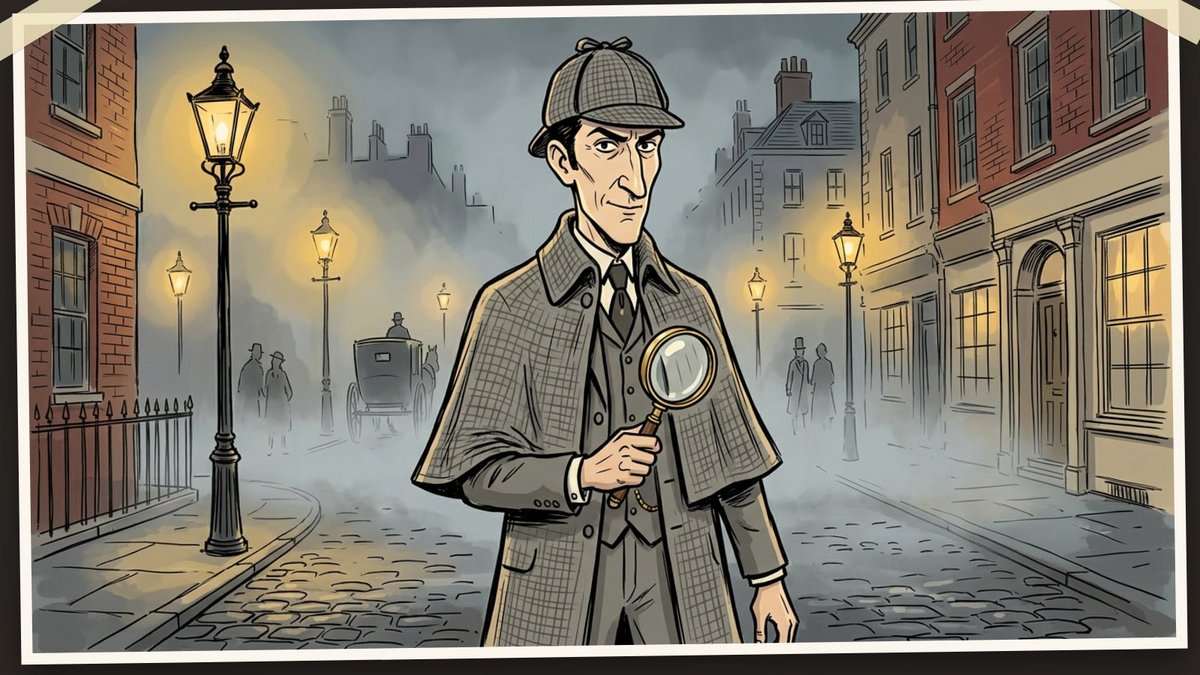
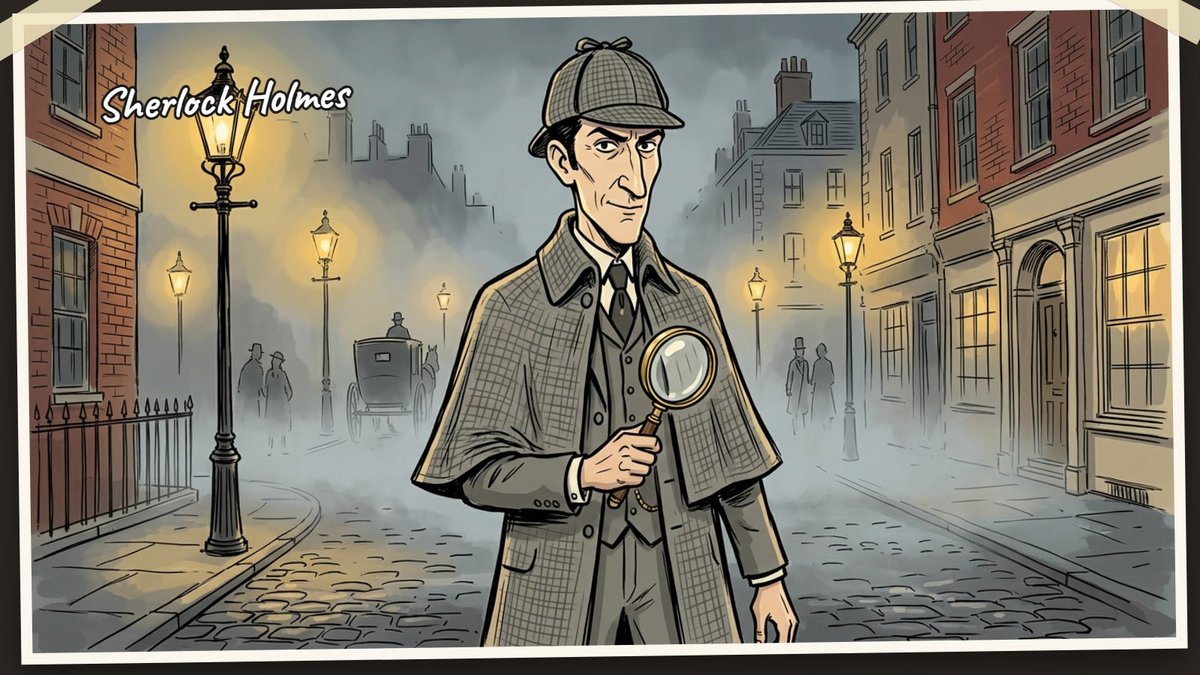
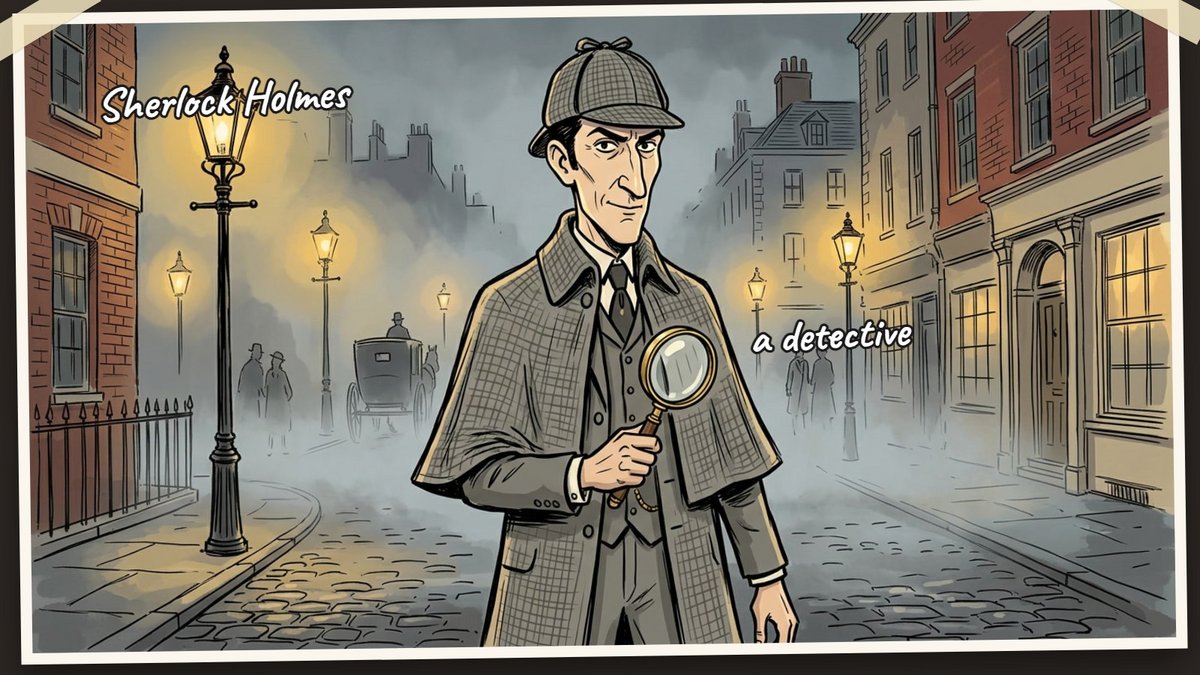
Sherlock Holmes is the most famous detective in the world: he finds out who did a crime from tiny clues, and his writer let him die in 1893, then brought him back in 1903.
Episode worksheets (2)
- Student sheet In your teacher account
- Teacher sheet In your teacher account
Teaching guide
Objective & content
This Look Closer episode (the first episode of the mini-series Sherlock Holmes's London) is a short documentary about Sherlock Holmes, the most famous detective in the world. A single narrator explains that Sherlock lives in London with his friend Doctor Watson, who tells the stories, and that people come to him with their problems: he finds out who did the crime because he notices tiny things, like mud on a shoe or a mark on a hand. Arthur Conan Doyle wrote four books and fifty-six short stories about him, and the short stories came out in a magazine, The Strand. In 1893 the writer was tired of his detective, and in a story Sherlock fell into a waterfall in Switzerland and died. The narrator then looks closely at what happened next: readers were very angry, many stopped buying the magazine, and in 1903 Conan Doyle brought him back. Today Sherlock is in more films and TV shows than any other person from a book. It is a comprehension episode: the narration uses the present simple and the past simple, with the most famous, and no grammar point is taught. Learners listen, then answer the 10 questions in the app: 8 on facts and 2 on vocabulary (detective, tiny). The study topic is Sherlock Holmes's London, the real places and people behind an imaginary detective: here, who the detective is.
Materials & prerequisites
The folder holds the audio, the slideshow and the script. Each pack is a one-page PDF with the text, three pictures, the key words and the 10 questions: a pupil pack, and a teacher pack with the answers highlighted. It also has a pupil sheet and a teacher sheet with the answer key. It has no lesson plan. Play the episode twice, hand out the pupil pack, then use the closing question (Would you like to read a Sherlock Holmes story?) for a short class discussion about detective stories. Learners should know the words friend, shoe, hand and book, and be able to read years such as 1893. The pack's key words explain the new words (detective, crime, tiny, mud, waterfall).
Curriculum alignment
Tagged reality-and-imagination (5e, "Le réel et l'imaginaire", Cycle 4). The episode targets CEFR level A2-.
Possible adaptations
- Lower levels: Offer segmented listening and additional visual aids.
- Advanced levels: Encourage an oral summary and a debate in English on the theme.
- Large groups: Organise group work with differentiated roles.
🔒 Restricted content
This resource requires a subscription to be viewed.
Unlock the resourceIncluded in the subscriptionTags
- Present simple
- Past simple: regular verbs
- Past simple: irregular verbs
- Past simple: was / were
- Superlatives
- want / would like to
- Detective & crime
- Famous people
- Feelings & emotions
- London
- Reality and imagination
- Listening comprehension
- Vocabulary building
- Cultural awareness