Sherlock Holmes's hat
Episode of the series Look Closer
- Illustrated slideshow (23 images)
- Glossary (15 words)
- Comprehension quiz (10 questions)
- 9 cultural notes
 Extract · 30 s
The episode
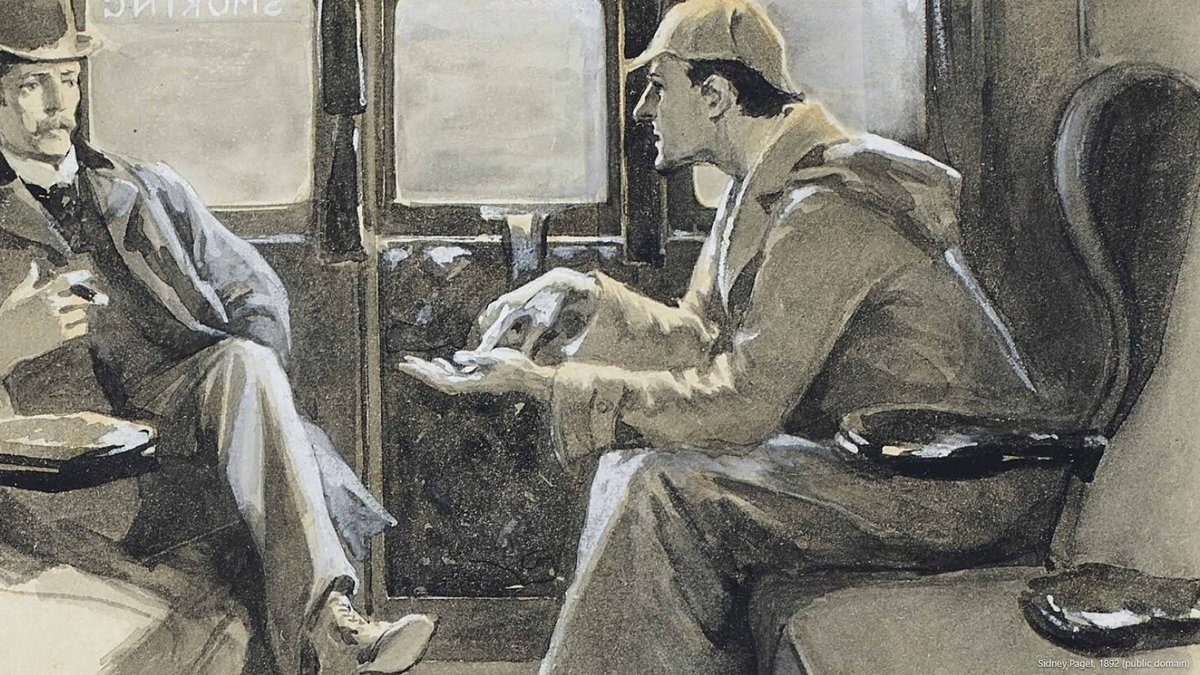
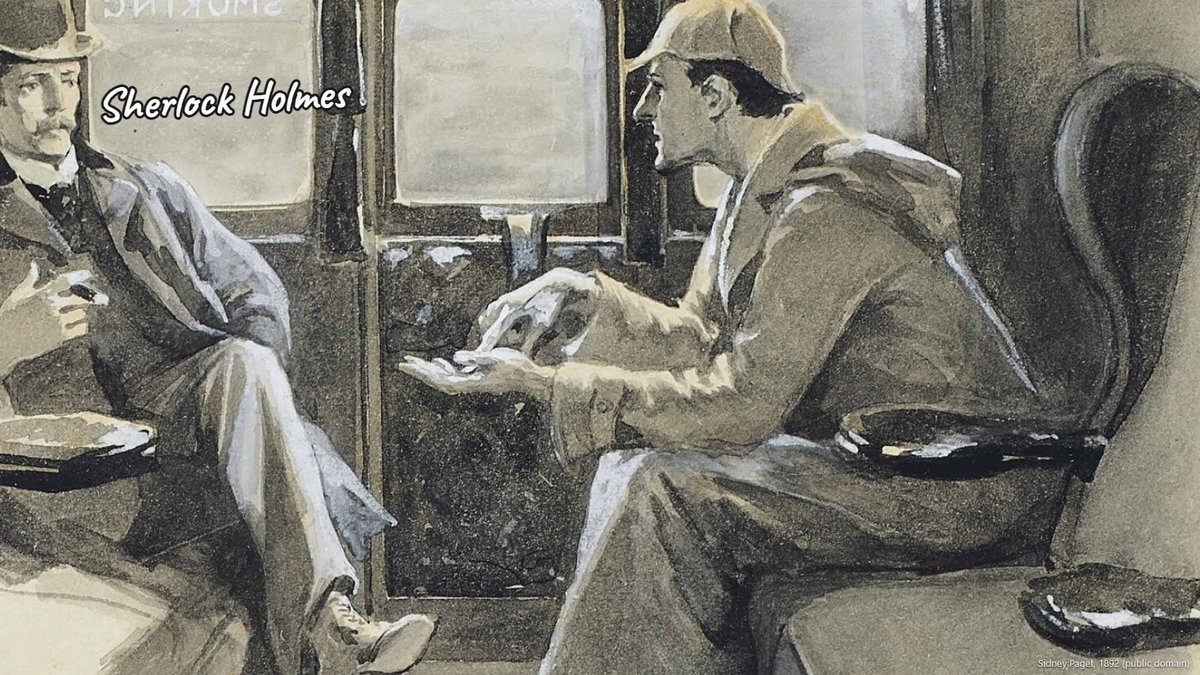
Sherlock Holmes's famous deerstalker is never named in the books: an artist, Sidney Paget, gave him the hat in a drawing in 1891.
Episode worksheets (2)
- Student sheet In your teacher account
- Teacher sheet In your teacher account
Teaching guide
Objective & content
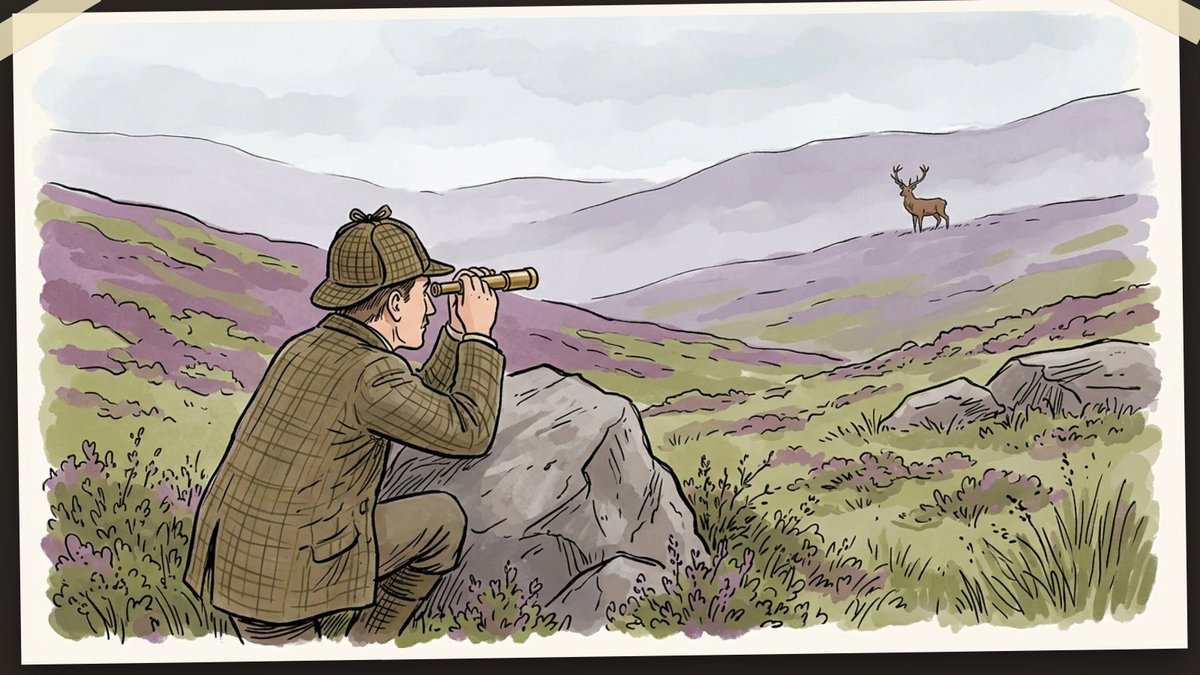
This Look Closer episode (the third episode of the mini-series Sherlock Holmes's London) is a short documentary about Sherlock Holmes's famous hat. A single narrator explains that this kind of hat is called a deerstalker, a name that comes from hunting deer in the countryside, and that it has a peak at the front and at the back, and two flaps for the ears. The narrator then looks closely at the stories: the writer, Arthur Conan Doyle, never uses the word "deerstalker". The stories came out in a magazine, The Strand, with drawings, and in 1891 an artist, Sidney Paget, drew Sherlock in the countryside with a deerstalker and a long cape. Readers loved the pictures, so the hat stayed; later, actors in plays and films wore it too, and now, when people see a deerstalker, they think of only one person: Sherlock Holmes. It is a comprehension episode: the narration uses the present simple and the past simple, and no grammar point is taught. Learners listen, then answer the 10 questions in the app: 7 on facts and 3 on vocabulary (deerstalker, peak, flaps). The study topic is Sherlock Holmes's London, the real places and people behind an imaginary detective: here, a hat the stories never name.
Materials & prerequisites
The folder holds the audio, the slideshow and the script. Each pack is a one-page PDF with the text, three pictures, the key words and the 10 questions: a pupil pack, and a teacher pack with the answers highlighted. It also has a pupil sheet and a teacher sheet with the answer key. It has no lesson plan. Play the episode twice, hand out the pupil pack, then use the closing question (Which object makes you think of a famous character?) for a short class discussion. Learners should know the words front, back, picture and film, and be able to read years such as 1891. The pack's key words explain the new words (deerstalker, hunting, peak, flap, cape).
Curriculum alignment
Tagged reality-and-imagination (5e, "Le réel et l'imaginaire", Cycle 4). The episode targets CEFR level A2-.
Possible adaptations
- Lower levels: Offer segmented listening and additional visual aids.
- Advanced levels: Encourage an oral summary and a debate in English on the theme.
- Large groups: Organise group work with differentiated roles.
🔒 Restricted content
This resource requires a subscription to be viewed.
Unlock the resourceIncluded in the subscriptionTags
- Present simple
- Past simple: regular verbs
- Past simple: irregular verbs
- Prepositions of place and time
- Clothes
- Detective & crime
- Art & photography
- Wild animals
- Cinema history
- Reality and imagination
- Listening comprehension
- Vocabulary building
- Cultural awareness