American Music, Part 2
Episode of the series Awesome Stuff
- Illustrated slideshow (37 images)
- Glossary (18 words)
- Comprehension quiz (17 questions)
- 26 cultural notes

 Extract · 30 s
The episode
Split by time from Part 1 (J, 2026-10-16), but the episode stands on its own: no callback.
Episode worksheets (2)
- Student sheet In your teacher account
- Teacher sheet In your teacher account
Teaching guide
Objective & content
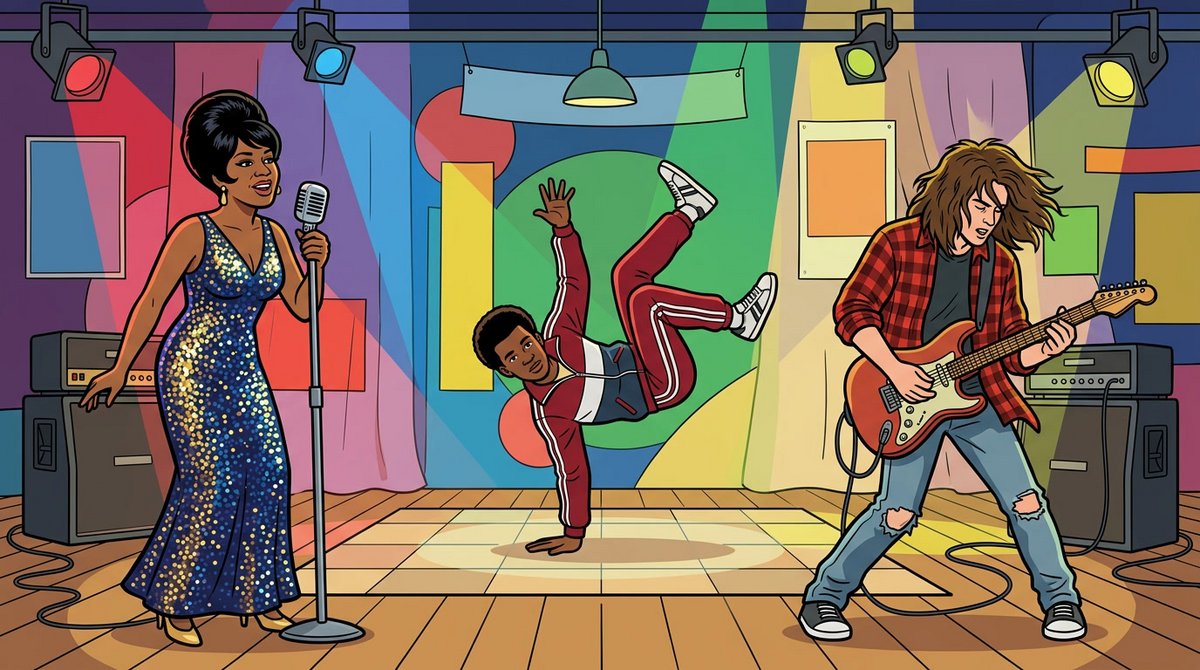
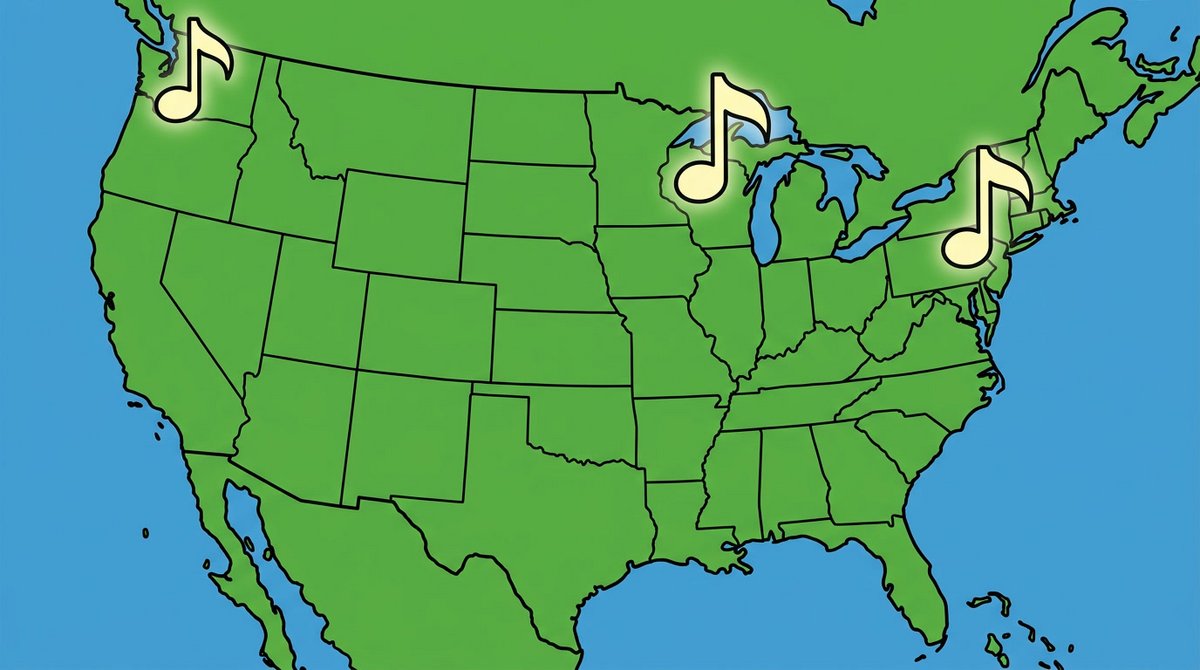
Two friends talk about three American sounds and the cities they come from. One explains and the other asks questions, on a trip with three stops: Motown in Detroit, Motor City, where in 1959 Berry Gordy buys a small house with a studio inside, Hitsville U.S.A., for singers like Diana Ross and the young Stevie Wonder, and where visitors can still sing today; hip-hop in the Bronx, New York, at a party in 1973 where the teenage DJ Kool Herc plays the best part of a song again and again, with breakdancing and rap, and breakdancing at the Paris 2024 Olympic Games; and rock in Seattle, with Jimi Hendrix, who plays a normal guitar upside down because he is left-handed, grunge in the 1990s, and a music museum that looks like a broken guitar. The grammar focus is present simple, also for the stories of 1959 and 1973, with there is (there's), can, questions (What's the music like?) and prepositions of place and time (in the north, on the floor, in 1973). Learners listen for the three cities, the people and the years.
Materials & prerequisites
- Student sheet and teacher sheet, each as HTML and PDF (in the episode's printables folder).
- Prerequisites: present simple, can and saying years in English.
Curriculum alignment
Tagged c3-child-and-wider-environment and art-and-expression-of-feelings, so it fits cycle 3 (6e) and the 6e axis Art and expression of feelings. It also fits the music topics of German Klasse 6 and 7. The episode targets CEFR A1+.
Possible adaptations
- Lower levels: Offer segmented listening and additional visual aids.
- Advanced levels: Encourage an oral summary and a debate in English on the theme.
- Large groups: Organise group work with differentiated roles.
🔒 Restricted content
This resource requires a subscription to be viewed.
Unlock the resourceIncluded in the subscriptionTags
- Podcast
- Present simple
- There is / there are
- Can: ability
- Prepositions of place and time
- Question forms
- Music basics
- The USA: basics
- Clothes
- Famous people
- Historical dates
- New York
- Child and wider environment
- Art and expression of feelings
- Listening comprehension
- Cultural awareness
- Vocabulary building