Cowboys, Part 2: The Cowboy Look
Episode of the series Awesome Stuff
- Illustrated slideshow (32 images)
- Glossary (30 words)
- Comprehension quiz (17 questions)
- 17 cultural notes
 Extract · 30 s
The episode
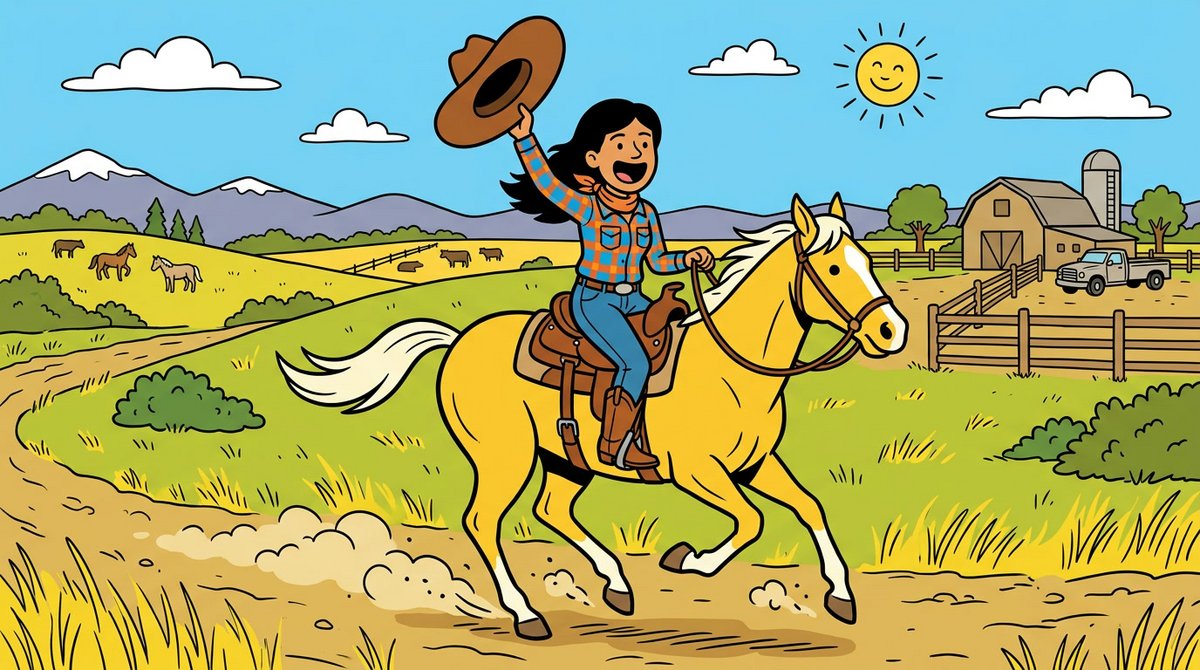
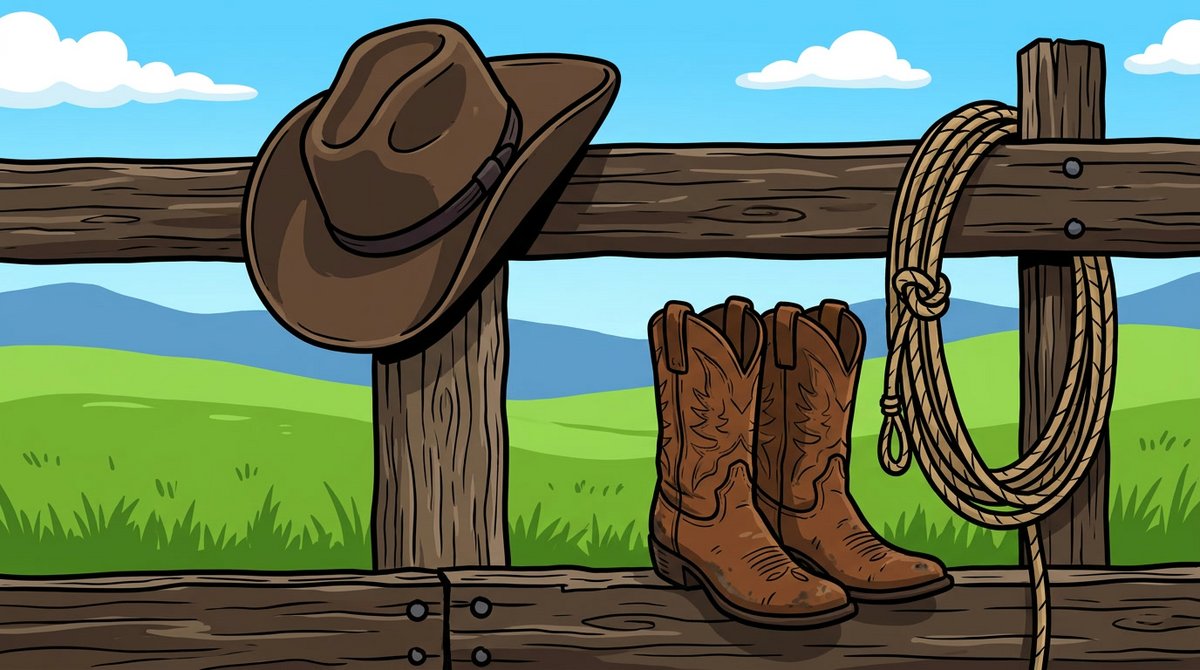
Cowboy hats, pointed boots and a lasso! Find out why cowboys dress like that, who invented a rodeo sport, and where real cowboys still work today.
Episode worksheets (2)
- Student sheet In your teacher account
- Teacher sheet In your teacher account
Teaching guide
Objective & content
Two friends talk about the cowboy look and cowboys today: one friend explains, the other asks. The friends start with the hat, the boots and the lasso, what each one is for and where the hat and the cowboy words come from (the first big hats were the sombreros of the Mexican vaqueros, and lasso, ranch and rodeo are Spanish words), then go to the rodeo, the westerns of the 1940s and 1950s and the real cowboys who still work on ranches today. On the way, learners meet Bill Pickett, a black cowboy from Texas who invented a new rodeo sport. The look, the rodeo and cowboys today are described in the present simple (the brim keeps the sun off, a cowboy throws the lasso), with the past simple for dated events (wore, made, started, jumped, invented), questions with why, who, what, when, where and how long, and the oldest and the most in fixed facts. Learners listen for the names, the dates and the numbers, then answer the quiz in the app and the one-page pupil sheet.
Pedagogical guide
The 45-minute lesson plan starts from a drawing of a cowboy with a big hat, boots and a rope: what does a cowboy wear? Learners preview eight words (brim, boots, heel, stirrup, lasso, rodeo, western, ranch), listen twice (once for the three things of the cowboy look, once with four pauses for questions), then check the facts, practice the vocabulary, sort sentences into "Today" and "In the past" to notice the -s of the present simple and the past forms, and ask and answer "why" questions in pairs. At A1+ learners form simple past simple questions themselves ("When did the first rodeo start?") and answer briefly ("In 1888."). Most activities have a support path and a stretch path.
Suggested procedure
- Activate knowledge (3 min): draw a cowboy with a big hat, boots and a rope, and ask what a cowboy wears.
- Vocabulary preview (5 min): brim, boots, heel, stirrup, lasso, rodeo, western, ranch.
- First listen (5 min): play the whole episode (about 3 minutes 40 seconds) and ask for the three things of the cowboy look.
- Second listen (12 min): pause four times to ask about the hat; the boots, the lasso and the Spanish words; the rodeo and Bill Pickett; the westerns and the ranches today.
- Comprehension check (5 min): the Facts part of the pupil sheet (questions 1 to 6, as in the app quiz).
- Vocabulary practice (5 min): the Vocabulary part (questions 7 to 12).
- Grammar focus (5 min): sort the episode's sentences into "Today" and "In the past", underline the -s of one person or thing (keeps, throws), match past forms to their base verbs (wear and wore, make and made, invent and invented), then the Grammar part (questions 13 to 18).
- Speaking (5 min): in pairs, students ask and answer "why" and "what" questions about the cowboy look.
Materials & prerequisites
- The episode in the app, with its quiz.
- The one-page pupil sheet (18 items: facts, vocabulary, grammar) and its answer key, in the episode's printables.
- Prerequisites: the present simple, and years and big numbers in English.
Possible adaptations
- Lower levels: Offer segmented listening and additional visual aids.
- Advanced levels: Encourage an oral summary and a debate in English on the theme.
- Large groups: Organise group work with differentiated roles.
🔒 Restricted content
This resource requires a subscription to be viewed.
Unlock the resourceIncluded in the subscriptionTags
- Podcast
- Present simple
- Past simple: irregular verbs
- Past simple: regular verbs
- Past simple: was / were
- Question forms
- Superlatives
- Clothes
- The USA: basics
- Sports
- Film genres
- Large numbers
- Historical dates
- US states
- Cinema history
- Child and wider environment
- Daily life: living, playing, learning
- Listening comprehension
- Cultural awareness
- Vocabulary building
- Sport & games
- Arts & media
- Exploring America
- Everyday Life
- Places & Journeys