Zusammengefasst
Klassenstufe :Klasse 8, Klasse 9
Art :Hörbücher
Kulturelle Schwerpunkte :Personen & Charaktere, Alltag, Länder & Landschaften, Legenden & Fantastisches


 y
y
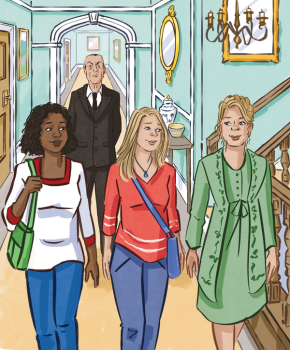
Take your students on a thrilling psychological thriller where appearances are deceiving. "A Nose for Trouble" blends genealogical investigation, history (the Titanic), and identity theft in the subdued atmosphere of the British aristocracy. This 32:58 audiobook, rich in plot twists, is ideal for students who wish to sharpen their listening and critical thinking skills when faced with a multifaceted plot.
Klassenstufe :Klasse 8, Klasse 9
Art :Hörbücher
Kulturelle Schwerpunkte :Personen & Charaktere, Alltag, Länder & Landschaften, Legenden & Fantastisches
Sonderangebot für Early-Bird-Anmeldungen. Schalten Sie diese Ressource frei, indem Sie Ihre Schülerinnen und Schüler jetzt für den Wettbewerb anmelden, und profitieren Sie von unseren exklusiven Vorteilen!
Ziel & Zusammenfassung der Handlung
Ziel: Die Schüler dazu bringen, einer komplexen Audiohandlung zu folgen und sie zu verstehen, indem sie die Hauptfiguren, ihre verborgenen Motivationen und die verschiedenen Ebenen der Handlung (Vergangenheit/Gegenwart) identifizieren.
Zusammenfassung: Eine junge amerikanische Touristin, Jessica, entdeckt, dass sie einem Porträt in einem walisischen Herrenhaus zum Verwechseln ähnlich sieht. Was als einfache Neugier beginnt, stürzt sie in ein dunkles Familiengeheimnis, das mit der Titanic verbunden ist und einen Identitätsdiebstahl, einen Doppelmord und die Tatsache enthüllt, dass ihre eigene Großmutter die wahre Erbin des Anwesens ist.
Vorgeschlagener Ablauf
1. Vor dem Hören (~10 min): DAS MYSTERIUM ENTWICKELN
Brainstorming: Diskutieren Sie die Schlüsselwörter: stately home (Herrenhaus), aristocracy, heir (Erbe), impostor (Hochstapler), proof (Beweis).
Antizipation: Präsentieren Sie die Charakterkarte (Seite 2) und bitten Sie die Schüler, ihre Rollen zu erraten (Who is the hero? The villain?).
2. Während des Hörens (~40 min): DER ERMITTLUNG FOLGEN
Fragmentiertes Hören in 3 Akten, um die Länge und Komplexität zu bewältigen:
Akt 1 (Das Mysterium): Hören Sie bis zur Entdeckung des Porträts und dem Treffen mit Angela. Pause: "What is the connection between Jessica and the portrait?".
Akt 2 (Die Ermittlung): Hören Sie bis zum Verschwinden des Briefes und des Fotos. Pause: "Who are the suspects? What are they trying to hide?".
Akt 3 (Die Auflösung): Hören Sie den Rest bis zur Auflösung und dem finalen Twist.
3. Nach dem Hören (~15-20 min): DIE INTRIGE AUFLÖSEN
Diskussion: "Who was the real villain: Diana or Bernard? Why? What was the biggest surprise?".
Syntheseaufgabe: Erstellen Sie in Gruppen ein Diagramm oder eine Zeittafel, die Dianas Machenschaften nachzeichnet (Treffen mit Angela, Operation, Mord an der Mutter usw.).
Anpassungen
Zur Vereinfachung: Stellen Sie ein "Who's who?"-Arbeitsblatt zur Verfügung, das während des Hörens ausgefüllt werden kann (Wer ist Diana? Wer ist Grace?). Decken Sie die Wendungen einzeln mit dem Lehrer auf.
Zur Vertiefung: Organisieren Sie einen Mini-Prozess, bei dem die Schüler die Rollen der Verteidiger (für Bernard) und der Ankläger (für Diana) spielen und dabei Elemente der Geschichte als Beweismittel verwenden.
6 o’clock sharp 6 o’clock exactly
actually (adv.) in fact
amazing (adj.) very surprising
arrow (n.) a thin stick with a sharp point, cf. Robin Hood
batter (n.) a mixture of flour, egg and milk or water.
be in the way to block the way
blame (v.) to hold responsible
butler (n.) The butler is a domestic servant who is in charge of all the other servants.
clear (v.) When you clear a table, you remove the dirty plates and glasses.
conservatory (n.) a large room with a glass roof and walls, attached to a house and used for plants
corridor (n.) a passage between rooms
crack (n.) a small opening
curse (n.) to call on a supernatural power to punish someone
down-to-earth (adj.) very practical, with your feet on the ground
drown (v.) to die in water
duty (n.) Your duty is something you think you are obliged to do.
earl (n.) a member of the British aristocracy, the equivalent of a count
engaged (adj.) If you are engaged, you have a fiancé[e], and you’re going to get married.
expat (n.) a person who lives and works in a foreign country
extra (adj., adv.) more
feel sorry for (v.) to feel pity for
finishing school (n.) a private school where girls are prepared for life in ‘high society’
frown (v.) When you frown, you are worried or doubtful and your eyebrows come together.
gasp (v.) You gasp when you are so surprised that you can’t say anything.
hold someone tight to hold someone very firmly and stop them moving.
housekeeper (n.) A housekeeper ‘keeps house’ for someone, i.e. he/she makes sure everything is clean, well-organised, etc.
illegible (adj.) impossible to read
invaluable (adj.) essential, of very high value
jet lag (n.) tiredness after a long flight that has crossed several time zones
lane (n.) a narrow country road
laundry (n.) a place where they wash dirty clothes, etc.
look forward to (v.) to be impatient for something to happen
luggage (n. sing. inv.) bags, suitcases
maiden voyage (n.) the very first voyage of a ship
odd (adj.) strange on the house You don’t have to pay.
overhear (v.) to hear a conversation when the people who are talking don’t know you are listening
pack (v.) to put things in a suitcase or a bag
plastic surgeon (n.) a doctor who changes people’s faces, noses, etc. and sometimes makes them look younger
plump (adj.) rather fat
pose (v.) to stand in a certain position for a photo or a portrait, for example
priceless (adj.) so valuable that it has no price
proud (adj.) very satisfied with yourself
prove (v.), proof (n.) You prove your identity to someone when you show your identity papers – they are proof of your identity.
purse (n.) You carry a purse or a wallet to put your money in.
recipe (n.) the list of ingredients and the method for cooking something
rent (v.) to pay to use something for a short time
rural (adj.) the opposite of urban, i.e. not in or very close to a town
save (v.) keep safely (especially for computers)
scary (adj.) frightening
scream (v.) to shout loudly when you are very frightened or very excited
search (v.) to look for set the table to put the knives, forks, spoons, plates, glasses, etc. on the table
shadow (n.) a dark area where there is no light because something is blocking the sun, the moon, etc.
sight (n.) the ability to see
sinister (adj.) A person looks sinister when he/she looks frightening and you think he/she might harm you.
sink (sunk, sunk) (v.) When a ship sinks, it goes to the bottom of
tear (tore, torn) (v.) If something is torn, there is a piece missing or it is damaged.
tip (n.) the top, the end or the edge of something
trace (n.) If there is no trace of someone it means nothing is left to show that the person was here or to show where he or she has gone.
train (v.) to learn a job
treasure (n.) something that is very valuable
trouble (n.) difficulty, problems
ugly (adj.) the opposite of beautiful
upset (adj.) worried, unhappy
upset (v.) to worry someone or make someone unhappy
vulture (n.) a large bird that feeds on dead animals
wealth (n.); wealthy (adj.) riches; rich
weird (adj.) strange
wonder (v.) to ask yourself, to be curious to know
yawn (v.) When you are tired, you often open your mouth wide and yawn.
Please wait...