Houses
Episode of the series Great Stuff
- Illustrated slideshow (19 images)
- Glossary (12 words)
- Comprehension quiz (17 questions)
- 19 cultural notes

 Extract · 30 s
The episode
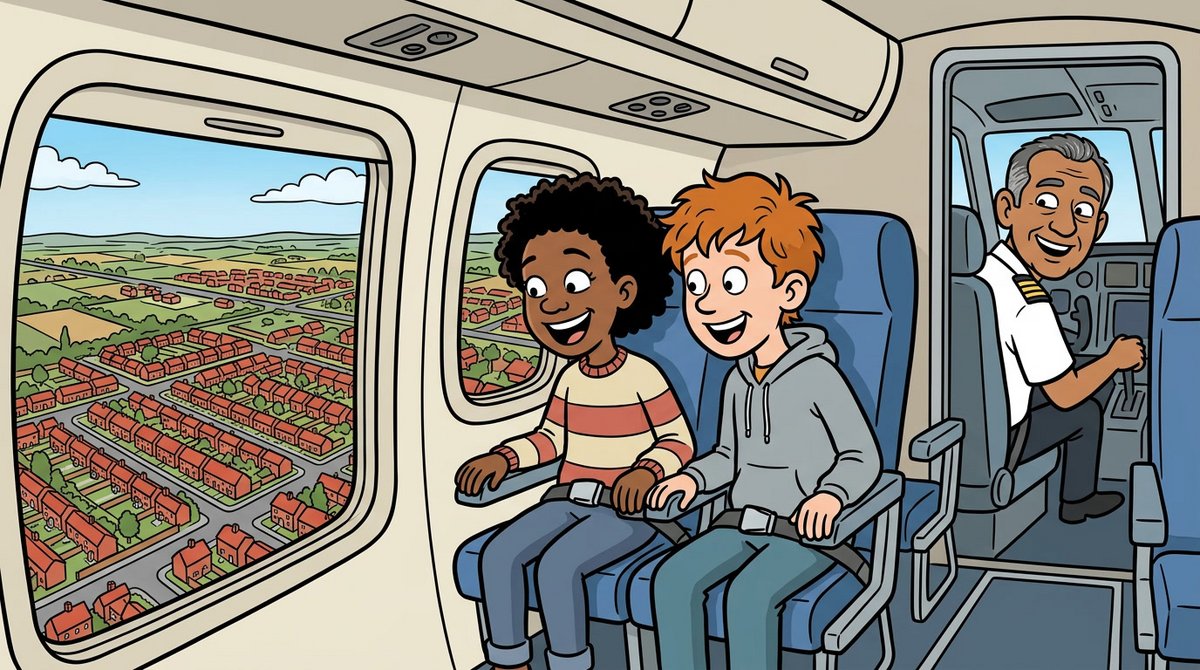
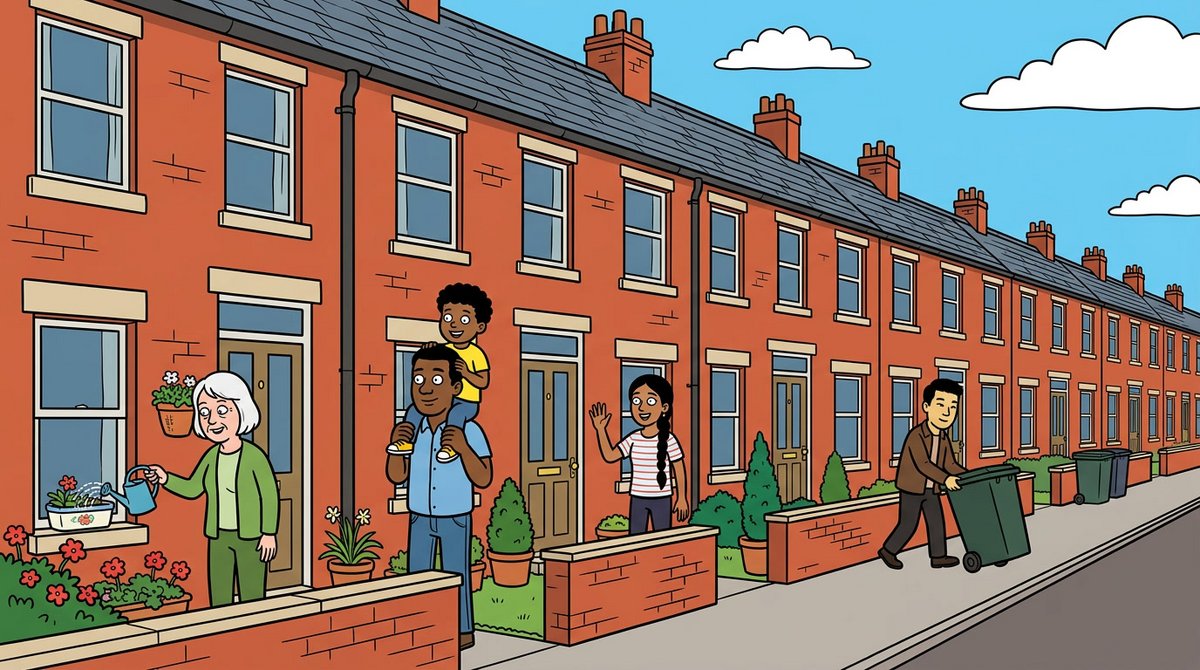
Rows of brick houses joined together, a letterbox in the front door and two taps that never meet: two friends walk down a British street.
Episode worksheets (2)
- Student sheet In your teacher account
- Teacher sheet In your teacher account
Teaching guide
Objective & content
This A1+ documentary, "Houses", is a dialogue between two friends who walk down a British street, door by door. They find that about eight homes in ten in England are houses, not flats, and they meet the four main types: the terraced house (a row, with shared side walls), the semi-detached house (two houses, one shared wall), the detached house (on its own) and the bungalow (all rooms on one floor). At the front door they look at a number or a name (Rose Cottage), the letterbox and the doorbell. Inside, they see carpet on the stairs and two taps, one hot and one cold. The main language point is the present simple, with there is / there are, adverbs of frequency and a short comparative ("lower than"). A line to notice: "It just shares one wall, not two." The skill is listening: learners match each description to a house type, then take the in-app quiz.
Pedagogical guide
The episode gives learners a visual set of house words they can point to and match. Teach terraced house, semi-detached, detached and bungalow for recognition only, because they name the subject of the episode, and teach letterbox, doorbell and tap by picture and gesture. The pause points sit after the terraced house, the shared walls, the letterbox and the two taps, so each pause asks for one clear answer. Keep the focus on what the two friends say about British houses; do not ask learners to compare their own family's home with the others.
Suggested procedure
- Pre-listening (8 min): ask "House or flat?", take a vote on what most people in Britain live in, then preview seven words (terraced house, semi-detached, detached, bungalow, letterbox, doorbell, tap) with pictures.
- First listen (4 min): play the whole audio (about 3 minutes 20 seconds) and tick the house types heard.
- Second listen (9 min): pause at 0:57, 1:30, 2:19 and 2:48 and fill in the House / How do I know? grid.
- Comprehension check (5 min): six questions from the Facts section of the quiz.
- Vocabulary practice (3 min): matching game or questions 7 to 12 of the student sheet.
- Grammar focus (5 min): "It just shares one wall, not two." / "There aren't many." / "Do houses have names?"
- Speaking extension (4 min): in pairs, one learner describes a house type and the other guesses it.
- Optional writing (2 min): two or three sentences about a dream house.
Materials & prerequisites
- Student sheet and teacher sheet (HTML and PDF versions of each), from the episode's printables.
- Pictures of the four house types and of a front door with a letterbox (the episode slideshow works).
- Learners should already know the present simple, there is / there are and the rooms of a house.
Curriculum alignment
Cycle 3 (6e): the child and the close environment (c3-child-and-close-environment) and the child and the wider environment (c3-child-and-wider-environment). CEFR target: A1+.
Possible adaptations
- Lower levels: Offer segmented listening and additional visual aids.
- Advanced levels: Encourage an oral summary and a debate in English on the theme.
- Large groups: Organise group work with differentiated roles.
🔒 Restricted content
This resource requires a subscription to be viewed.
Unlock the resourceIncluded in the subscriptionTags
- Documentary
- Be (affirmative)
- There is / there are
- Demonstratives: this / that
- Present simple
- Adverbs of frequency
- House & home
- Cultural differences
- Child and close environment
- Child and wider environment
- Listening comprehension
- Vocabulary building
- Cultural awareness