Stonehenge
Episode of the series Great Stuff
- Illustrated slideshow (17 images)
- Glossary (10 words)
- Comprehension quiz (17 questions)
- 21 cultural notes

 Extract · 30 s
The episode
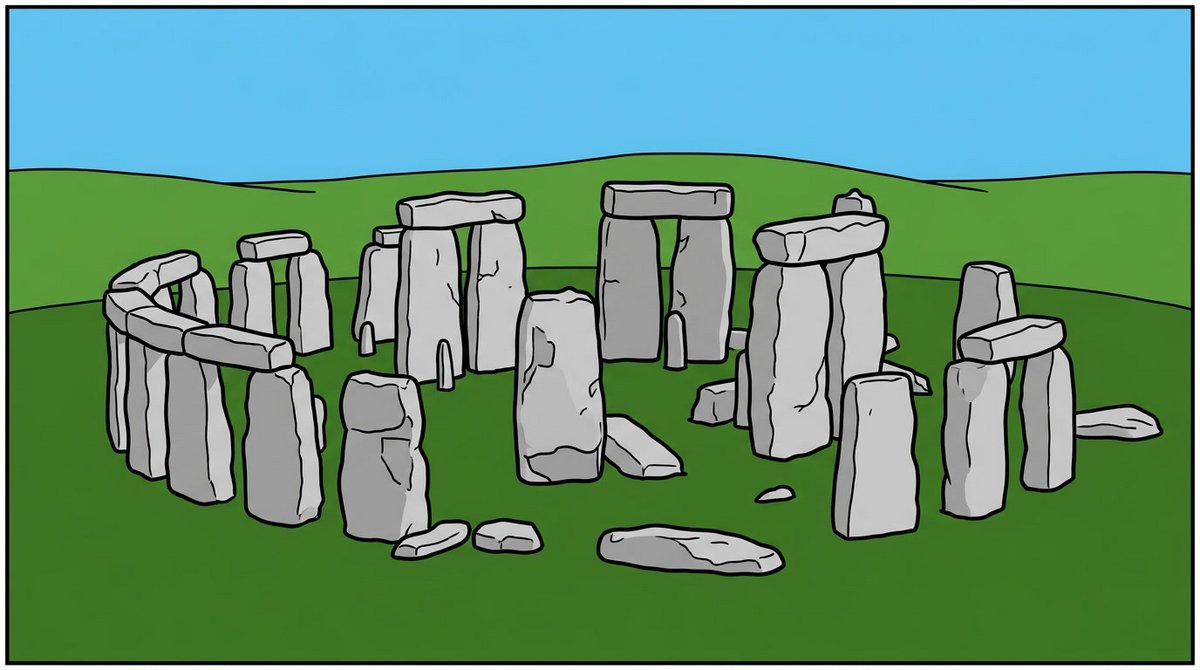
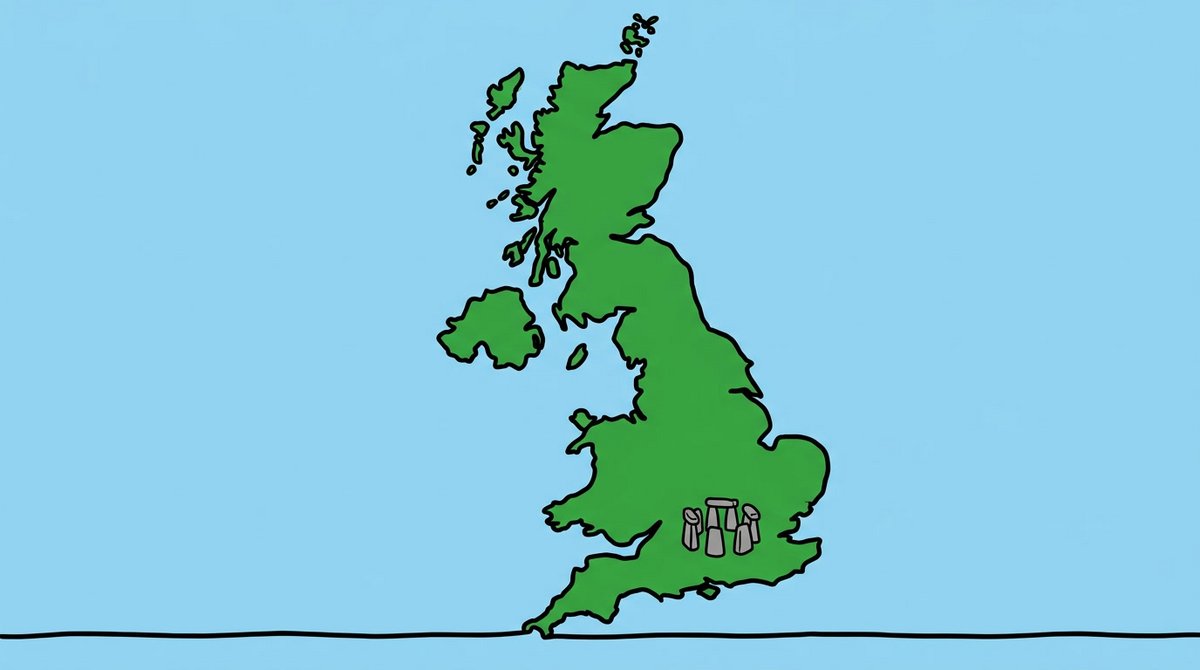
A giant circle of stones in the south of England, about 5,000 years old. Two friends find out how big the stones are, where some of them came from, and why nobody knows what Stonehenge was for.
Episode worksheets (2)
- Student sheet In your teacher account
- Teacher sheet In your teacher account
Teaching guide
Objective & content
This Great Stuff Short is a quick dialogue about Stonehenge, the circle of giant stones in Wiltshire, in the south of England. The speakers compare its stones with a two-storey house and with double-decker buses, say it is older than the Egyptian pyramids, and explain that nobody knows why it was built. They also mention that some of the smaller stones travelled over 200 kilometres from Wales. The grammar focus is comparison (as ... as, superlatives) in the present simple, with sightseeing words and large numbers. Learners listen, then answer the in-app questions. One line to notice: "Nobody's sure."
Materials & prerequisites
The folder holds the audio, the slideshow, the script, a student sheet and a teacher sheet with the answer key (PDF); it has no lesson plan. Learners should know numbers above 100 and the present simple.
Curriculum alignment
Tagged c3-child-and-wider-environment and c3-child-and-passing-time (cycle 3, 6e). The episode targets CEFR level A1-.
Possible adaptations
- Lower levels: Offer segmented listening and additional visual aids.
- Advanced levels: Encourage an oral summary and a debate in English on the theme.
- Large groups: Organise group work with differentiated roles.
🔒 Restricted content
This resource requires a subscription to be viewed.
Unlock the resourceIncluded in the subscriptionTags
- Documentary
- As...as comparisons
- Comparatives: short adjectives
- Superlatives
- Present simple
- Sightseeing
- Large numbers
- Historical dates
- UK nations & regions
- Child and wider environment
- Child and passing time
- Listening comprehension
- Vocabulary building
- Cultural awareness