Pets
Episode of the series Great Stuff
- Illustrated slideshow (19 images)
- Glossary (12 words)
- Comprehension quiz (17 questions)
- 23 cultural notes

 Extract · 30 s
The episode
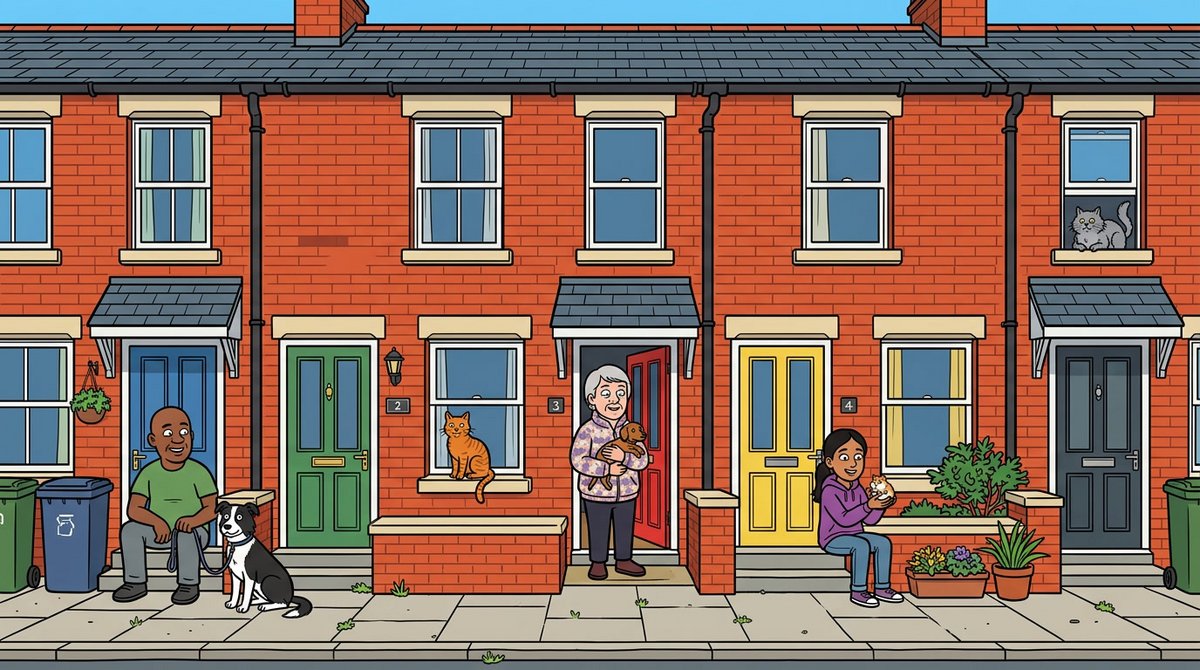
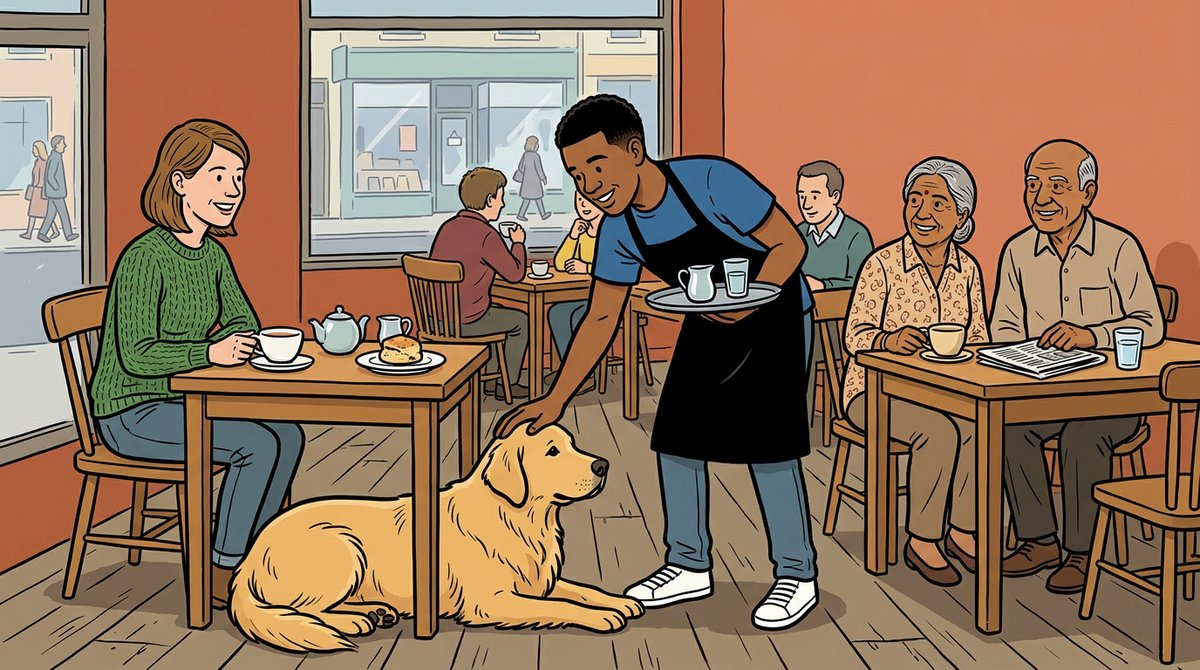
Rabbits in the garden, a hamster in the bedroom, goldfish in the living room: two friends take a tour of Britain's pets and meet a cat with a real job.
Episode worksheets (2)
- Student sheet In your teacher account
- Teacher sheet In your teacher account
Teaching guide
Objective & content
This A1+ documentary, "Pets", is a dialogue between two friends who visit a British home room by room to find its pets: dogs that go into cafés, shops and trains, a rabbit in a hutch in the garden, guinea pigs that live in twos, a hamster in a child's bedroom, goldfish in the living room and a budgie that can learn words. It ends with the cat at Number 10 Downing Street, which has a real job and stays when Prime Ministers change. The main language point is the present simple, with there is / there are to say where each pet lives, plus a short comparative ("quieter than"), because for reasons and going to for a plan. The vocabulary covers pets and their homes (hutch, cage, bowl) and the rooms of a house. A line to notice: "In the day, it sleeps. At night, it runs on its wheel." The skill is listening: learners note each pet and where it lives, then take the in-app quiz.
Materials & prerequisites
- Student sheet and teacher sheet (HTML and PDF versions of each), from the episode's printables.
- Learners should already know the present simple, there is / there are and the rooms of a house.
Curriculum alignment
Cycle 3 (6e): the child and the living world (c3-child-and-living-world) and the child and the close environment (c3-child-and-close-environment). CEFR target: A1+.
Possible adaptations
- Lower levels: Offer segmented listening and additional visual aids.
- Advanced levels: Encourage an oral summary and a debate in English on the theme.
- Large groups: Organise group work with differentiated roles.
🔒 Restricted content
This resource requires a subscription to be viewed.
Unlock the resourceIncluded in the subscriptionTags
- Documentary
- Present simple
- There is / there are
- Comparatives: short adjectives
- Future: be going to
- Pets
- House & home
- Government
- London
- Child and living world
- Child and close environment
- Listening comprehension
- Vocabulary building
- Cultural awareness