England
Episode of the series Great Stuff
- Illustrated slideshow (40 images)
- Comprehension quiz (18 questions)
 Extract · 30 s
The episode
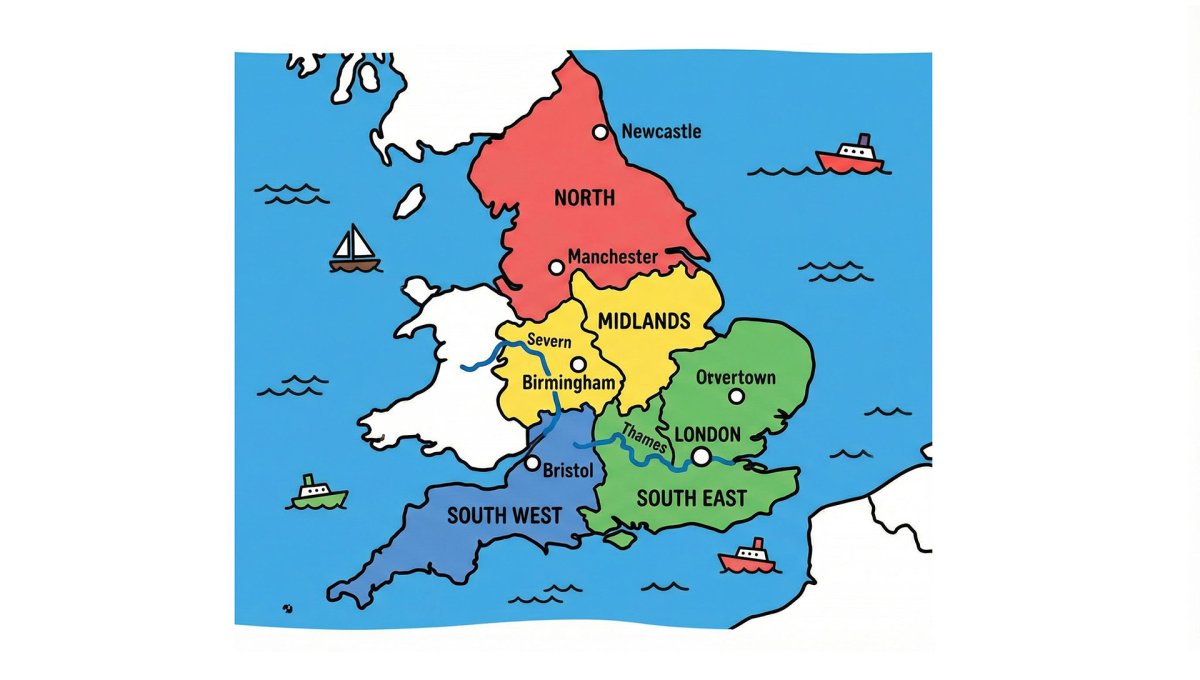
Come with us on a trip to England! It is the biggest country in the United Kingdom. You will learn about London, big cities like Liverpool, and the beautiful Lake District. We look at the north, the midlands, and the south. Let’s go!
Episode worksheets (2)
- Student sheet In your teacher account
- Teacher sheet In your teacher account
Teaching guide
Objective & content
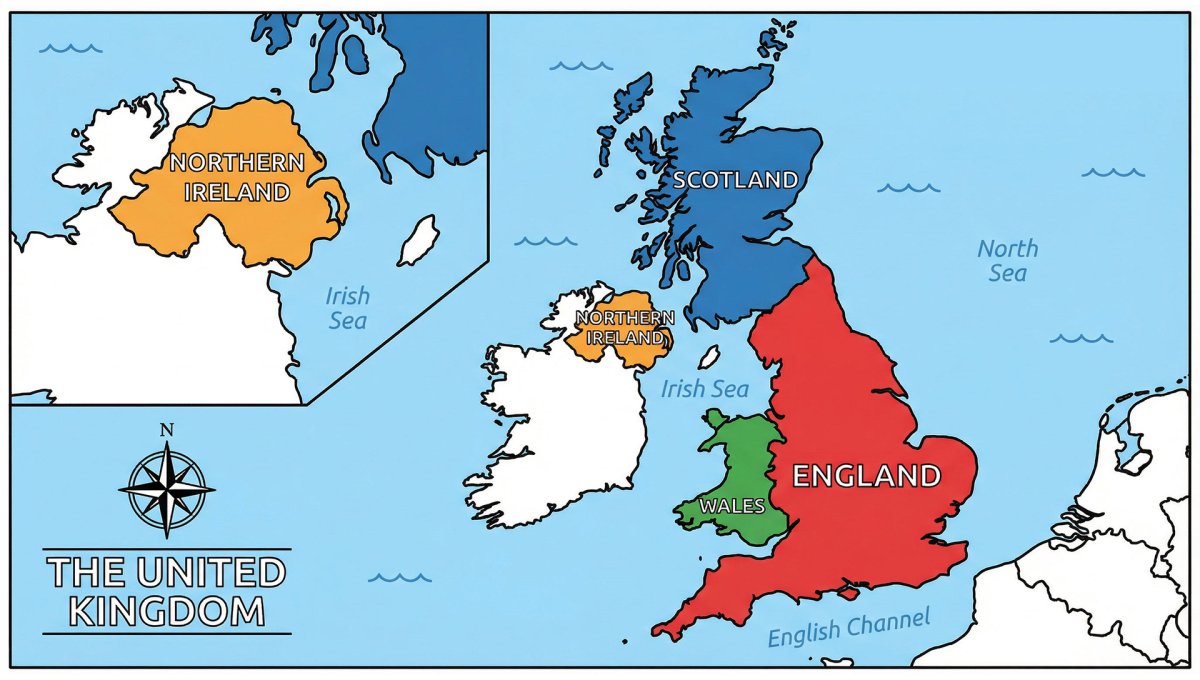
Two presenters take a tour of England, one of the four countries of the United Kingdom. They place regions and cities on the map (the Lake District, Liverpool and Manchester, the Midlands, the south-east, Devon and Cornwall) and compare England with the other three countries in size and population. The language focus is prepositions of place and compass directions ("to the north", "in the south-west"), present simple, and short comparatives and superlatives. Vocabulary covers places, cities and famous people linked to each region, such as The Beatles, Robin Hood, Shakespeare and Isaac Newton. The skill is listening, then the in-app quiz. Key line: "England is the biggest of those countries."
Materials & prerequisites
- Student sheet and teacher sheet (printables/student-sheet.pdf, teacher-sheet.pdf, with HTML versions).
- Prerequisites: the four countries of the UK (episode 1), "is" and "there is", and the compass points.
Curriculum alignment
Cycle 3 (6e): "child and wider environment" (c3-child-and-wider-environment). The episode targets CEFR level A1-.
Possible adaptations
- Lower levels: Offer segmented listening and additional visual aids.
- Advanced levels: Encourage an oral summary and a debate in English on the theme.
- Large groups: Organise group work with differentiated roles.
🔒 Restricted content
This resource requires a subscription to be viewed.
Unlock the resourceIncluded in the subscription