The High Street
Episode of the series Great Stuff
- Illustrated slideshow (20 images)
- Glossary (14 words)
- Comprehension quiz (17 questions)
- 17 cultural notes

 Extract · 30 s
The episode
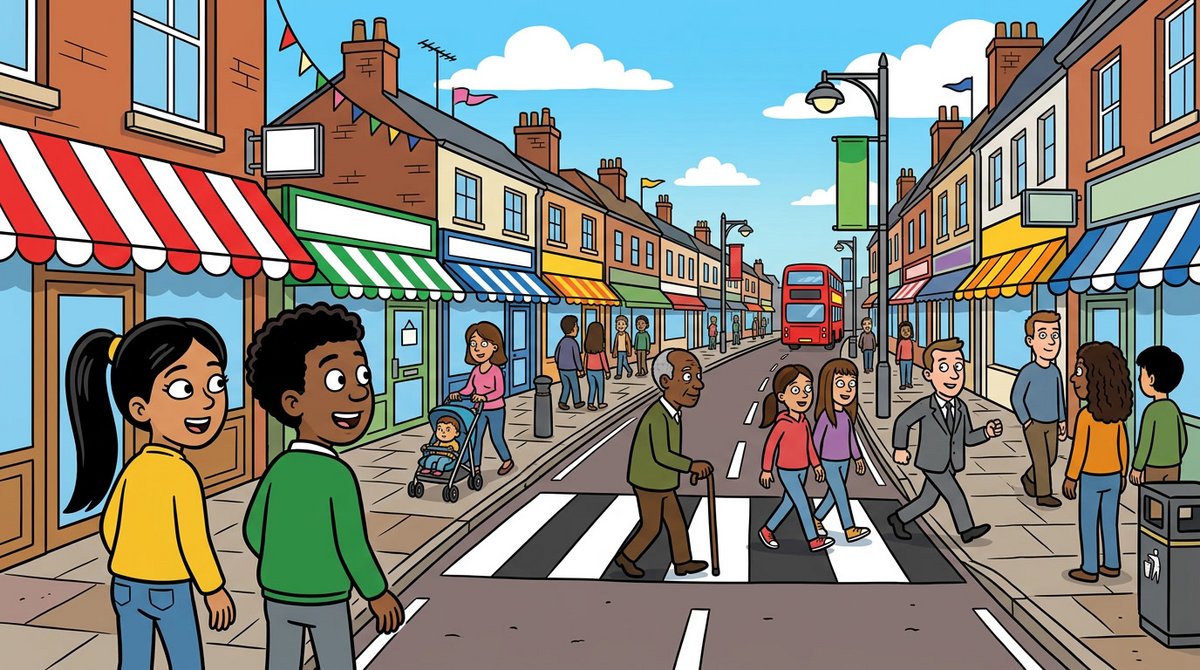
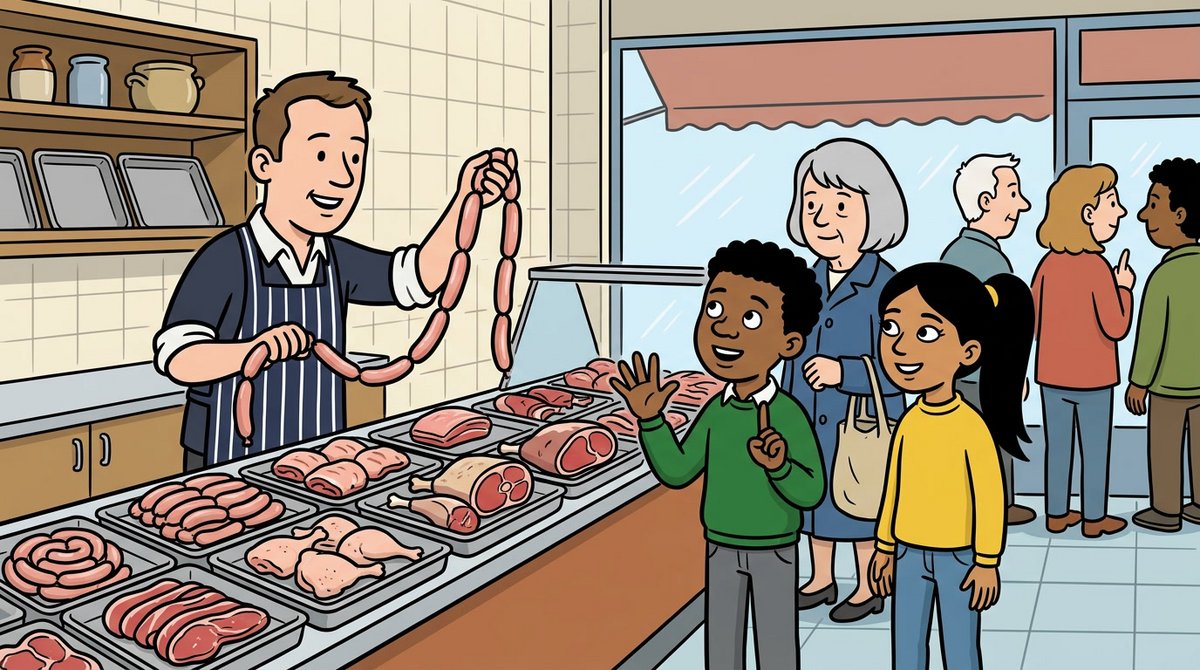
Charity shops, corner shops and a red post box: two friends walk down a British high street and ask what every shop sells.
Episode worksheets (2)
- Student sheet In your teacher account
- Teacher sheet In your teacher account
Teaching guide
Objective & content
This A1+ documentary, "The High Street", is a dialogue between two friends who walk down a British high street, shop by shop. They pass about ten shops, from the butcher's and the bakery to the newsagent and the chemist, and end with a cup of tea at the café. They find that lots of post offices are inside a shop, and that Britain has more than ten thousand charity shops, where about two hundred thousand volunteers work for free. The main language points are there is / there are with prepositions of place ("Opposite the bakery, there's a supermarket.") and asking for something in a shop with can, and for its price. The skill is listening: learners put the shops in order along the street and say what each one sells, then take the in-app quiz.
Pedagogical guide
The episode gives learners a map they hear: each shop has a place (next door, opposite, on the corner, at the back, at the end of the street) and a short list of what it sells. Teach the shop words (butcher's, greengrocer's, newsagent, chemist, hairdresser's, corner shop, charity shop) for recognition, because they name the subject of the episode, and teach queue and volunteer through the episode's own explanations ("the line of people", "work in them for free"). The pause points sit after the bakery, the queue, the hairdresser's and the volunteers, so each pause asks for one clear answer. The prices are example prices said in a shop; the lesson does not teach British coins or notes.
Suggested procedure
- Pre-listening (8 min): ask what shops there are in the learners' town, then preview eight words (high street, butcher's, greengrocer's, corner shop, newsagent, chemist, charity shop, queue) with pictures.
- First listen (4 min): play the whole audio (about 2 minutes 47 seconds) and tick the shops heard.
- Second listen (9 min): pause at 0:52, 1:29, 1:53 and 2:22 and write the shops in order on a street drawn in the notebook.
- Comprehension check (5 min): six questions from the Facts section of the quiz.
- Vocabulary practice (3 min): match each shop to what it sells, or questions 7 to 12 of the student sheet.
- Grammar focus (5 min): "Opposite the bakery, there's a supermarket." / "Next to the corner shop, there's a newsagent." / "Can I have one, please? How much is it?"
- Speaking extension (4 min): a shop role play in pairs, asking for something and its price.
- Optional writing (2 min): draw a high street with four shops and write one sentence for each.
Materials & prerequisites
- Student sheet and teacher sheet (HTML and PDF versions of each), from the episode's printables.
- Pictures of the shops (the episode slideshow works) and word cards for the shop names.
- Learners should already know the present simple and numbers to ten (for the prices).
Curriculum alignment
Cycle 3 (6e): the child and the wider environment (c3-child-and-wider-environment), with the 6e themes town, shopping, shops and prices. CEFR target: A1+.
Possible adaptations
- Lower levels: Offer segmented listening and additional visual aids.
- Advanced levels: Encourage an oral summary and a debate in English on the theme.
- Large groups: Organise group work with differentiated roles.
🔒 Restricted content
This resource requires a subscription to be viewed.
Unlock the resourceIncluded in the subscriptionTags
- Documentary
- There is / there are
- Prepositions of place and time
- Present simple
- Can: polite requests
- Imperatives
- Shops
- Town & village
- Volunteering
- Food & drinks
- Child and wider environment
- Listening comprehension
- Vocabulary building
- Cultural awareness