The Tube
Episode of the series Great Stuff
- Illustrated slideshow (18 images)
- Glossary (14 words)
- Comprehension quiz (17 questions)
- 17 cultural notes

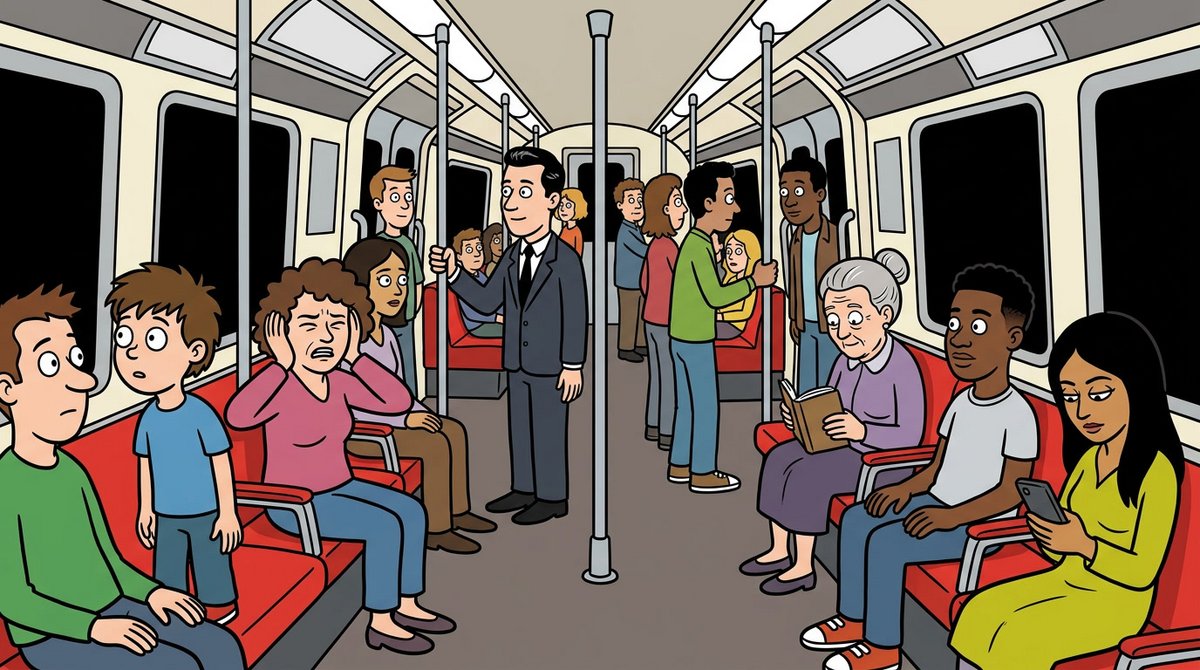
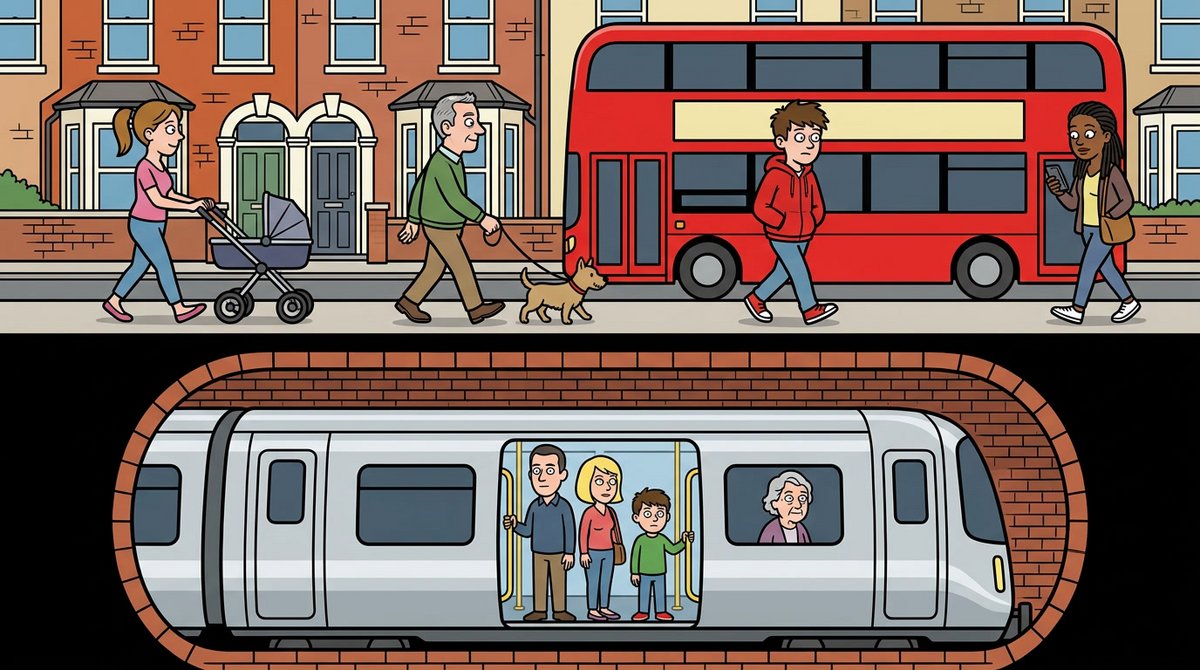 Extract · 30 s
The episode
A train under the street, a map with colourful lines, and one famous warning: two friends take a ride on London's Tube and learn its unwritten rules.
Episode worksheets (2)
- Student sheet In your teacher account
- Teacher sheet In your teacher account
Teaching guide
Objective & content
This A1+ documentary, "The Tube", is a dialogue between two friends who take a ride on the London Underground, the oldest underground railway in the world, and follow a journey from the map to the train. The main language points are the present simple, instructions with the imperative ("Look down." "Get on.") and do-questions ("Do I need a ticket?"). The skill is listening: learners put the steps of the journey in order, then take the in-app quiz.
Pedagogical guide
Each step of the journey comes with one short instruction, so learners hear the imperative in a real context before they practise it. Escalator, rush hour and tap in are above the level in the dictionary but name the subject, and the episode explains each one ("stairs that move", "everybody goes to work, or goes home, at the same time"); teach them for recognition. The oyster joke is a good check that learners know the Oyster card is a plastic card, not food.
Suggested procedure
- Pre-listening (8 min): ask about the metro in the learners' own country, then preview nine words (the Underground, map, line, ticket, gate, platform, tunnel, gap, crowded) with pictures.
- First listen (4 min): play the whole audio (about 2 minutes 45 seconds): where are the friends, and how old is the Tube?
- Second listen (9 min): pause at 1:14, 1:33, 1:59 and 2:21 and put seven step cards (map, ticket, gate, escalator, platform, gap, train) in order in the notebook.
- Comprehension check (5 min): six questions from the Facts section of the quiz.
- Vocabulary practice (3 min): name the picture (gate, platform, gap, crowded train), or questions 7 to 12 of the student sheet.
- Grammar focus (5 min): "Look down." / "Get on." / "Be careful with your feet." / "Do I need a ticket?"
- Speaking extension (4 min): in pairs, one learner gives a visitor the instructions for a Tube journey, step by step.
- Optional writing (2 min): an instruction card with three imperatives for a visitor in the learners' own town.
Materials & prerequisites
- Student sheet and teacher sheet (HTML and PDF versions of each), from the episode's printables.
- The episode audio (about 2 minutes 45 seconds) in the app or as a file.
- Seven step cards for the board; pictures from the episode slideshow (optional).
Curriculum alignment
Cycle 3 (6e): the child and the wider environment (c3-child-and-wider-environment), with the 6e axes "Le quotidien" and "Pays et paysages" (London) and the 6e theme town, directions and transport. CEFR target: A1+.
Possible adaptations
- Lower levels: Offer segmented listening and additional visual aids.
- Advanced levels: Encourage an oral summary and a debate in English on the theme.
- Large groups: Organise group work with differentiated roles.
🔒 Restricted content
This resource requires a subscription to be viewed.
Unlock the resourceIncluded in the subscriptionTags
- Documentary
- Present simple
- Imperatives
- There is / there are
- Can: ability
- Comparatives: short adjectives
- Question forms
- Transport
- Town & village
- Historical dates
- London
- Child and wider environment
- Listening comprehension
- Vocabulary building
- Cultural awareness