Free Museums
Episode of the series Great Stuff
- Illustrated slideshow (20 images)
- Glossary (12 words)
- Comprehension quiz (17 questions)
- 17 cultural notes

 Extract · 30 s
The episode
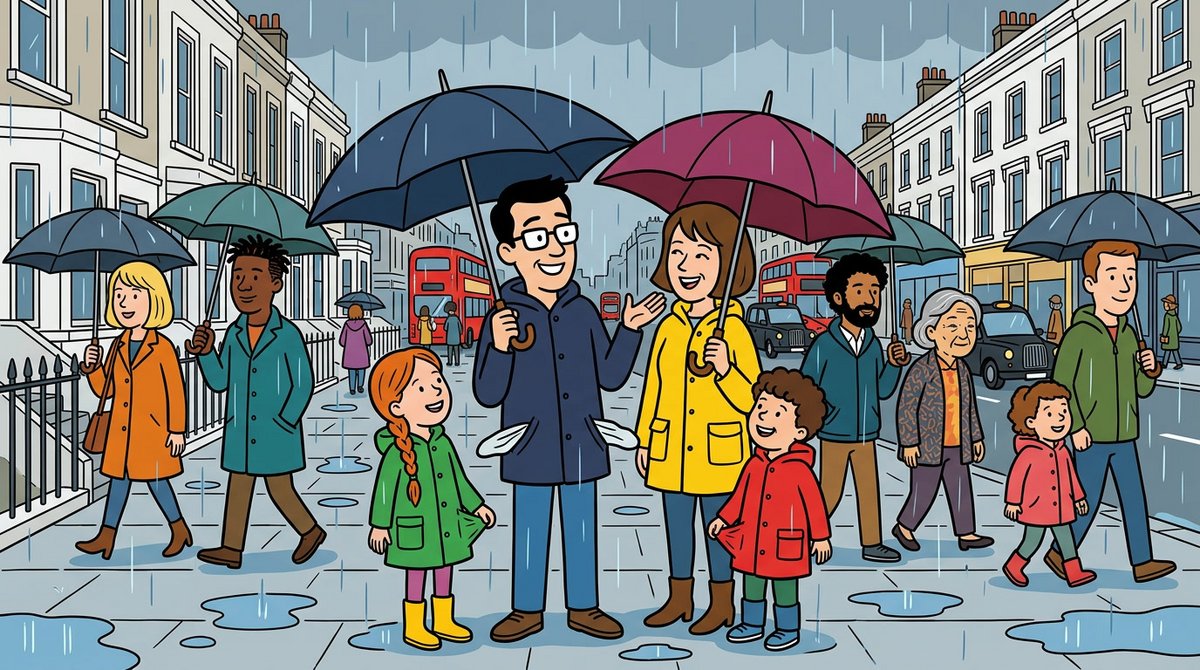
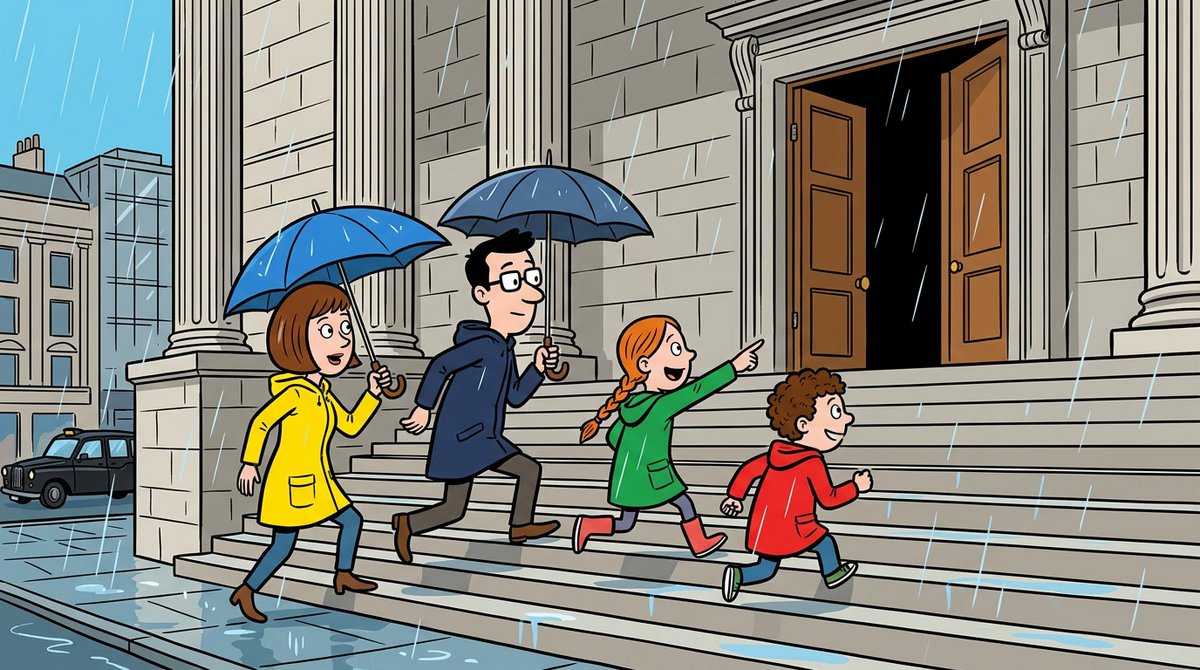
A giant whale, dinosaurs, mummies from Egypt and famous paintings, and no ticket to buy: a family spends a rainy day in Britain's free museums.
Episode worksheets (2)
- Student sheet In your teacher account
- Teacher sheet In your teacher account
Teaching guide
Objective & content
This A1+ documentary, "Free Museums", follows a family with no money on a rainy day in London as they visit three big museums for free: the Natural History Museum (a blue whale skeleton and dinosaurs), the British Museum (mummies from ancient Egypt) and the National Gallery (the Sunflowers by Van Gogh). It says why they are free (the government gives money to the big museums), that most big museums are free but not all, and that the national museums of Scotland and Wales are free too. The main language points are the present simple, instructions with the imperative ("Look, but don't touch."), can questions ("Can I touch it?") and was/were ("They were people from Egypt."). The skill is listening: learners put the day in order, then take the in-app quiz.
Pedagogical guide
The episode explains its own museum words: a whale skeleton is "all its bones", a mummy is "a body from ancient Egypt, in long pieces of cloth", a coffin is "a box for the body", a gallery is "a museum for paintings" and special exhibitions are "a show for a short time". Whale is B1 and skeleton B2 in the dictionary, and dinosaur, bone and mummy are A2, but they name what the museums show; teach them for recognition, with a picture. The mummies are presented with respect, as real people from a very long time ago ("So we look quietly"); the one joke is on the word (mummy and mum), before the real meaning. The script says "most big museums", never all of them. "We've got no money" means "We have no money": the 2025 programme teaches have / has for possession.
Suggested procedure
- Pre-listening (8 min): ask which museums learners know and if a ticket is free, then preview eight words with pictures.
- First listen (4 min): the whole audio (about 3 minutes 27 seconds): what is the weather like, how many museums, and how much is a ticket?
- Second listen (9 min): pause at 0:44, 1:38, 2:18 and 2:48 and put six day cards in order, from the rainy morning to Scotland and Wales.
- Comprehension check (5 min): the six Facts questions of the episode quiz.
- Vocabulary practice (3 min): name the picture, or questions 7 to 12 of the student sheet.
- Grammar focus (5 min): the museum rules ("Look, but don't touch."), then "Can I touch it?" with a rule as the answer.
- Speaking extension (4 min): in pairs, one learner explains a free British museum to a first-time visitor.
- Optional writing (2 min): three sentences about a museum in the learners' town or one they want to visit.
Adaptations
Support: give the six day cards as a word bank, keep the pictures on the board during both listens, and ask questions 1 to 3 as multiple choice. Stretch: no pictures in the second listen, one sentence from the episode for each card, and questions on why someone says "Like my mum?" and "Oh no" at the end.
Materials & prerequisites
- Student sheet and teacher sheet (HTML and PDF versions of each), from the episode's printables.
- The episode audio (about 3 minutes 27 seconds) in the app or as a file.
- Six day cards for the board; pictures from the episode slideshow (optional).
Curriculum alignment
Cycle 3 (6e): the child and the wider environment, with the 6e axes "Pays et paysages" (London, Scotland, Wales) and "Arts et expression des sentiments", and the British cultural content of the 6e programme. No unit of the three 6e textbooks covers museums; Way to Go Unit 6 "London is a jungle" is the nearest for London. CEFR target: A1+.
Possible adaptations
- Lower levels: Offer segmented listening and additional visual aids.
- Advanced levels: Encourage an oral summary and a debate in English on the theme.
- Large groups: Organise group work with differentiated roles.
🔒 Restricted content
This resource requires a subscription to be viewed.
Unlock the resourceIncluded in the subscriptionTags
- Documentary
- Present simple
- Present continuous
- be / have got
- Imperatives
- Can: permission
- Past simple: was / were
- Cultural outings
- Art & photography
- Wild animals
- London
- UK nations & regions
- Child and wider environment
- Listening comprehension
- Vocabulary building
- Cultural awareness