Australia: The Dog Fence
Episode of the series Look Closer
- Illustrated slideshow (56 images)
- Glossary (13 words)
- Comprehension quiz (10 questions)
- 9 cultural notes
 Extract · 30 s
The episode
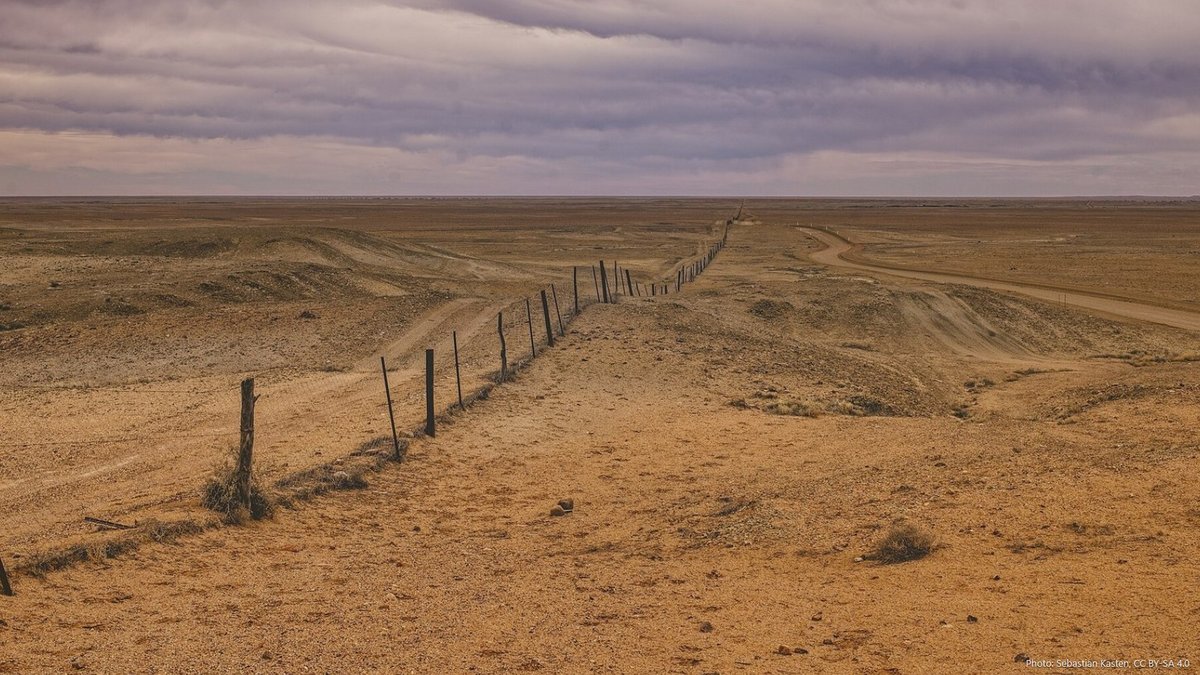
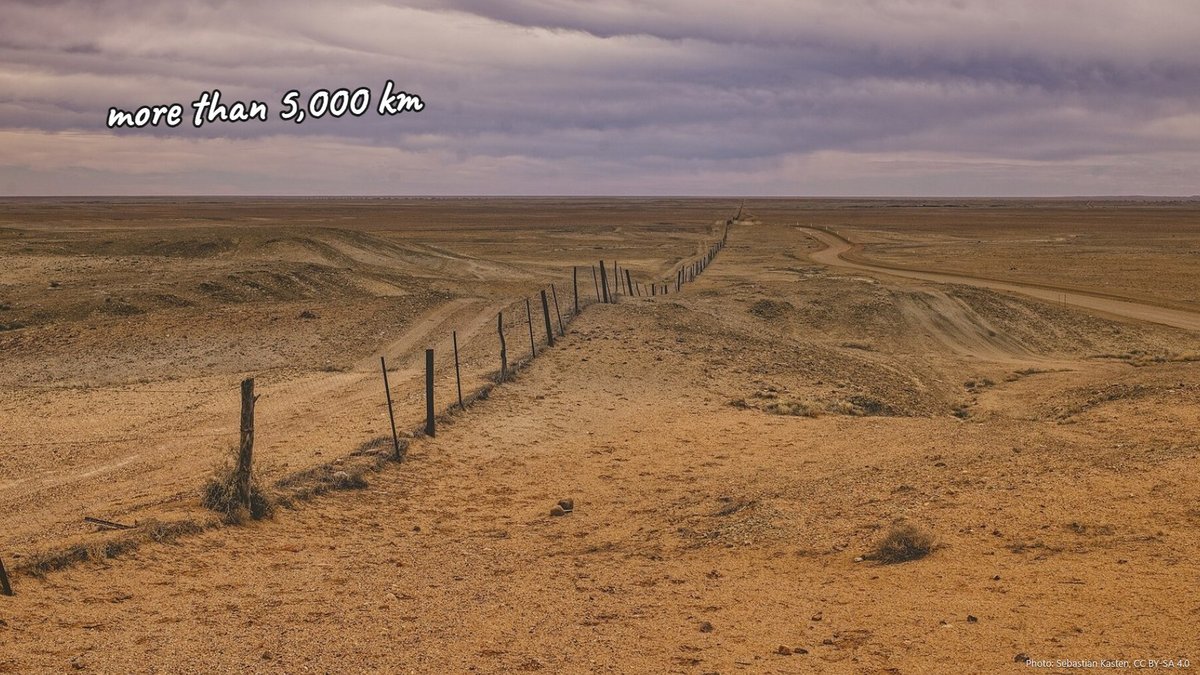
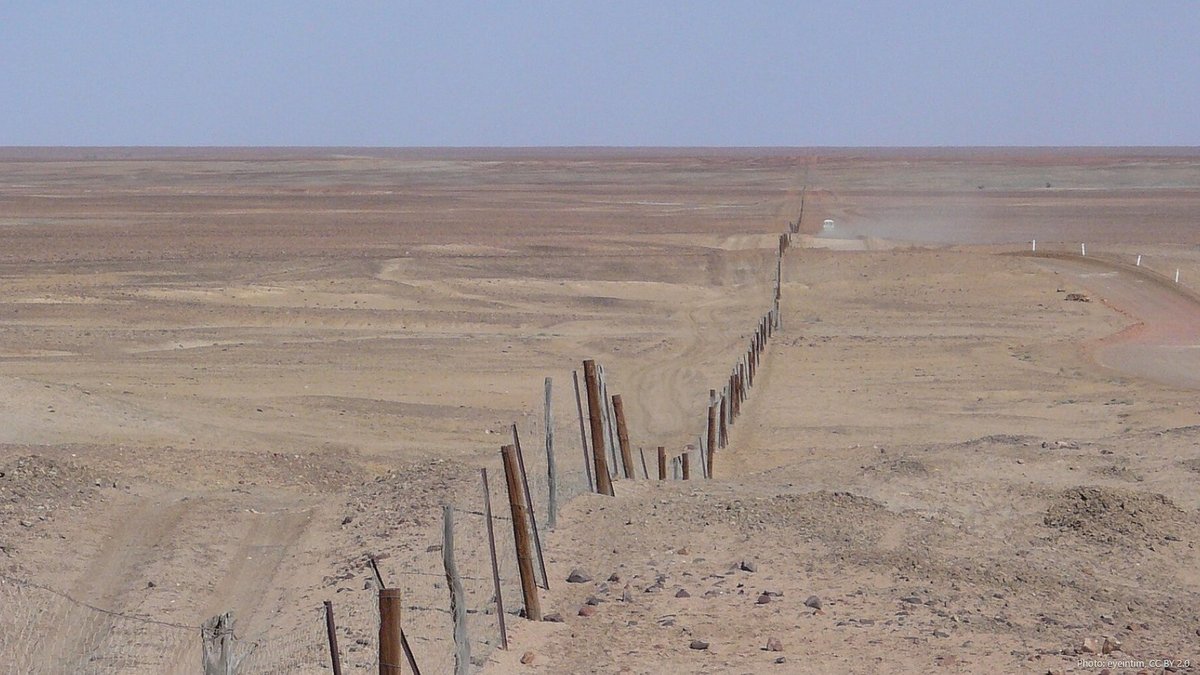
The Dog Fence crosses 5,614 kilometres of the Australian Outback to keep dingoes away from sheep farms, and it changes nature on its two sides.
Episode worksheets (2)
- Student sheet In your teacher account
- Teacher sheet In your teacher account
Teaching guide
Objective & content
This Look Closer episode (Australia mini-series, episode 152) is a short documentary about the Dog Fence, also called the Dingo Fence: 5,614 kilometres of fence from Queensland, in the east, to the south coast of South Australia, almost the distance from Paris to New York. It explains that a dingo is a wild dog, that farmers first built long fences in the 1880s against the rabbits people from Europe had brought, and that they later repaired them to keep dingoes away from the huge sheep farms of the south-east; workers still drive along the fence to repair the holes that animals, wind and floods make. The look-closer moment is the two sides of the fence: scientists found thousands of kangaroos where there were no dingoes to hunt them, and very few where the dingoes lived, so the fence protects the sheep but also changes nature on each side.
The narration is in the present simple, with the past simple for the history and one past perfect (had brought); no grammar point is taught. It is a listening comprehension episode: learners listen, then answer the 10 questions in the app, 7 on facts and 3 on vocabulary (dingo, the Dingo Fence and repair), and the closing question (a fence to protect farm animals: good or not?) opens a short class discussion. The study topic is Australia and life in the Outback.
Materials & prerequisites
The folder holds the audio, the slideshow and the script; there is no lesson plan. The pupil pack and the teacher pack (answers highlighted) are one A4 page each, with the text, three photos (the fence across the Outback near Coober Pedy, rabbits round a waterhole in 1938, a mob of kangaroos), the key words and the 10 questions; a pupil sheet and a teacher sheet with the answer key come with them. The text ends with an open question (Think about it: Do you think a fence is a good way to protect farm animals? Why, or why not?). Learners should know the present and past simple of common verbs and be able to read large numbers. The pack's key words explain the new words (fence, Outback, dingo, wild, rabbit, repair, attack, sheep).
Curriculum alignment
Tagged c4-travel-and-migration ("Voyages et migrations") and c4-encountering-others ("Rencontres avec d'autres cultures"), Cycle 4 (3e): animals that Europeans brought to Australia, and how people there live with the land and its wildlife. The episode targets CEFR level B1-.
Possible adaptations
- Lower levels: Offer segmented listening and additional visual aids.
- Advanced levels: Encourage an oral summary and a debate in English on the theme.
- Large groups: Organise group work with differentiated roles.
🔒 Restricted content
This resource requires a subscription to be viewed.
Unlock the resourceIncluded in the subscriptionTags
- Present simple
- Past simple: regular verbs
- Past simple: irregular verbs
- Past perfect
- There is / there are
- Wild animals
- Environment
- Large numbers
- Urban vs rural
- Australian animals
- Commonwealth
- Travel and migration
- Encountering others
- Listening comprehension
- Vocabulary building
- Cultural awareness