Stage to screen: Romeo and Juliet
Episode of the series Look Closer
- Illustrated slideshow (41 images)
- Glossary (12 words)
- Comprehension quiz (10 questions)
- 9 cultural notes
 Extract · 30 s
The episode
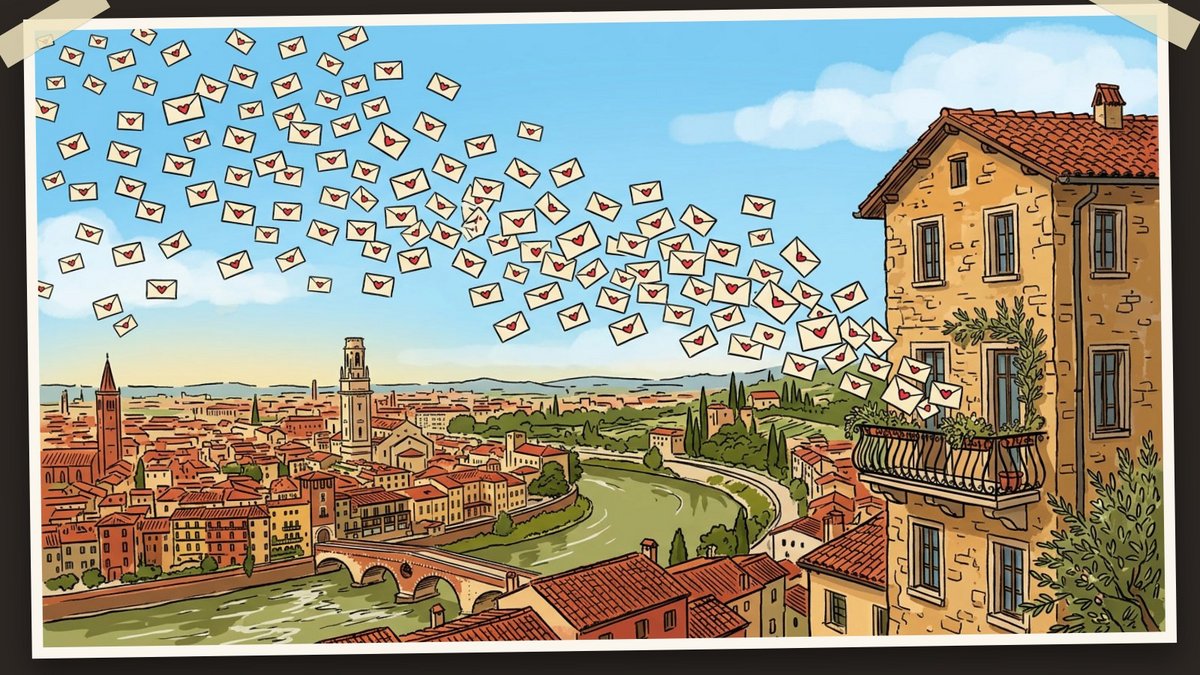
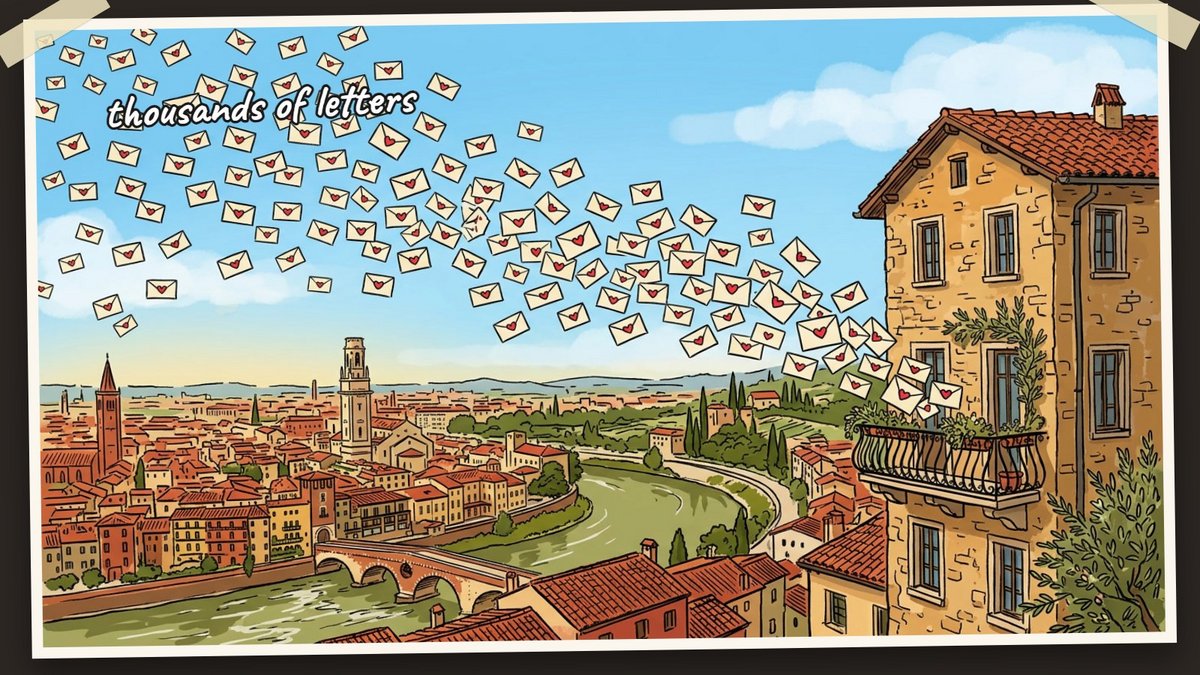
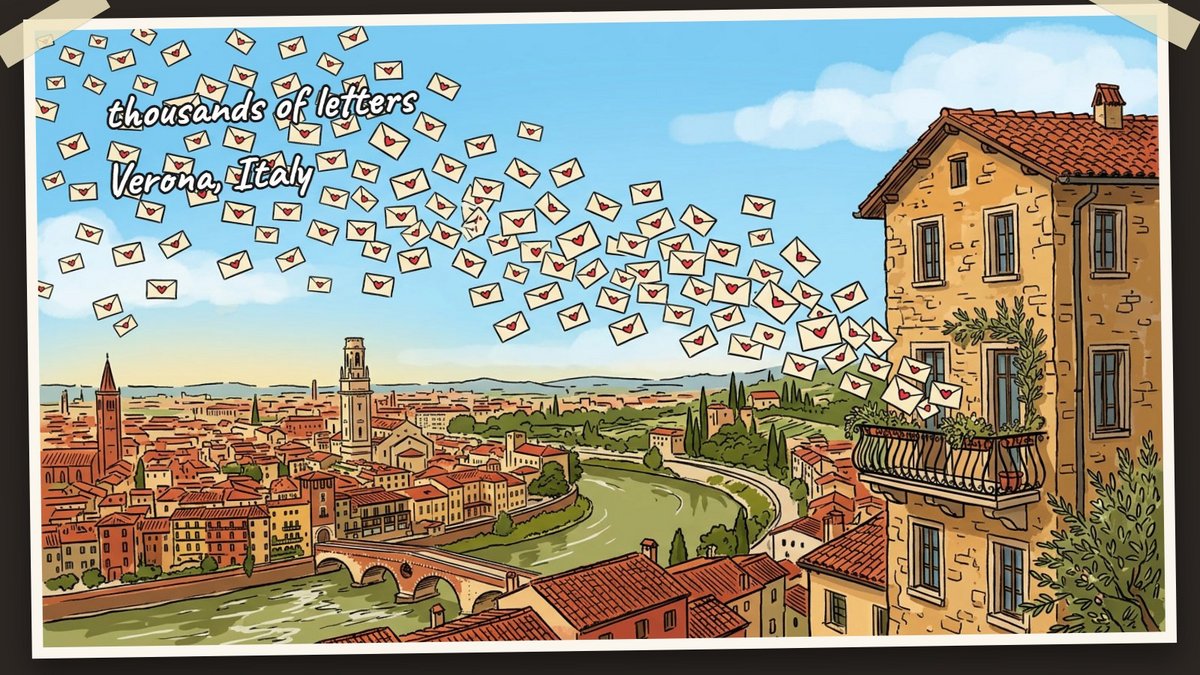
Every year, thousands of letters arrive in Verona for Juliet, a girl who never lived: her story travelled from an Italian tale to Shakespeare's play, to West Side Story and the cinema.
Episode worksheets (2)
- Student sheet In your teacher account
- Teacher sheet In your teacher account
Teaching guide
Objective & content
This Look Closer episode (From stage to screen mini-series, episode 170) is a short documentary about the story of Romeo and Juliet and how it travelled from the page to the stage and the screen. It starts with the letters that arrive in Verona for Juliet, then follows the story from an Italian writer and an English poet (1562) to Shakespeare's play in the 1590s, then to the musical West Side Story in New York (1957), its 1961 film and a 1996 film set in a modern city. It ends in Verona, with Juliet's balcony (added in the 1930s), the volunteers who answer the letters and the wall of notes. The ending of the play is said once, simply; nothing is shown. No grammar point is taught. It is a listening comprehension episode: learners listen, then answer the 10 questions in the app: all 10 on facts. The study topic is how one story travels from the page or the stage to the screen, and what changes on the way.
Materials & prerequisites
The folder holds the audio, the slideshow and the script; there is no lesson plan. The pupil pack and the teacher pack (answers highlighted) are one A4 page each, with the text, three pictures (a drawing of letters flying to Verona, Frank Dicksee's 1884 painting of Romeo and Juliet, a photo of Juliet's balcony), the key words and the 10 questions; a pupil sheet and a teacher sheet with the answer key come with them. The text ends with an open question (Think about it: Why do you think people still love this story?). Teachers may want to check beforehand that learners can read dates and decades (the 1590s, the 1930s). The pack's key words explain the new words (letter, poet, play, hate, marry, secret, musical, gang, teenager, balcony, volunteer, note).
Curriculum alignment
Tagged artistic-languages-and-messages (axis 5, "Langages et messages artistiques"; objet d'étude "Des planches aux plateaux de cinéma"), Cycle 4 (4e). The episode targets CEFR level A2+.
Possible adaptations
- Lower levels: Offer segmented listening and additional visual aids.
- Advanced levels: Encourage an oral summary and a debate in English on the theme.
- Large groups: Organise group work with differentiated roles.
🔒 Restricted content
This resource requires a subscription to be viewed.
Unlock the resourceIncluded in the subscriptionTags
- Present simple
- Past simple: regular verbs
- Past simple: irregular verbs
- Can: ability
- Cultural outings
- Film genres
- Historical dates
- Volunteering
- Shakespeare
- Cinema history
- New York
- Artistic languages and messages
- Listening comprehension
- Vocabulary building
- Cultural awareness