Segregation: Rosa Parks
Episode of the series Look Closer
- Illustrated slideshow (45 images)
- Glossary (14 words)
- Comprehension quiz (10 questions)
- 6 cultural notes
 Extract · 30 s
The episode
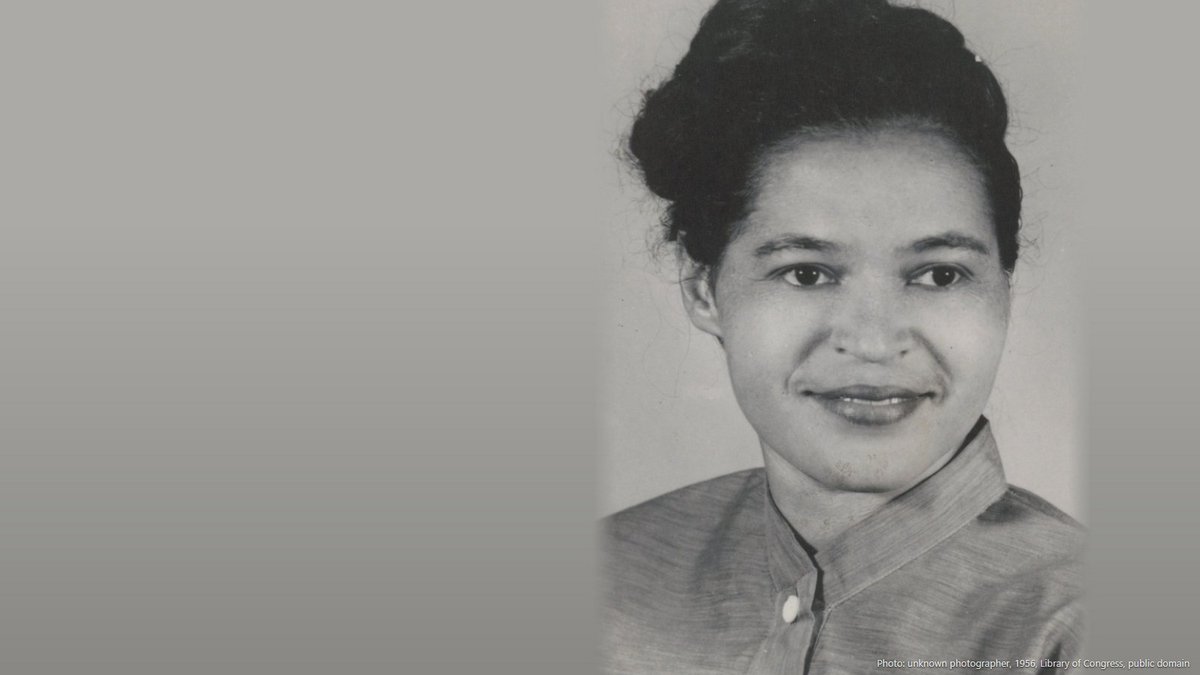
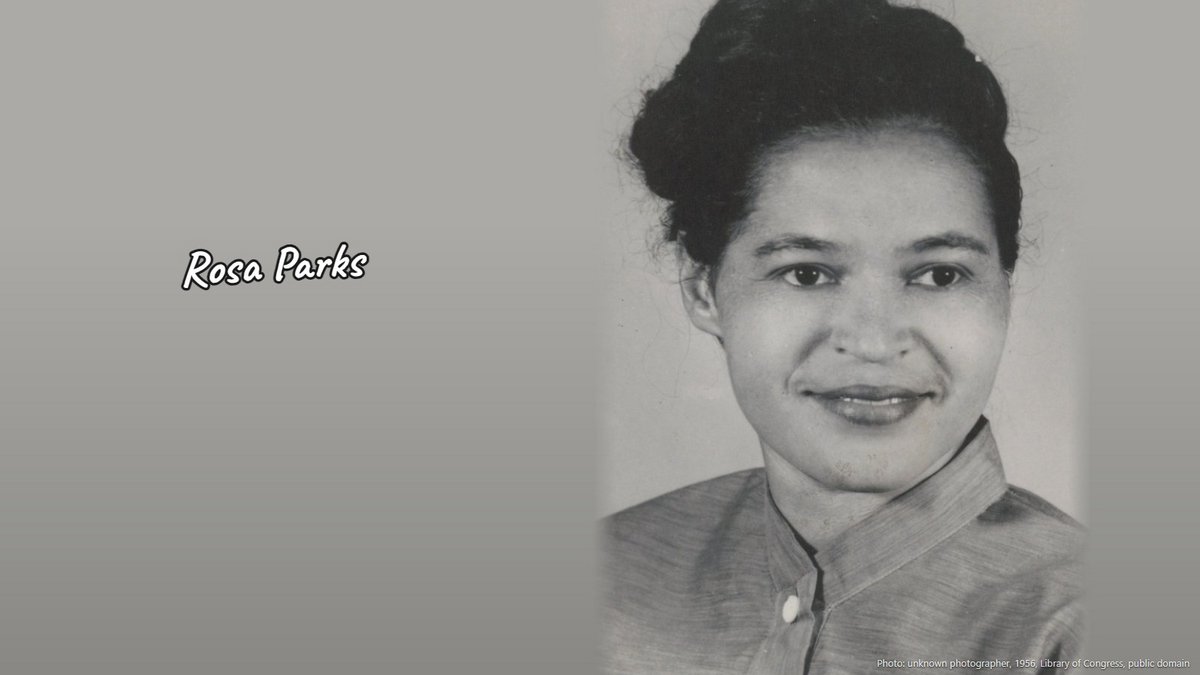
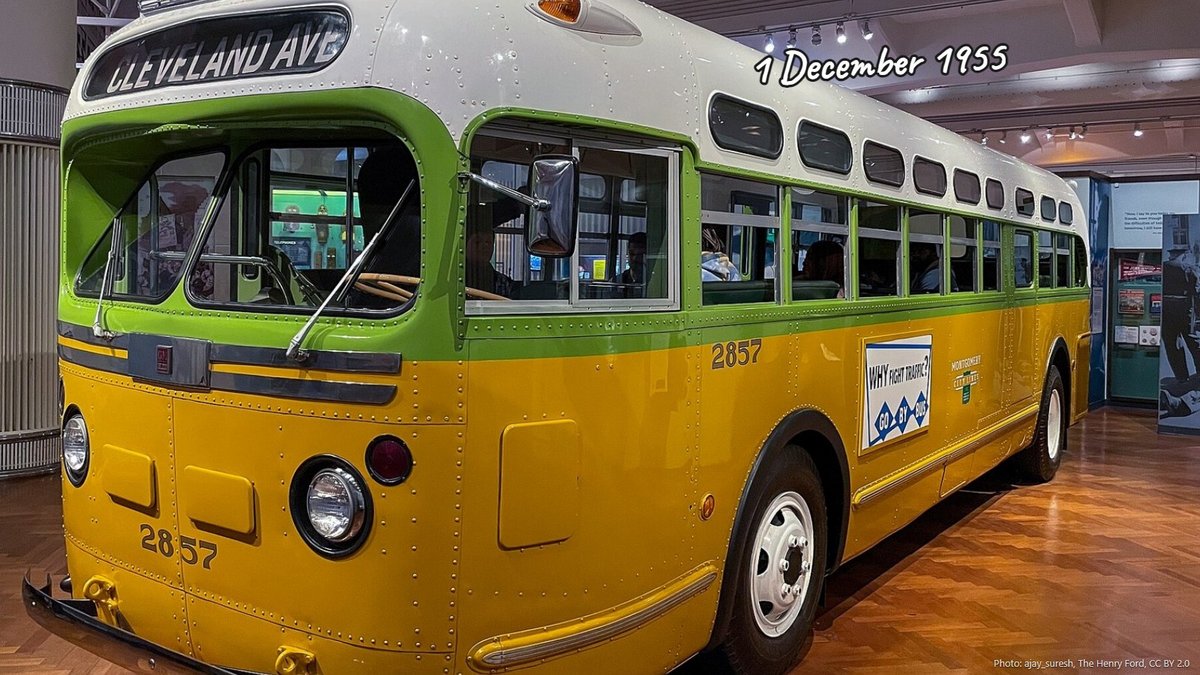
On 1 December 1955, in Montgomery, Alabama, Rosa Parks stayed in her bus seat; she was not a tired old lady but a trained activist, and the 381-day bus boycott that followed ended segregation on the city's buses.
Episode worksheets (2)
- Student sheet In your teacher account
- Teacher sheet In your teacher account
Teaching guide
Objective & content
This Look Closer episode (Segregation mini-series, episode 248) is a short documentary about Rosa Parks. A narrator explains that on 1 December 1955 she got on a bus after work in Montgomery, Alabama, where she was a seamstress. On the city's buses, the front seats were for white passengers, and when the bus was full, black passengers had to stand up and give their seats to white people. That evening the driver told her and three other black passengers to stand up; the others moved, she stayed, and the police arrested her. Pupils then look closer at the story most people know: she was not a tired old lady but a woman of forty-two, the secretary of a group that fought for the rights of black people, who had learned that summer how to protest peacefully and decided not to move. Her own words, "The only tired I was, was tired of giving in", are explained. Four days later, the black people of Montgomery stopped taking the buses; for 381 days they walked, shared cars or took taxis, until in November 1956 the Supreme Court said that segregation on buses was against the law. The arrest is stated once, plainly, and the episode ends on what the boycott achieved and on the name many people give her today, "the mother of the civil rights movement".
The narration uses the past simple, with obligation in the past (had to sit, had to stand up) and defining relative clauses (a person who makes, a group that fought); no grammar point is taught. Learners listen, then answer the 10 questions in the app: 7 on facts and 3 on vocabulary (seamstress, giving in, boycott). The closing question (Why do you think the boycott worked?) opens a short class discussion.
Materials & prerequisites
The folder holds the audio, the slideshow and the script; there is no lesson plan. The pupil pack and the teacher pack (answers highlighted) are one A4 page each, with the text, three pictures, the key words and the 10 questions. The folder also holds a one-page pupil sheet and a teacher sheet with the answer key. Learners should know the past simple of common verbs. The script explains its new words as it goes.
Possible adaptations
- Lower levels: Offer segmented listening and additional visual aids.
- Advanced levels: Encourage an oral summary and a debate in English on the theme.
- Large groups: Organise group work with differentiated roles.
🔒 Restricted content
This resource requires a subscription to be viewed.
Unlock the resourceIncluded in the subscriptionTags
- Past simple: regular verbs
- Past simple: irregular verbs
- Past simple: was / were
- Modals in the past
- Relative clauses
- Present simple
- Civil rights
- Famous people
- Historical dates
- Transport
- Jobs: basics
- Encountering others
- Forms of commitment
- Listening comprehension
- Vocabulary building
- Cultural awareness
- Fairness
- Citizenship & society
- Modern history
- Exploring America
- Heroes & Values
- Our World
- Past & Progress
- Places & Journeys